Physical Address
304 North Cardinal St.
Dorchester Center, MA 02124
Physical Address
304 North Cardinal St.
Dorchester Center, MA 02124
|
Notice!
This article was heavily rewritten in 2026 because the original September 16, 2023 version highkey kinda sucked. It has since been expanded with new information and many revisions. If you’re curious, you can read the original, unedited version here. |
When it comes to Fire Emblem’s long history, something that I find to be a bit overlooked is the history behind its numerous fan translations. Since the series didn’t have much of an official foothold in the West until relatively recently, a lot of the fandom lived and died on the fan translations available to them. Despite that, though, there isn’t a whole lot of comprehensive coverage or documentation that pertains to the full history of these fan translations online, at least not for every Japanese-exclusive game.
That’s a bit of a shame because a lot of the history of these translations is interesting in their own right. In fact, I’d go as far as to say that a lot of the drama regarding some of these translations rivals a lot of the internal drama regarding the development of the games themselves.
For some reason, a lot of people like to engage in pointless endeavors like “starting a career” or “having a social life,” instead of doing something actually important like documenting the history of Fire Emblem’s fan translations. That’s why I wanted to take it upon myself to document the numerous fan translations that exist for the series in one comprehensive blog post. So let’s cut the bullshit and get right into it!
So, Fire Emblem is a series that debuted in Japan in 1990 for the Nintendo Famicom. The series never really left Japan until November 3rd, 2003, when Fire Emblem: The Blazing Blade was released worldwide due to the popularity of the characters, Marth and Roy, appearing in Super Smash Bros. Melee. In addition, the popularity of Advance Wars also justified this worldwide release, as the two genres were similar enough for Nintendo of America to have confidence in Fire Emblem.
Among the fandom, Blazing Sword is commonly referred to as “FE7,” and because of this, you can hopefully surmise that it is because it’s the seventh game in the series. Meaning that there were six games before it. Furthermore, there was even a Satellaview side game, a few other games made by the original developer after he left Nintendo, a trading card game, books, manga, and even gummies, which we never got here in the West.
While people enjoyed the content that we did get at the time and they’d form their own niche followings, other people wanted more. There were some dedicated fans who wanted to learn of the series’ roots, see where this Marth guy came from, learn about references made in future games, and so on. This is where some of these dedicated fans would work to translate this content and make it accessible to fellow fans.
I’m sure that if you’re currently reading a blog post about Fire Emblem, or have played any other Japanese series that lacked global releases like Final Fantasy, you probably know what a fan translation is, but for the person who clicked on this post by accident, a fan translation is an unofficial translation of various forms of written or multimedia products made by fans, usually into a language that it is not yet available in.
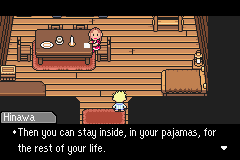
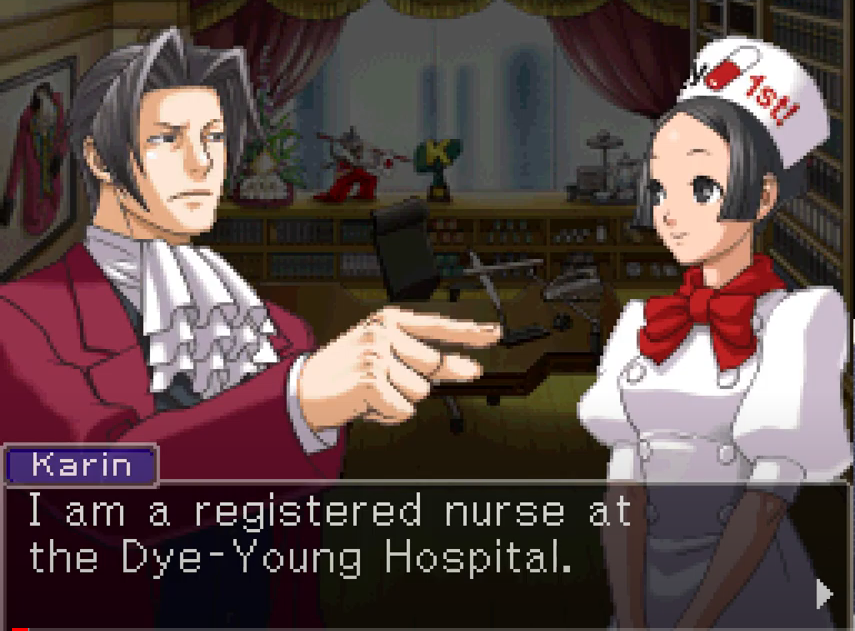
Some of the most popular fan translations that exist are Mother 3’s fan translation spearheaded by Clyde Mandelin, and Ace Attorney Investigation 2’s fan translation led by Aurynn, both with a vast number of contributors.
While I generally make it no secret how much I despise the Fire Emblem community as a whole, one thing I do love is how passionate the small portion of the community is. In particular, this passion has resulted in every mainline game in the series being accessible and fully playable in English, which isn’t something a lot of more niche fanbases can say.
This, in turn, has resulted in introducing more and more people to the series, fostering sub-communities, and inspiring a wealth of creative contributions. Some of these include fan art, ROM hacks, fan games, and fanfiction, and all of this occurred even before the series gained even more widespread recognition through Awakening or Heroes.
That said, while contemporary perceptions of fan translations are predominantly associated with video games, the origins of fan translations can be traced back to the 1980s, specifically within the context of anime fansubbing.
In Minako O’Hagan’s article, Evolution of User-generated Translation: Fansubs, Translation Hacking, and Crowdsourcing, she notes that the inception of fansubbing can be attributed to a form of protest against the significant alterations made in anime dubs during that era. Notable instances of such changes include stuff like Speed Racer, Voltron, or Robotech. A more topical example, though, would be something like the 4Kids One Piece dub.

The mid-90s saw the emergence of video games in the fan translation scene. Among the pioneers of early English video game fan translations were members of a group known as Oasis, which included Dennis Lardenoye and Ron Bouwland, both avid fans of the MSX. In their efforts, they translated Konami’s RPG SD Snatcher, making it accessible to English-speaking audiences in April 1993. Additionally, their translation work extended to Dragon Slayer: The Legend of Heroes, which became available in English in 1995.
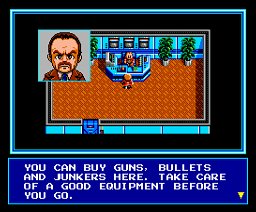
They also worked on several other projects that contributed to the early fan translation scene. These projects included titles like Fray, Rune Master 3, Xak – The Art of Visual Stage, Xak 2, Xak – The Tower of Gazzel, Ys, Ys II: The Final Chapter, and Wanderers From Ys.
During this period, fan translations were made possible primarily due to games being distributed on floppy disks. This format made it comparatively easier to modify and distribute these translated versions to users, particularly before the widespread use of emulation on personal computers.
The 90s, however, were the birth of the emulation age. And with that, fan translations of video games had a huge boom at the time as well. Starting this boom was a group called Kowasu Ku that stated plans to translate Final Fantasy V. However, like many projects, it fell flat. A fellow member of the emulation scene, known as Demi, decided to jump in and pick up the effort to translate Final Fantasy V. And this was when he formed one of the first significant fan translation groups, Multiple Demiforce.
Unfortunately, once again this effort to translate Final Fantasy V would fall flat, once again, in favor of Final Fantasy II. Since that was a Famicom game, it was a much more manageable project. And he’d team up with Som2Freak to complete the project.
Using Pasofami (the only NES graphical debugger released at the time), Demi would release four screenshots of his WIP translation for Final Fantasy II to the then-popular emulation site, Archaic Ruins. And for the first time ever, fans saw the results of the ROM hacking involved in this fan translation. This proved that commercial-quality game fan translations were possible and sent the underground translation scene into a frenzy.
Spotting Demi and Som2Freak’s work on Archaic Ruins’s “Piña Consolada” page, two users, Derrick Sobodash (a.k.a Shadow) and David Timko, both contacted Som2Freak expressing interest in translating Final Fantasy V. He then provided each with some basic tools, BiGWeirD’s X-Char 2.0, X-Late 1.0, and a tbl (table) file for Final Fantasy V, and for the next few months, Shadow and Timko worked against one another. This generated interest from other onlookers.
Eventually, the two of them essentially said: “Hey, why don’t we just work together?” This decision, at around 8:43 PM EST on July 8, 1997, was when the group RPGe was born as one of the first major fan-translation groups. After this, FFV’s fan translation was completed, and it gained notoriety for being the first JRPG game to ever receive a proper and complete fan translation. The birth of RPGe inspired many other groups to form within the following months, and groups like Translation Corporation, DeJap Translations, and Starsoft Translations are all notable groups that formed at the time.
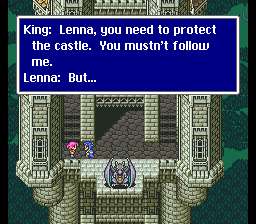

Since then, the fan translation scene has only grown and grown over the next few decades. If there’s a popular series that you enjoy, and one of the games in that series has not been released in English, the game has likely received a fan translation. Even though games are mostly released worldwide nowadays, there are still fan translation efforts that do things like revert localization changes or just rudimentary patches to play in anticipation of a game’s worldwide release.
Now then, creating a fan translation for a video game might seem like a simple task—after all, you just need to be a fan who knows how to translate it, right?
That’s actually quite far from the truth. In contrast to other fan-driven efforts like manga scanlations or anime fansubs, fan-translating video games is an insanely complex and difficult endeavor. It demands a unique skill set. Not only must you be proficient in both Japanese and English, but you also need expertise in game graphics manipulation, text modification, and in many cases, assembly language programming.
Consider an official translation process for a game. It typically involves a team of professionals, each excelling in their respective areas. There’s someone fluent in Japanese and well-versed in cultural references; a team of skilled writers; a marketing expert offering insights on adaptational changes; and a group of programmers capable of modifying in-game text and data. Add to that a graphic designer adept at tweaking game visuals, and you have a relatively swift translation project.
Whereas a fan translation is often done by some dude who, at most, has some background knowledge in programming, and has to learn how to do everything else by themselves. A lot of early fan translations are often criticized for being shoddy, but considering the circumstances, it’s not hard to imagine why they would come off as ‘low effort’ compared to an official project.

There’s a lot that goes into a fan translation, but going into depth about the different programming aspects and difficulties warrants a separate write-up and a half. Instead, this article will only cover relevant topics as they arise.
Another noteworthy aspect to note is that fan translations, like all forms of fan work, vary a lot from person to person. When translating text from one language to another, the words that the original author expresses can be interpreted in many different ways by the fans, especially when they lack contact with the original writers. This means that a translator or translation team’s thought process will inevitably manifest through the text and terminology used in a game or translation.
Different individuals may translate terms or interactions differently; one might prioritize consistency with other localized entries in the series, while another may lean towards staying faithful to the original Japanese text as much as they can. Yet, another translator might aim to enhance elements where the original Japanese game fell short to better portray the original intent. Even translations that aim to be completely faithful are often just one person’s subjective perspective of what is considered faithful.
Despite popular belief, Fire Emblem actually did have a following before the localization of FE7 and even before Super Smash Bros. Melee. It was very small, granted, but it existed! At the start, the main method of conversing with other fans was Usenet; then over time, things shifted to Yahoo groups, then dedicated forum sites. Said forums were mostly dedicated to Genealogy and Thracia. Gaiden and FE1 didn’t get too much attention, but in the case of FE1, FE3 was still moderately popular, and most people’s experience with the War of Shadows came from FE3 Book 1.
A lot of the fans were mostly otaku who liked Nintendo as well as more niche JRPGs, and as FE4 was the most popular game at this time, marriage and inheritance were popular topics. Not to mention, a lot of shipping discourse existed at the time, and sometimes it even got a bit heated.
Having said that, it’s not like there was absolutely no FE content ever released to the West before 2003. In 1996, there was a two-episode OVA based on Book 1 of FE3, produced by Studio KSS and Studio Fantasia. In 1997, this OVA was dubbed into English by ADV Films, making it the first licensed Fire Emblem media to see an official release outside of Japan.
Apart from the OVA, the Nintendo Power August Edition of 1996 makes mention of the series in Japan, with FE4, the newest game released at the time, being heavily promoted.
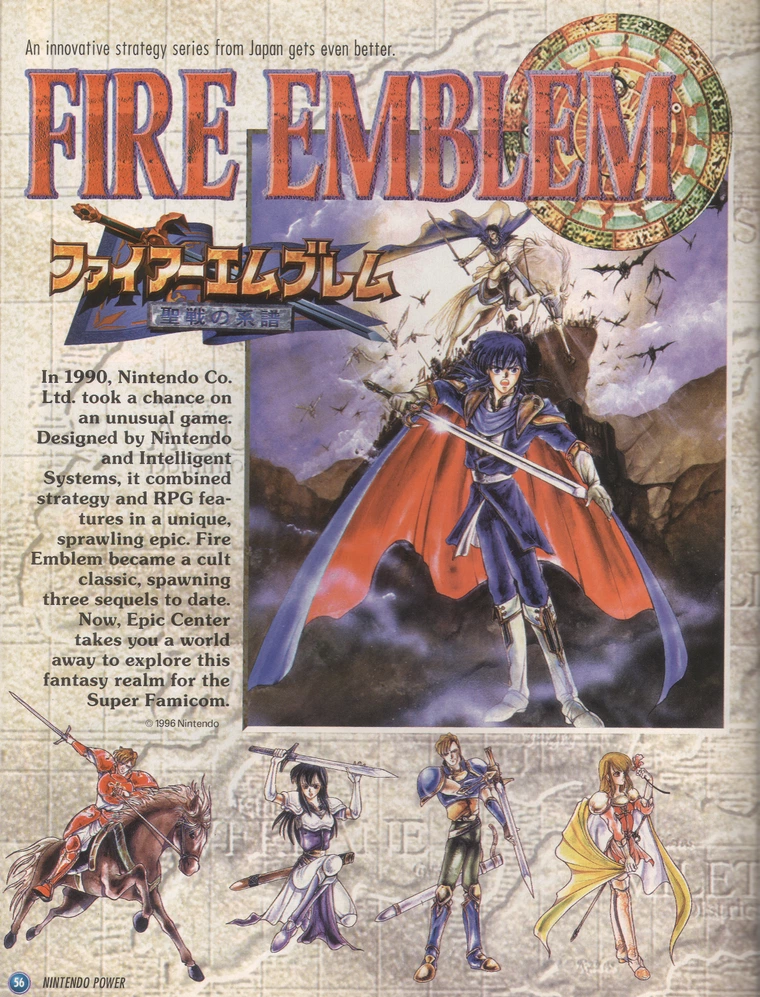
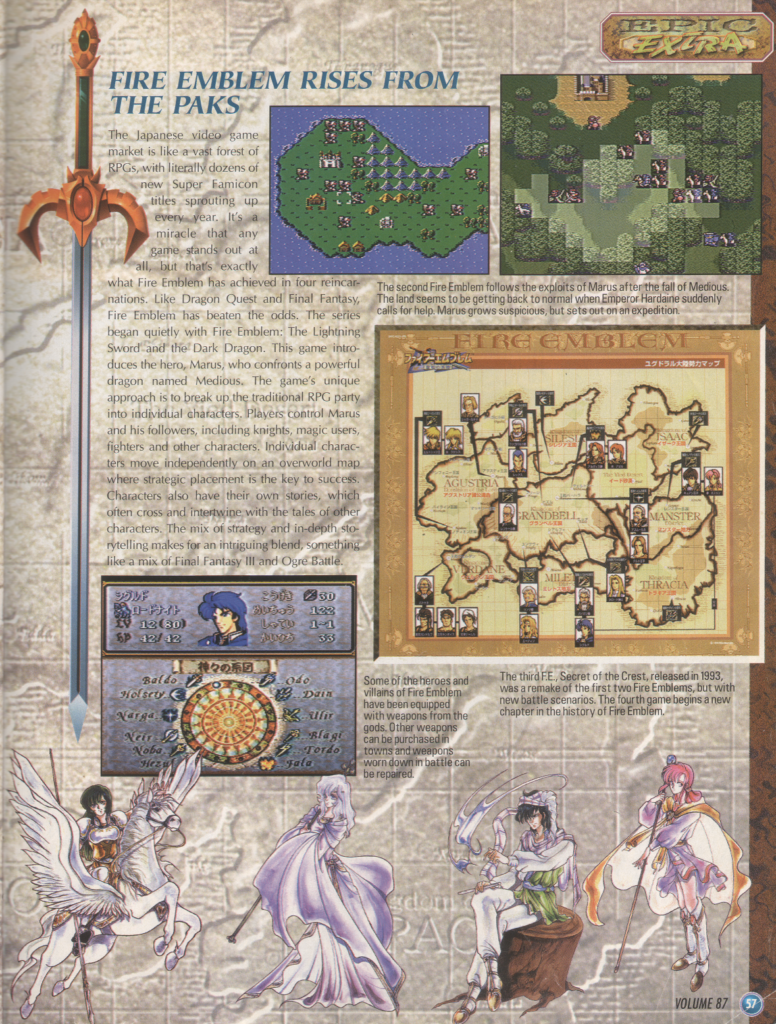
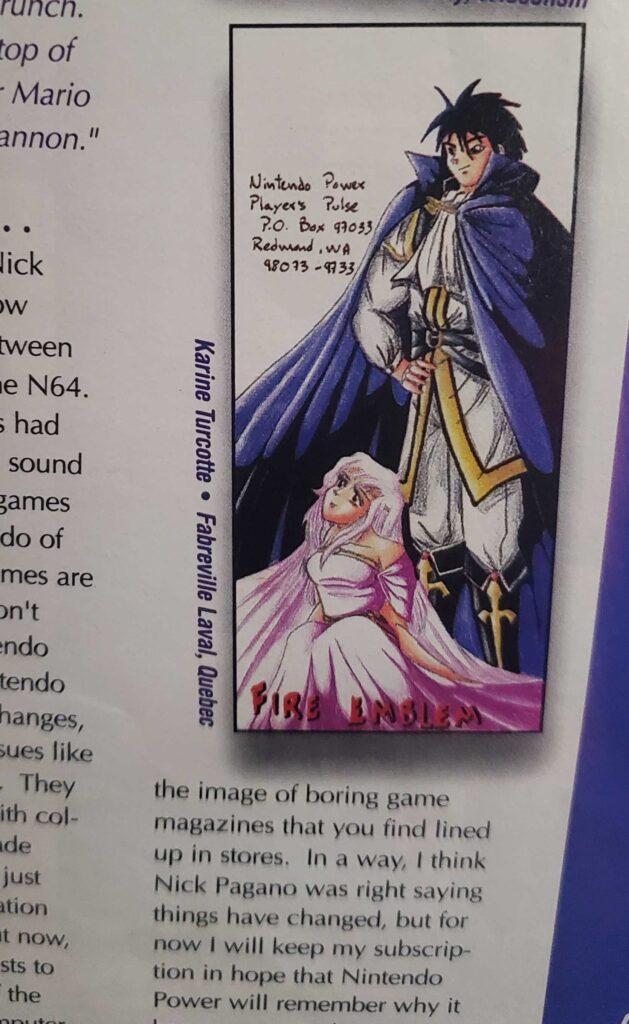
The small fanbase was vocal enough to even have art of Sigurd and Deirdre featured in the March 1997 issue of Nintendo Power.
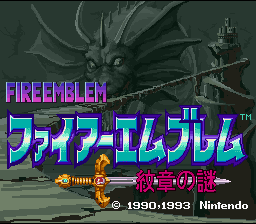
Anyways, a lot of the English patches that came out at this time were more on the rudimentary side due to the lack of resources at the time. The first publicly released fan translation of a Fire Emblem game was a FE3 English patch back on December 9th,1999. This translation was done by a group aptly referred to as Fire Emblem Translations. This fan translation only translated dialogue up to chapter 5, and none of the menus were touched. However, this was one of the few FE3 fan translation patches, and one of the few SNESFE patches in general, that included a modified title screen.
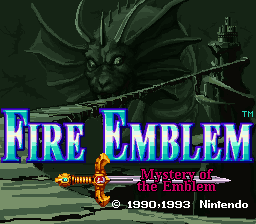
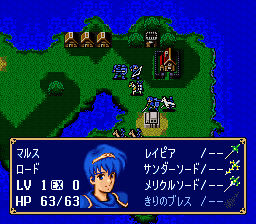
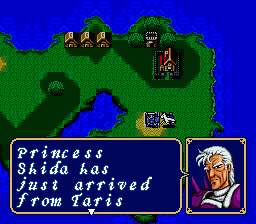
Later that same month, on the 17th, Fire Emblem Gaiden also received a fan translation of its own; this one was done by J2e. Fun fact: J2e did fan translations of a lot of games from 1998 to 2004, with games including Final Fantasy IV and Super Puyo Puyo 2.
This FE2 patch is commonly joked about in online spaces for the names used, such as “Kreb” for Clive—emulating the Japanese romanization of the name—and “Bird” for Robin—used as a shorthand since Robin exceeded the name limit. For some reason, they refused to use “Robn.” Because of this, this patch would commonly be known as “The Bird Patch” in online spaces.
But besides that, many other names were also shortened due to space limitations, like Celica’s name being shortened to Celic—with the li using up one bigram—Catria, aka Katua (カチュア lit. Kachua) in Japanese, being shortened to Catu, and Saber’s name not even loading properly, because the translator forgot to make his name four letters.
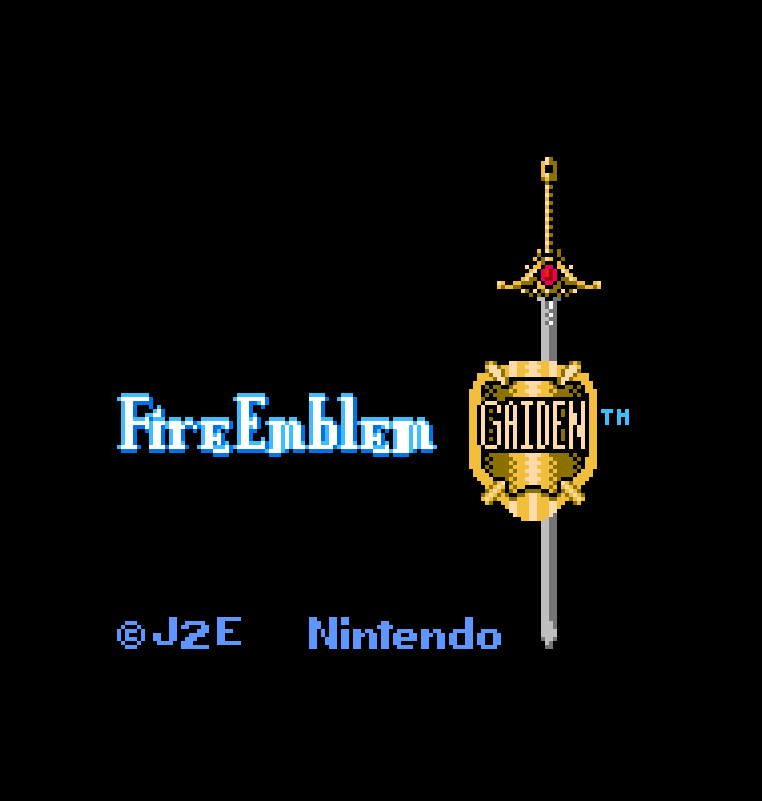
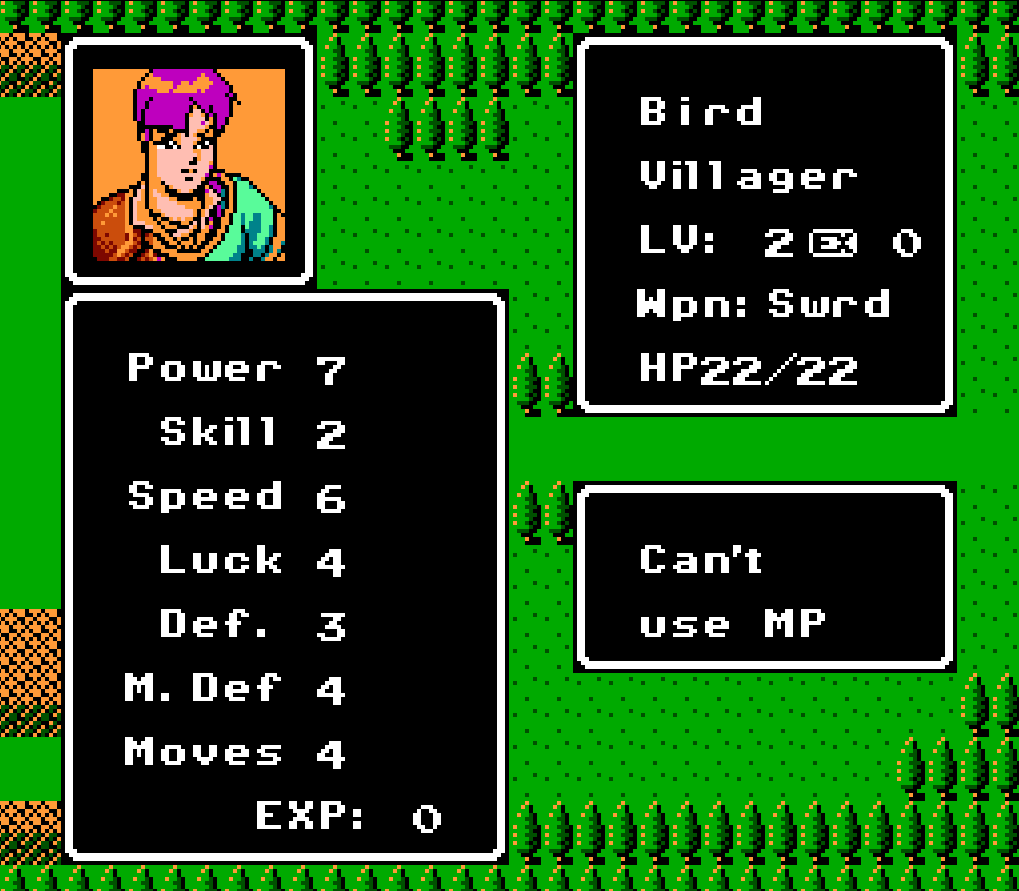
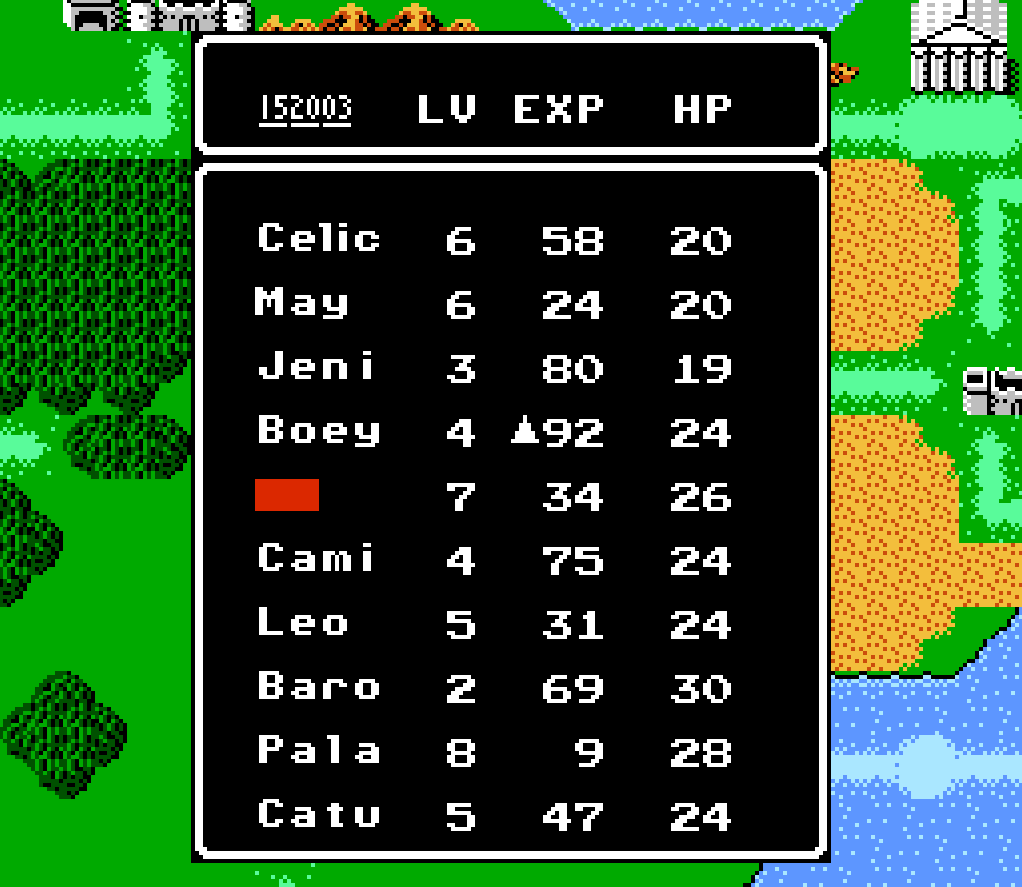
Apart from just the names, though, the overall presentation itself looked a bit substandard and buggy. There were a lot of odd grammar mistakes; numbers and punctuation were misaligned with letters, and a lot of the text wasn’t formatted correctly, displaying what I assume to be placeholder hex values.
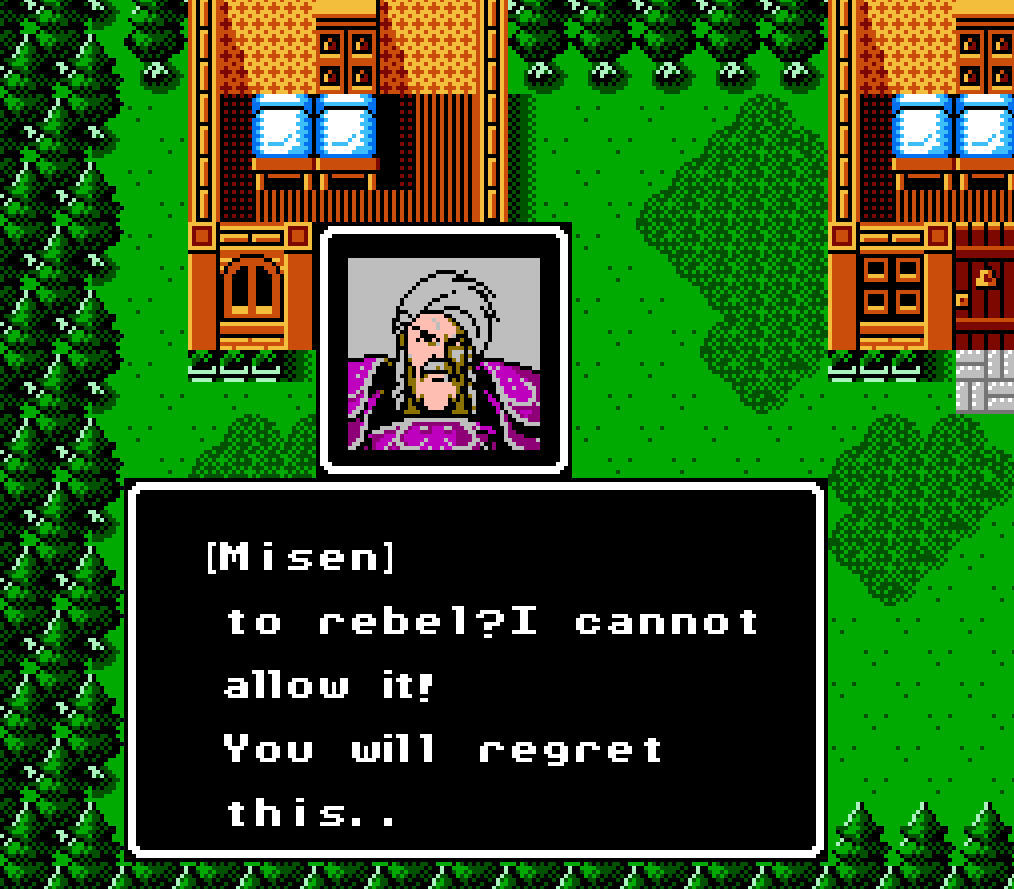
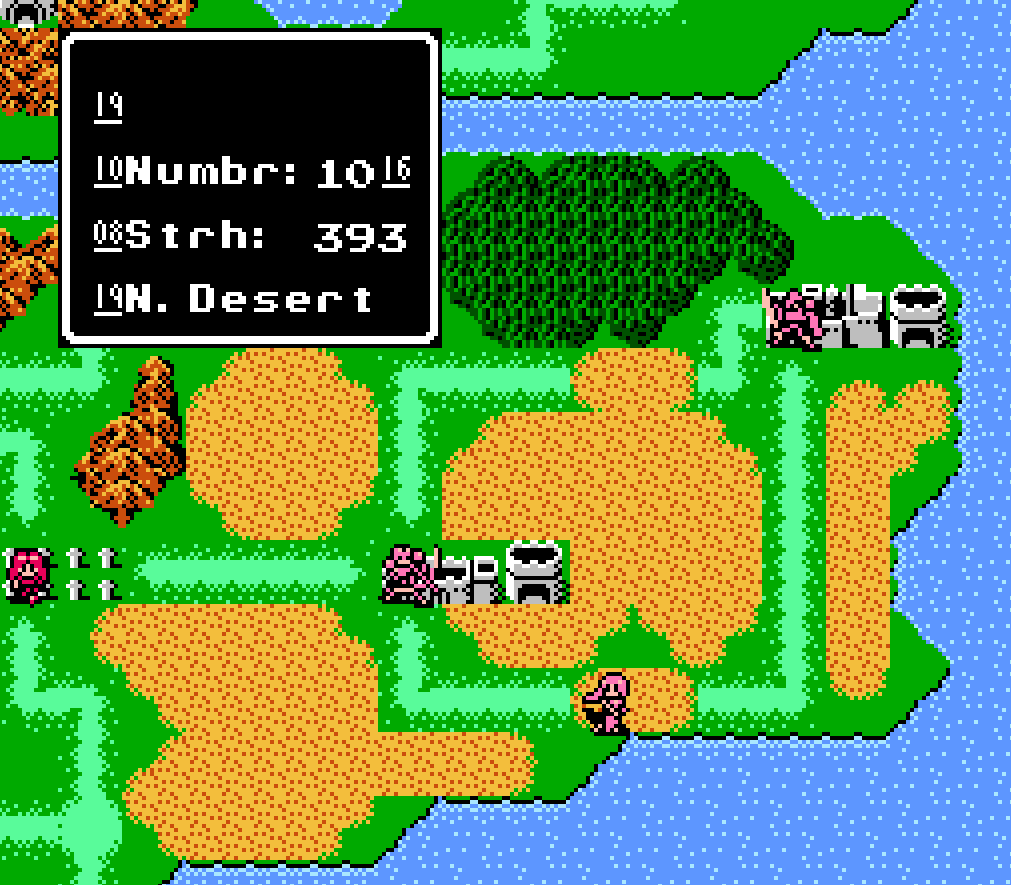
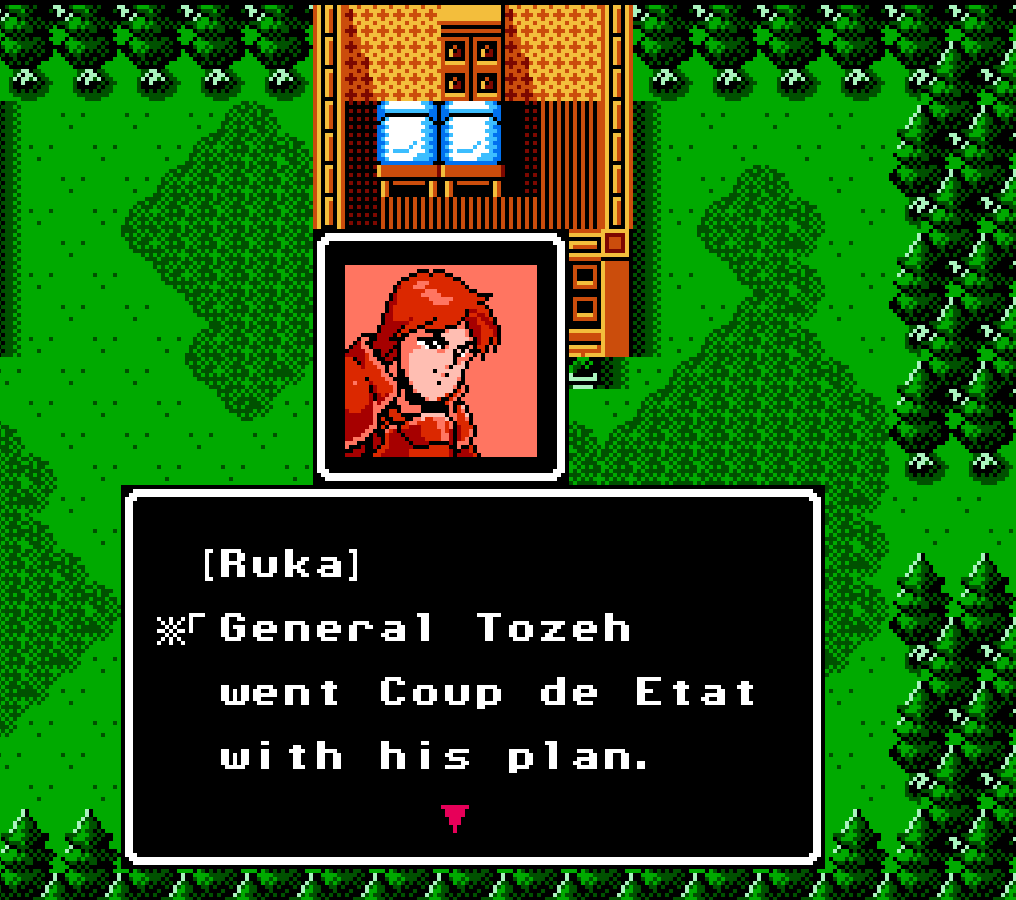
This translation, like a lot of older fan translations at the time, had a lot of bugs and glitches and even crashes on occasion; however, in 2006, a user by the name of Starwolf released an addendum patch that fixed some of the bugs.
In May of 2000, the first game, Shadow Dragon and the Blade of Light, received a fan translation by Gaijin productions. The group was made up of users Musashi, Bokudono, recluse, Rom/Unicorn, Dave, and Look4sheep, and they even had their own website here.
This patch featured a spiffy, unique text font, and it translated all the menus and most of the battle text. Unfortunately, in terms of dialogue, the text was only translated up to chapter 2. The original translator of this project would end up disappearing off the face of the internet, and interest in this project would end up dying out.
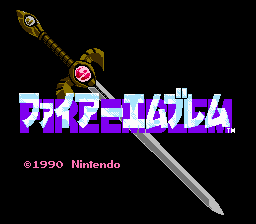
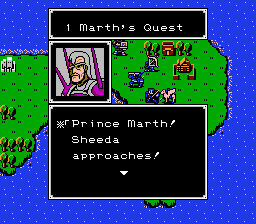
In May of 2002, there was another FE3 patch released by Fallen StarTranslations. Unfortunately, this project died very early on, and it didn’t translate much outside of some menus. This patch was notable considering it was the first, to my knowledge, that was released after the release of Super Smash Bros. Melee.
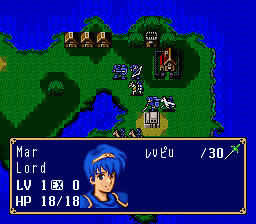
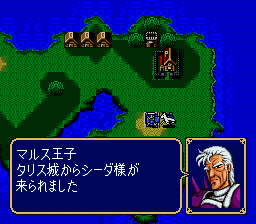
Marth’s name is displayed as “Mar” in this menu because マルス takes up three character slots, and when he gets the Fire Emblem in Chapter 5, the icon for that takes up the fourth character slot. It took hackers up to 2016 to find out how to get the Emblem icon to appear in the sixth slot, so that “Mar” could be extended to “Marth”
In October of 2002, Fire Emblem: Genealogy of the Holy War received its first fan translation by j2e translations, once again. This project was originally conceived in 2000, but it never reached completion until December 2001.
This one is pretty notable: FE4 was much more text-heavy compared to previous games. Despite that, the translation was surprisingly polished. This patch is also interesting in the fact that its development has been recorded. The user, bookofholsety, another translator who will be mentioned far later, managed to get access to the readme from the original patch before it was lost to time and discusses it on his blog site along with other FE4 patches.
According to bookofholsety, the project started as a six-person project, but over time, the project was eventually worked on by just one guy named Jay. Later on, someone else by the name of Boo joined the project and became the head translator of the project, and they formed their own branch group called j2e renegade in 2001.
❝Jay put out a call for ROM hackers to assist him with the project which promptly went unanswered, so this leg of the journey basically ended around December 2001. Their last release was eventually put up on their site (mirrored on RHDN in October 2002), and while i can’t find any surviving archives of the page to verify this, multiple sources say it was accompanied by a warning saying it was “not to be enjoyed” because of its incomplete state.❞
The development of this first FE4 patch was very rough, but it miraculously managed to get released. It is also important to note that Jay and Boo’s script and hacking tools became the foundation for future FE4 patches, before the Project Naga patch, by Bookofholsety in 2016.
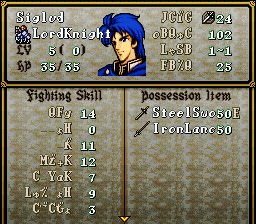
An interesting aspect of this patch is that Boo, while working on the script, predominantly drew character, location, and item names from the Fire Emblem Treasure artbook from 1999, which is where names such as Siglud, Skasaher, Leaf, and Celice come from.
Interestingly, the older J2E builds didn’t use Treasure as a reference, and because of that, the interpretations of the names were mostly a mixed bag. You had names like Leif and Ares, which were more sensible and would later become their official names. Then you had more quirky interpretations like Couple, Sukasa, Deu, and Jolaver.
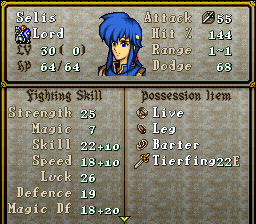
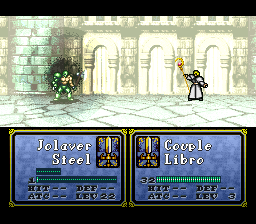
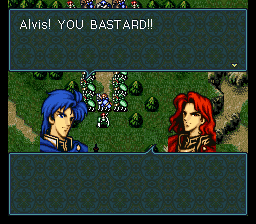
In November of 2002, another FE3 patch was made by Blaxor. Like the one made by Fallen Star, this one doesn’t have much to show. This one lacked menu translations, and it only translated dialogue up to chapter 3.
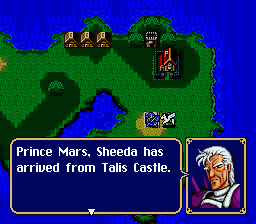
After this, in 2003, the fifth game of the series, Thracia 776, got its first fan translation. Released by Luxifer Angel, with the help of lehung, asdfgh, and Summer Wolf. Before recently, Thracia 776 was known as a game notoriously difficult to hack, so this was impressive at the time. This patch mostly focused on translating menus and did none of the dialogue.
This patch also had both English and Vietnamese fonts, and is known by a lot of people as the “Big Iron” patch. It was referred to as such because Iron Blades were referred to as Big Iron, but later changed to Claymore in v.0.2
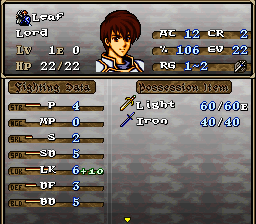
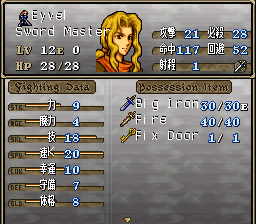
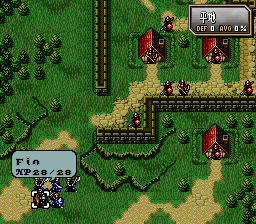
Two years later, in April of 2005, Thracia 776 received yet another translation project with a translated script, but untranslated menus. This one was done by a team called…Thracia 776 Translation Project. The dialogue is translated up to Chapter 5, but it’s important to know that this patch uses the same font used in a later popular patch referred to as the Shaya patch. Looking at the romhacking.net profile of this team has the following description:
❝The Thracia 766 Livejournal was organised by ‘VincentASM‘ from the UK, an administrator at Serenes Forest, and ‘angeling‘, but was ended in Sept 09, 2005 before their translation work on that SFC strategy game would be completed. It was passed onto another unknown person. That script was then shared online to the old FESS (’Fire Emblem: Sanctuary of Strategy’ Forums).❞
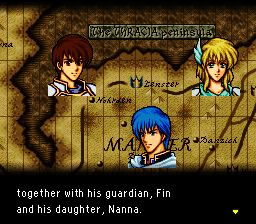
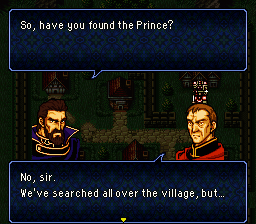
So, the Middle Ages is a term coined to describe the period between the releases of FE7 and FE13. This was a formative period for both the fandom and the series itself. While the games were gradually being localized into English, the series’ overall popularity experienced a noticeable decline, beginning with FE9 and continuing until the release of Awakening.
At the time, GameFAQs was the primary hub for Fire Emblem discussion, as it was for many gaming communities. It was on the GameFAQs boards that rumors began circulating about a possible English localization of Fire Emblem: The Binding Blade. However, at the time, FE6 was generally known among English-speaking fans as Sword of Seals, based on the name used for Roy’s trophy in Super Smash Bros. Melee.
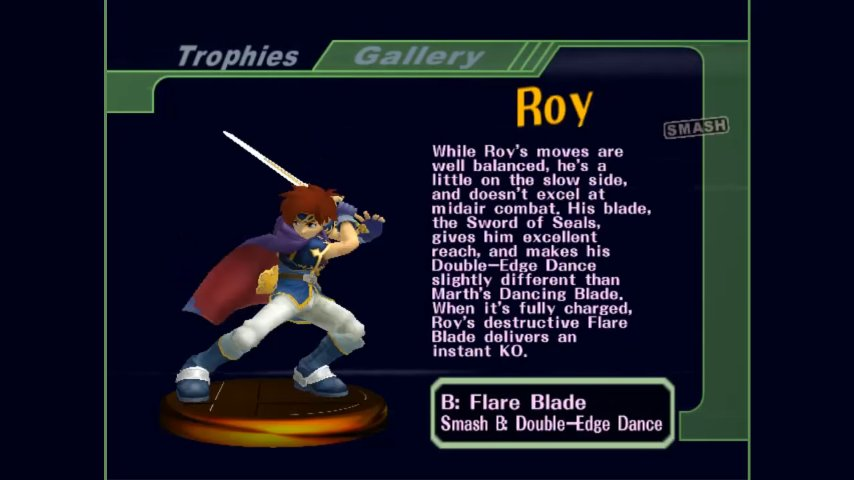
Sword of Seals would eventually become the namesake of FESS, short for Fire Emblem Sword of Seals, a German Freewebs site subtitled The Mamkute from 20,000 Fathoms, with Fae serving as its mascot. FESS was primarily an FE6 discussion site, where fans gathered in anticipation of the miracle that would be the game’s localization.
Then, uh… the “miracle” never happen.
❝People hoped for years that Nintendo would deign to release Fire Emblem 6 Fuuin No Tsurugi (FE6) on shores outside of Japan.
They didn’t.❞ – The DTN Translation Division
With an official localization seemingly off the table, ROM Hackers got to work and developed an English patch for FE6. This patch was done by Dark Twilkitri Net Translation Division, which was made up of users Twilkitri, PrinceLeaf, DarkSlime, kyuusei, Eaichu, and Jey Enduro, with Firelizard and Rosa Aquafire providing a translated script.
This patch wasn’t perfect, but at the time it was notably impressive, and many patches for other games that were released afterward aimed for the same level of polish. This project was first released in 2005, with development continuing up until 2007, when the members found less and less time to work on the project and motivation died out.
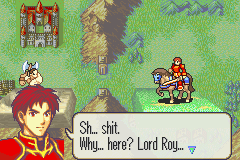
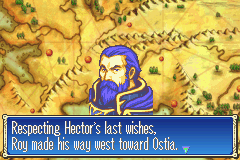
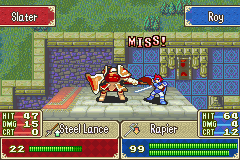
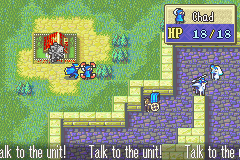
By this point, FESS had grown beyond its original role as an FE6 discussion board, becoming one of the major hubs of the English-speaking Fire Emblem community. The site itself was renamed from Sword of Seals to Sanctuary of Strategy, allowing it to retain the FESS acronym. Aside from that, FE Planet primarily served as a graphics hub, while FE Fusion focused on information and resources. Of the three, FESS was generally considered the more civil hub, while the other two had reputations for toxicity and frequent infighting.
The fan-translation scene continued to develop alongside these communities. In August of 2007, FE1 received another fan translation, this one by DarknessSavior and KingMike. This one only translated the menus, but it also featured a unique text font and a double-line patch implemented by KingMike in order to allow more text to fit in a single text box. It’s a bit of a shame that this patch didn’t go too far, considering the pretty font and the interesting method of rendering text.
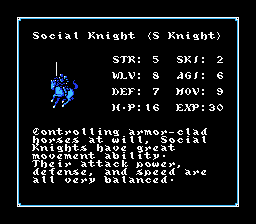
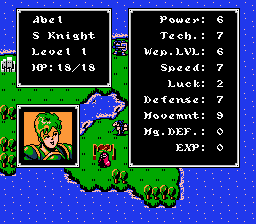
Unfortunately, 2007 would also mark the beginning of FESS’s final decline. The site had already experienced its fair share of toxicity and drama, but the final straw came late that year. A controversial moderator was demoted, only for a friend of his who was still on the staff to secretly reinstate him without the knowledge of the other moderators. The two effectively crashed out and went on a rampage, deleting boards and tearing the site apart. The remaining staff eventually IP-banned both of them and restored the deleted content.
Although the immediate crisis was resolved, much of the damage had already been done. In 2008, FESS’s chief moderator, Superbus, decided to shut the site down.
The fall of FESS marked the end of one of the earliest major eras of the Fire Emblem online community, but its members and influence didn’t simply disappear. The community branched out into other hubs and sites, including Fire Emblem: World of Dragons (FEWOD), a comprehensive Spanish-language information hub that remains useful even among English-speaking fans today.
Another major successor was Serenes Forest, created by FESS alumnus VincentASM. Today, it is arguably the most well-known independent Fire Emblem fan site.
Originally, Serenes Forest was a personal website for VincentASM’s indie game project, Angel Sword: Memories, before eventually being transformed into a Fire Emblem database.
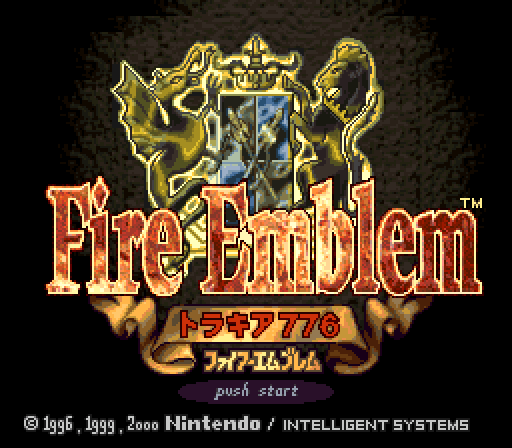
The fan-translation scene continued to move forward as well. On March 2nd, 2008, FE5 got a third fan translation—and probably the most infamous one of this post. If you’ve played FE5 at any point before 2019, there’s a good chance that you played using this patch. In fact, this patch is how I first played FE5.
This patch is referred to by most people as the Shaya patch, named after its creator, Shaya. This patch uses a script written by FireLizard, while Shaya did the insertion work and hacking.
The Shaya patch gained notoriety due to its questionable level of polish. While many prior patches lacked refinement and were objectively inferior, the Shaya patch was the only one that was actually playable to completion in English. It had enough polish for players to understand the game’s story, albeit with some errors. As a result, since many people played the game using this patch, its issues are more widely recognized compared to others.
This patch suffered from numerous untranslated text segments, notably within the menus and epilogue. It also exhibited errors such as text displayed in the wrong locations, dialogue loading incorrectly, and even instances where the game would outright crash when hovering the cursor over specific Mercenaries in chapter 24.
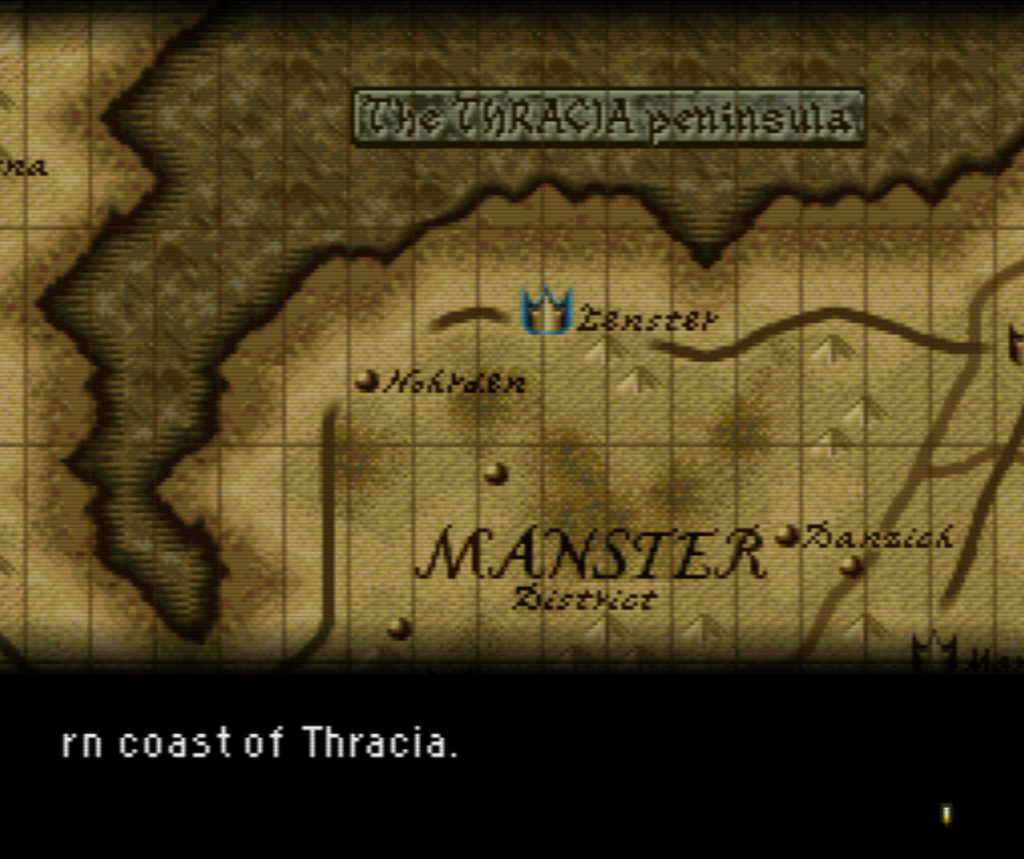
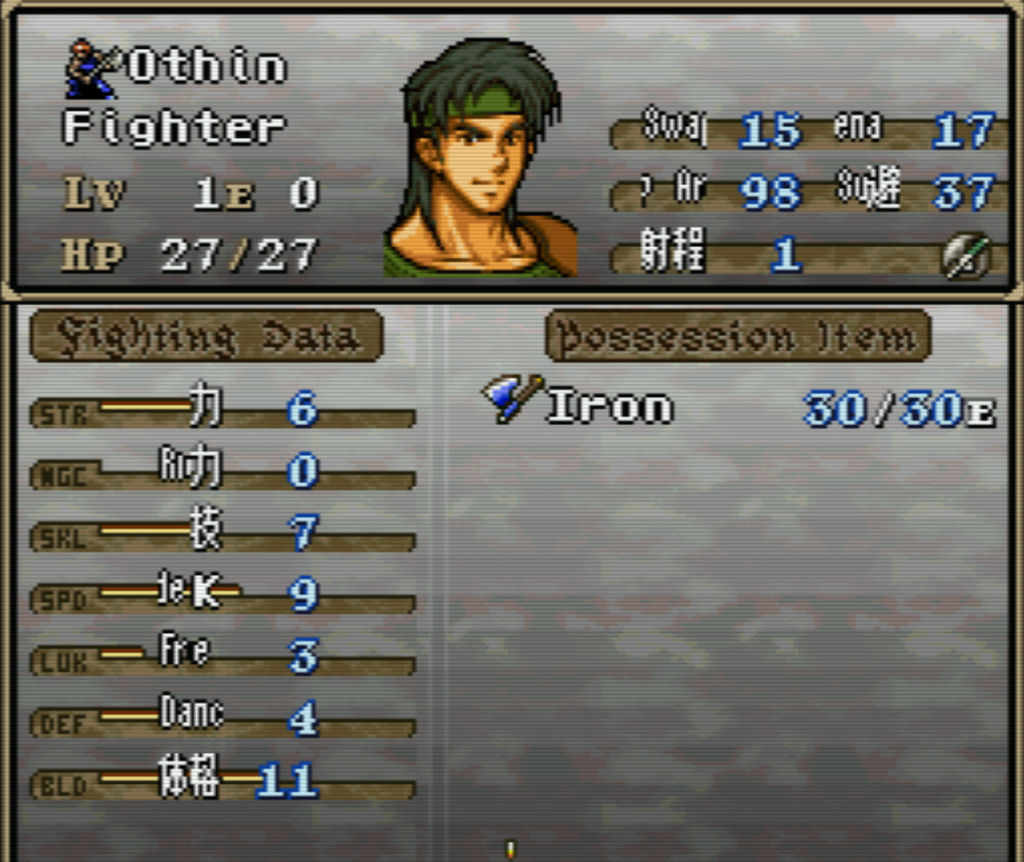
In modern times, FE5 hacking has advanced significantly, and now the Shaya patch is relegated to being the subject of memes and jokes. However, it undeniably played a pivotal role in the progression of FE5 hacking, and its creator’s insights were invaluable. Nevertheless, it’s common nowadays for people to recommend newer patches over the Shaya patch.
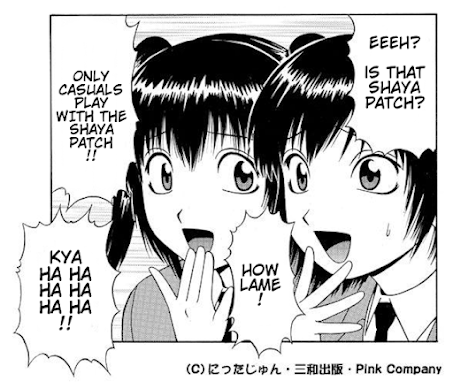
Many of the FE5-related memes come from the Shaya patch due to the abundance of garbled text and inappropriately placed references added to the dialogue. The funniest example is Kempf, an enemy boss, referencing Bandit Keith from the Yu-Gi-Oh! Abridged series. Apparently, there were rumors of an update patch that aimed to rectify these errors, which was supposedly uploaded on a now-defunct website. However, there is no evidence to support this outside of word-of-mouth.
According to the readme file of the patch, Shaya, the creator, began his university studies (and has presumably graduated by now) and has not actively worked on FE5 since the initial patch release.
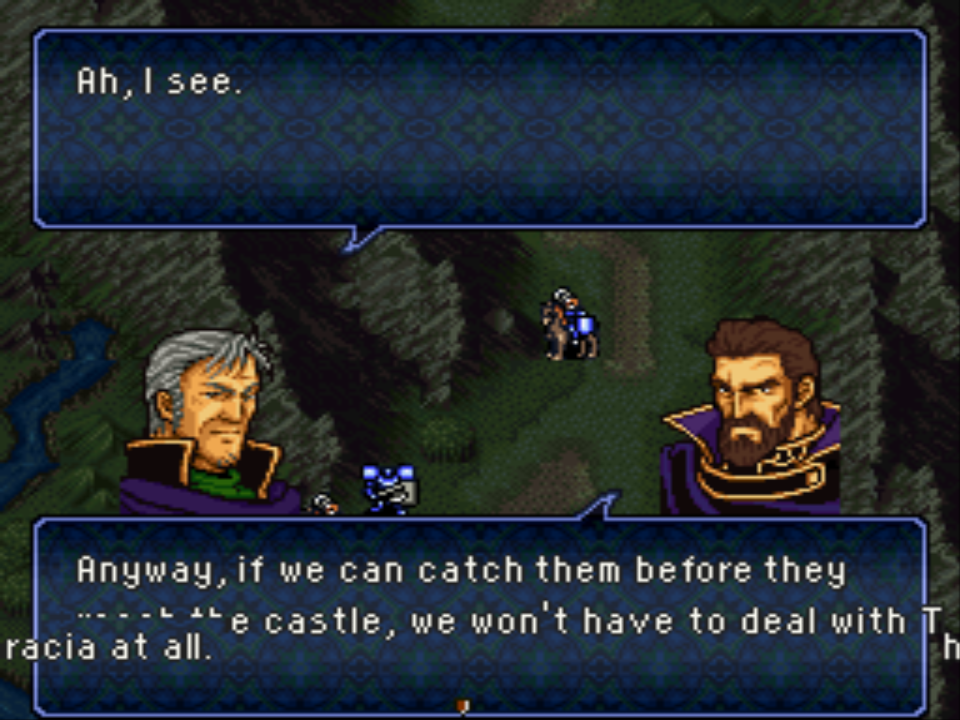
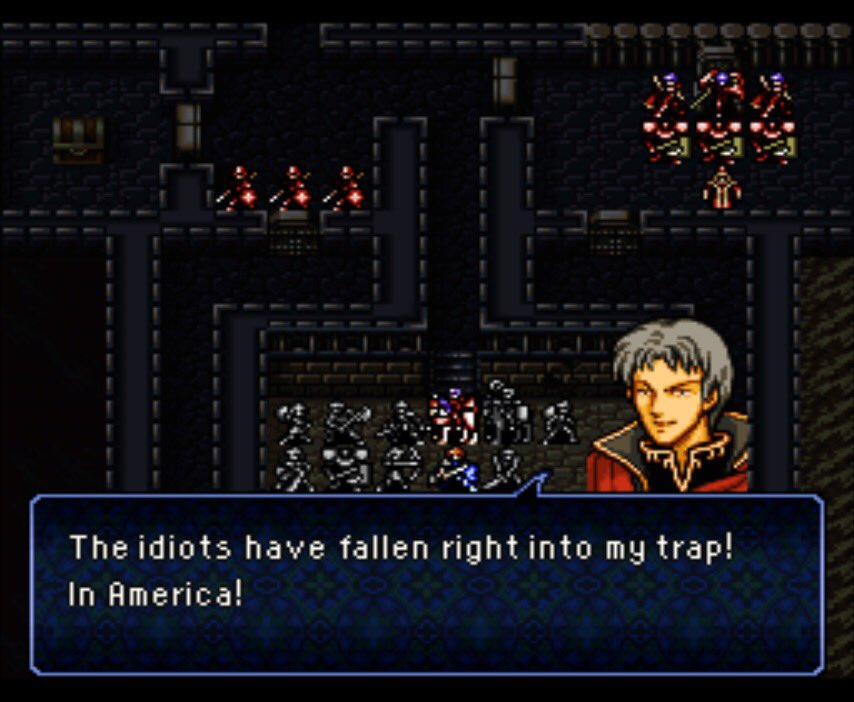
On August 8th, 2008, a user known as aznanimefreak1 on GBATemp released a basic menu patch of FE11 in anticipation of the release of the localized game. There isn’t really much else to say about it, however.
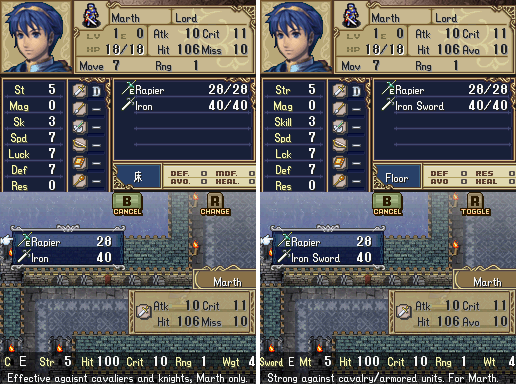
Shortly after, FE3 finally received an English patch that had its story translated in full. This patch was made by RPGuy96, using a script provided by VincentASM. Similar to the Shaya patch, this was the patch I used when I played FE3 for the first time and was many people’s first way of experiencing FE3. However, this patch was far from perfect; there were some notable issues, like some menu text being untranslated, Abel’s recruitment with Est not being translated, the opening crawl being completely incomprehensible, and a bug in which using the Geosphere in Book 1 will end up crashing the game. That said, the game was still playable, with the major details understandable enough in English.
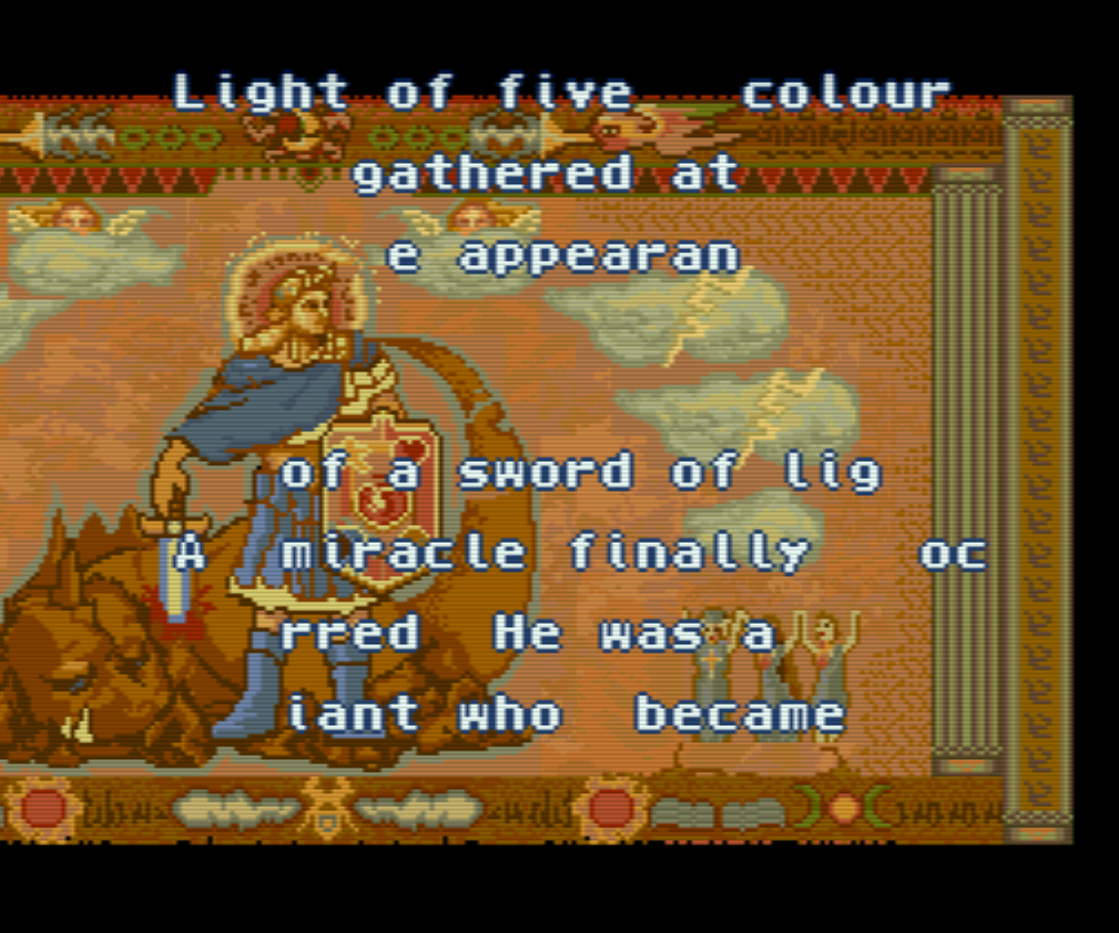
Many of the names and terms in this patch were taken either from direct romanizations of the Japanese names or from names found in Japanese artbooks. Examples include Biraku, Mediuth, and Oguma. Some of the quirkier romanizations, particularly those that were clearly mistransliterations of English names or sounded unnatural, were instead retranslated.
For example, Jorjue became George, Seazer became Caesar, Gohdon became Gordon, and Rolence became Lawrence. Additionally, as VincentASM is from the UK, the patch uses Commonwealth English, such as spelling “Armor” as “Armour” and “Defense” as “Defence.”
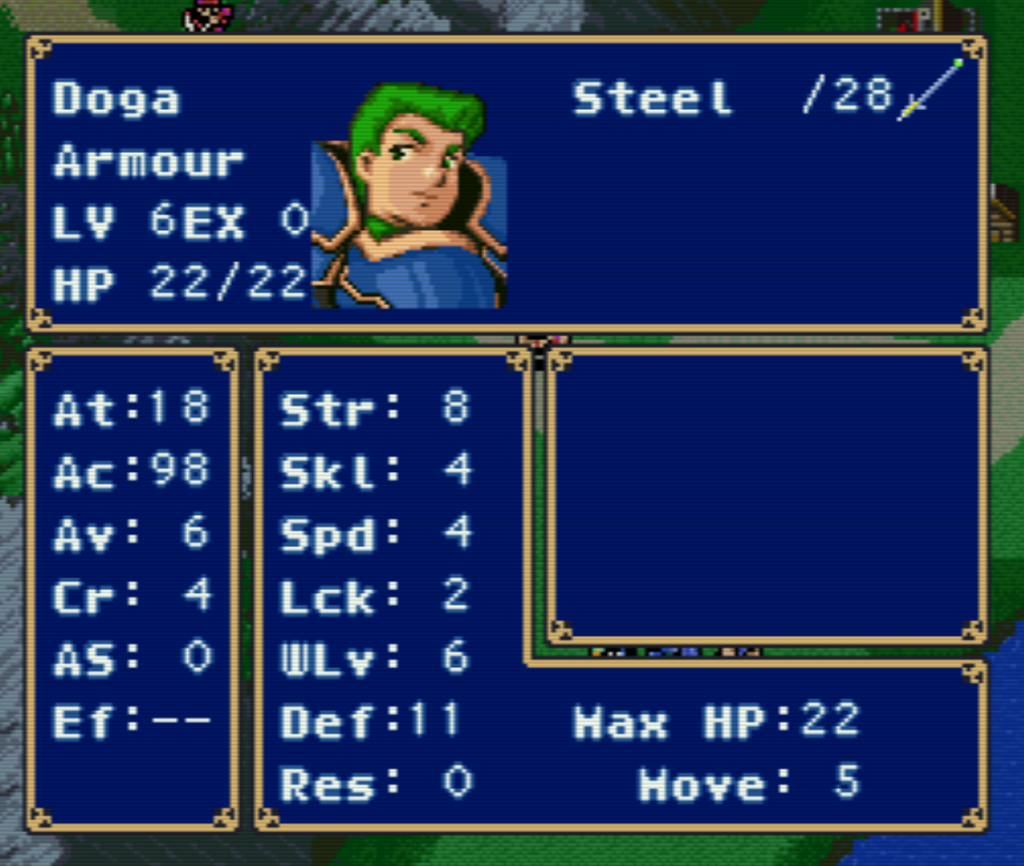
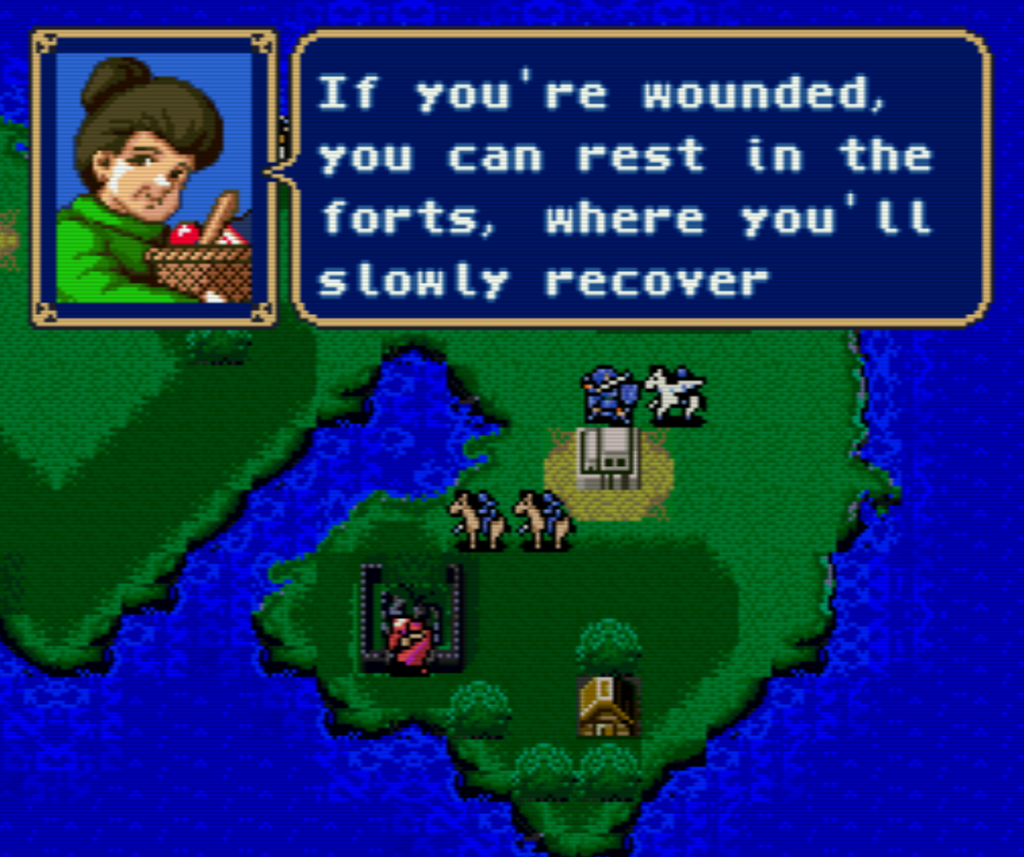
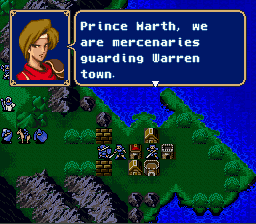
While some of the dialogue can come off as stiff or stilted, Vincent made some changes to make the text feel a bit more natural, although these are relatively infrequent. One example I remember is that Luke’s ending mentions that he became a ‘playboy,’ whereas the Japanese version simply used “Jobless Man.” Another example is in the Ageless Palace chapter, in which Boah mentions that without their weapons, they’re “sitting ducks,” while in Japanese he just says that there’s nothing they can do to fight back.
Nonetheless, VincentASM’s script laid the groundwork for all subsequent FE3 patches, served as a reference for Quirino’s later FE1 patch, and became a valuable resource for Polinym’s FE1 patch.
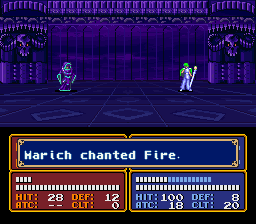
Around 2009, FE2 would get another English patch through the efforts of Artemis251. Like the previous FE3 patch, this was the first time FE2 got a fully functional English translation, translating both the dialogue and menus. This patch uses a script written by Shimizu Hitomi and reuses j2e’s font.
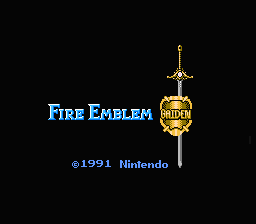
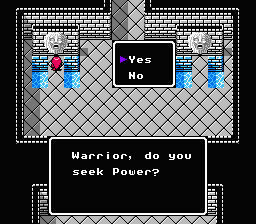
The in-game script, unfortunately, was a bit rough around the edges because there is very little available space in FE2’s ROM. This disallows very in-depth strings for conversations, resulting in a lot of the dialogue being truncated and sounding awkward. However, this patch did heavily use some techniques which made it easier to fit text in.
One of these techniques is bigrams. Basically, text characters are stored in 8×8 blocks within a game’s ROM. Since there are fewer English letters than Japanese kana, the remaining unused Japanese character slots are repurposed to store condensed letters as single-character blocks.
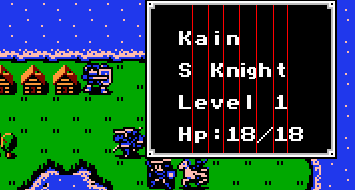
For example, in the image above, take a look at the ‘ig’ in ‘Knight.’ It’s actually two letters compressed into a single character block, rather than having ‘i’ and ‘g’ as separate characters. This allows the name to fit within 7 characters instead of 8.
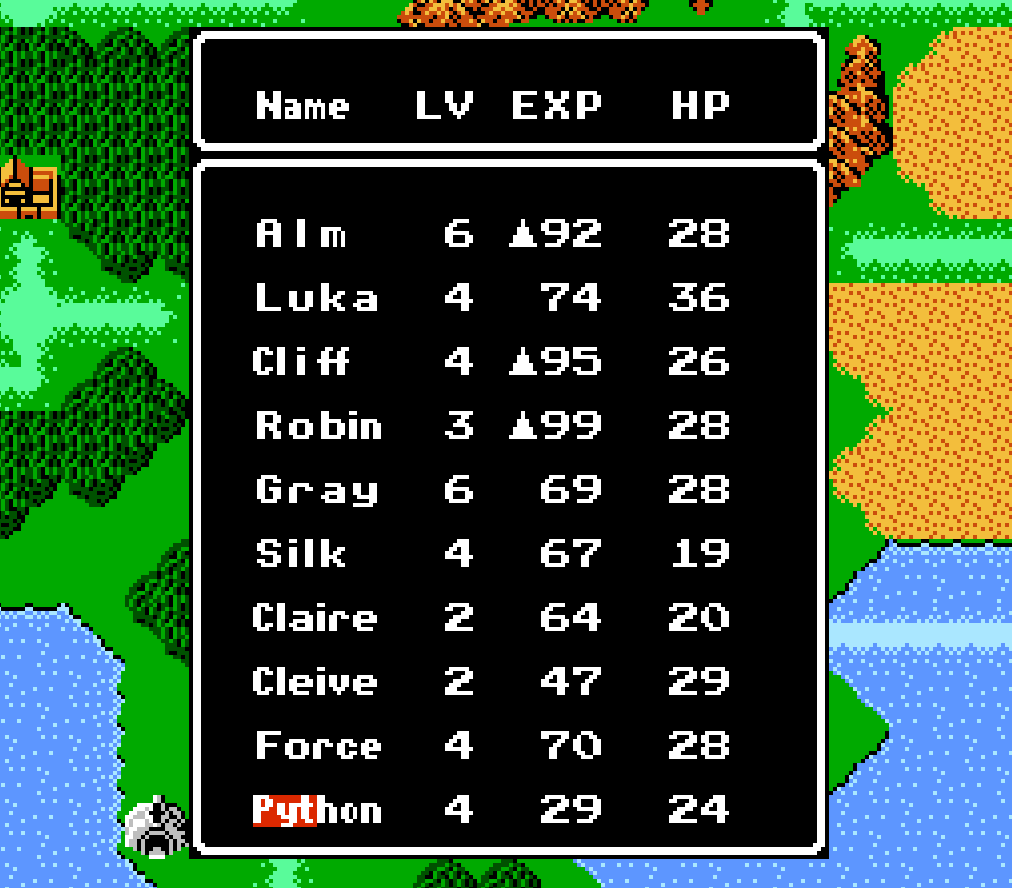
In most games, this technique is predominantly used for narrower character combinations such as “il,” “ll,” or “li.” In the case of FE2, however, this method was virtually essential, as playable character names are limited to four characters, while class names can only be around six characters before they begin causing issues with text boxes. In the screenshot above, bigrams are used to fit the word “Name” into three spaces by squeezing “ame” into two. The “Cl” in Cliff, Claire, and Cleive’s names is similarly compressed into a single character. You can also see “il” used in Silk’s name and “in” in Robin’s. Python takes this even further, with his entire name compressed into just four characters… Hacking this game is not fun.
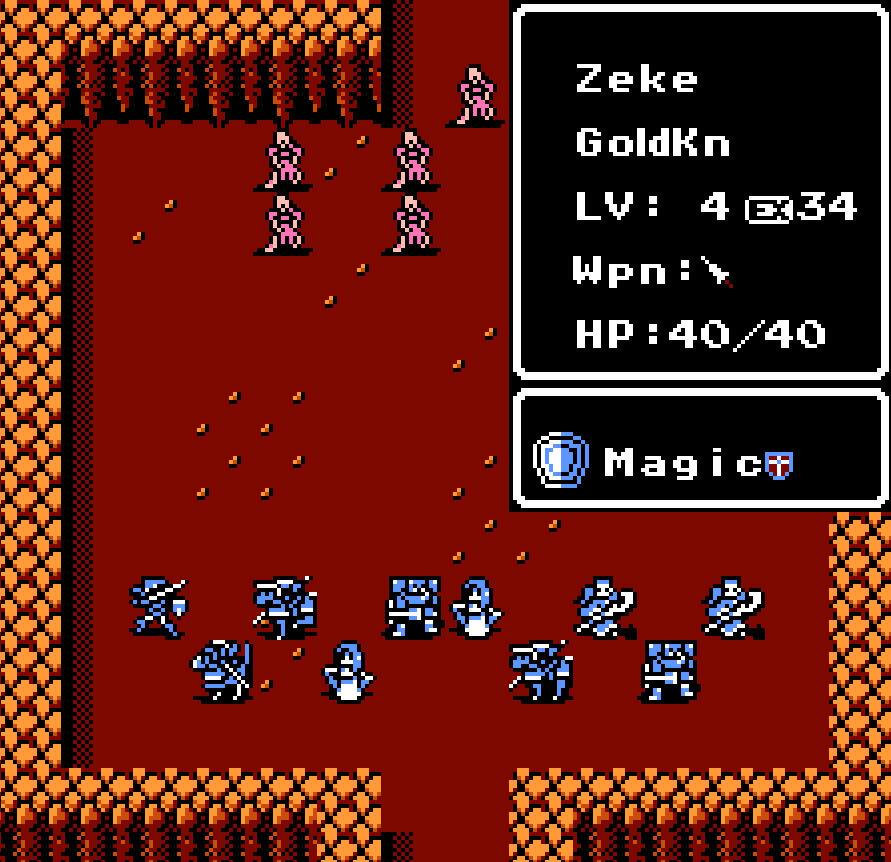
Another technique used is using Icons as Item Names. In the image above, you can see Zeke with a Magic Shield. In Japanese, this item is called まほうのたて (Mahou no Tate) or Magic Shield, which takes up seven characters. In English, “Magic Shield” takes up 12 characters, which goes far beyond the character limit. So, to get around this, the patch has “Magic” written in English text and uses one of the unused extra slots to make a little shield icon to signify that it’s a shield to get around this limitation.
Like with VincentASM’s patch, Artemis’ patch used names present in official romanizations, while some of the more unnatural romanizations, or ones that were clearly mistransliterations of English names, were instead retranslated. So the name Paison was retranslated as “Python,” Fols was rendered as “Force,” and Clea was changed to “Claire.”
Though some bosses almost had the opposite treatment, like the boss Lawson was renamed Loso in the game for space reasons, and Zakson was shortened to Zack.
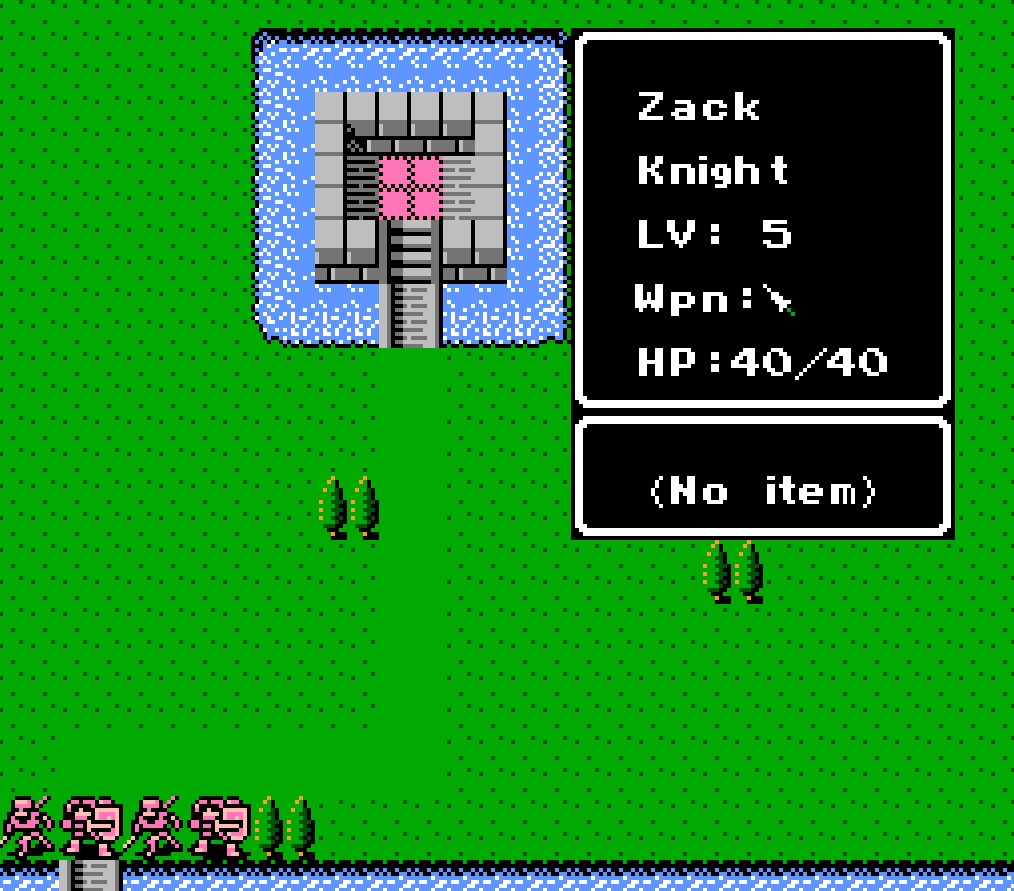
Additionally, being translated after FE7’s localization meant that this patch would, for the most part, use names that were consistent with previous localized games at the time. So, Swordfighter became Myrmidon (Myrmid in-game), and Knight became Cavalier (Cavalr in-game).
Though I say “for the most part” because classes with longer names, like the Revenant class, retained the Japanese name, being “Zombie.” Additionally, Celica’s Princess class was renamed to Royal, since Princess couldn’t fit within the space limitations. Because of this, the Royal Sword was renamed to the Regal Sword.
In a similar vein, the Speed Ring was renamed to the Quick Ring to reflect that the name of the ring in Gaiden (はやさのゆびわ lit. Hayasa no Yubiwa) differs from the stat booster present in other games (スピードリング lit. Supīdo Ringu). The boss Garcia was renamed to Garcie to avoid conflict with the Fighter in FE8, and the boss Geese (Greith in Echoes) was renamed to Geyse to avoid conflict with the Pirate in FE6.
There are also some issues where some class names would be outright wrong, like the Fiend class, which was called “Majin” (Demon Man) in Japanese, being translated as “HiKnight” (Short for High Knight), which removes the nuance of it being some kind of evil or demonic entity. Though this appears to be the result of a mix-up of name strings, as ハイナイト (Hai Naito) was the name of an unused class.
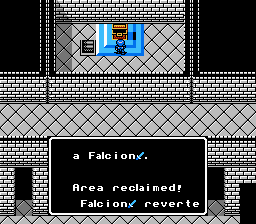
There was also another mistake where you’d get an error message saying “Area claimed, [item] reverted.” when you tried to open a chest when your inventory was full, which, as you’d expect, is supposed to be a message telling you that your inventory is full. Errors aside, this patch would serve as the foundation for all future FE2 patches.
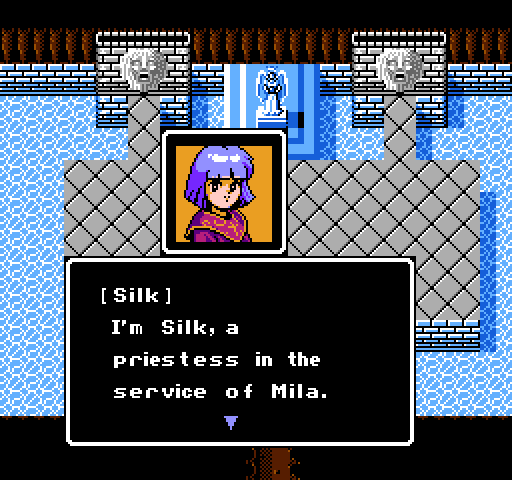
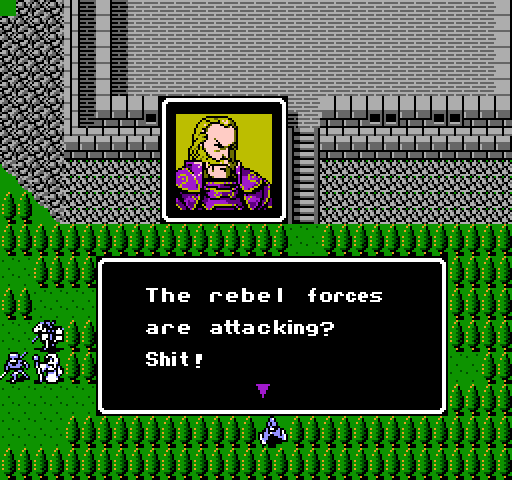
In 2011, FE1 received a completed fan translation as well. This patch translated all the menus and most of the dialogue. This patch was done by Quirino, who stated that he initially wanted to play through every FE game, but as he couldn’t read Japanese and there were no completed patches at the time, he took it upon himself to translate FE1 by himself.
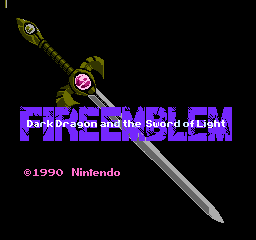
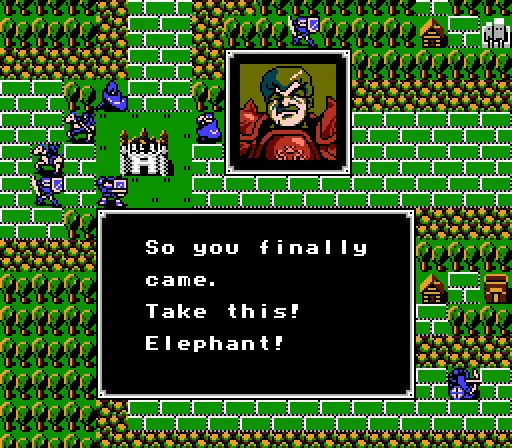
At the time, Quirino had no hacking experience and learned what to do along the way. The project was started in April 2010, but was originally canceled due to a lack of motivation, then revived again and released in January 2011.
As an untranslated Famicom game from the ’90s, FE1 had a lot of the same issues regarding ROM space that FE2 did—albeit FE1 was way more lenient in terms of free space in the ROM. And both the techniques mentioned before were deployed in this patch.
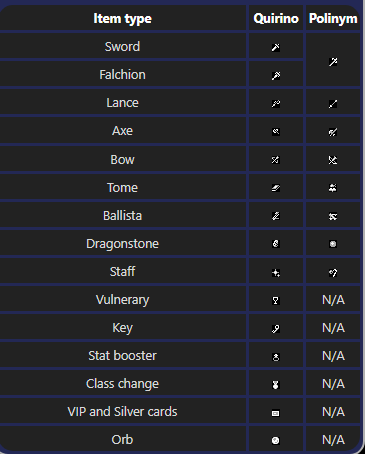
While this patch primarily used FE3’s patch as a reference for text translation, as FE3 Book 1 abridged and removed a lot of content from FE1, a lot of the original text had to be translated from scratch.
However, the patch did have its share of issues, which include typos, grammar mistakes, mistranslated text, and untranslated text. For example, none of the shop dialogue for being short on gold is translated, so the game will just return mojibake. Which, I suppose, is remote dialogue anyway.
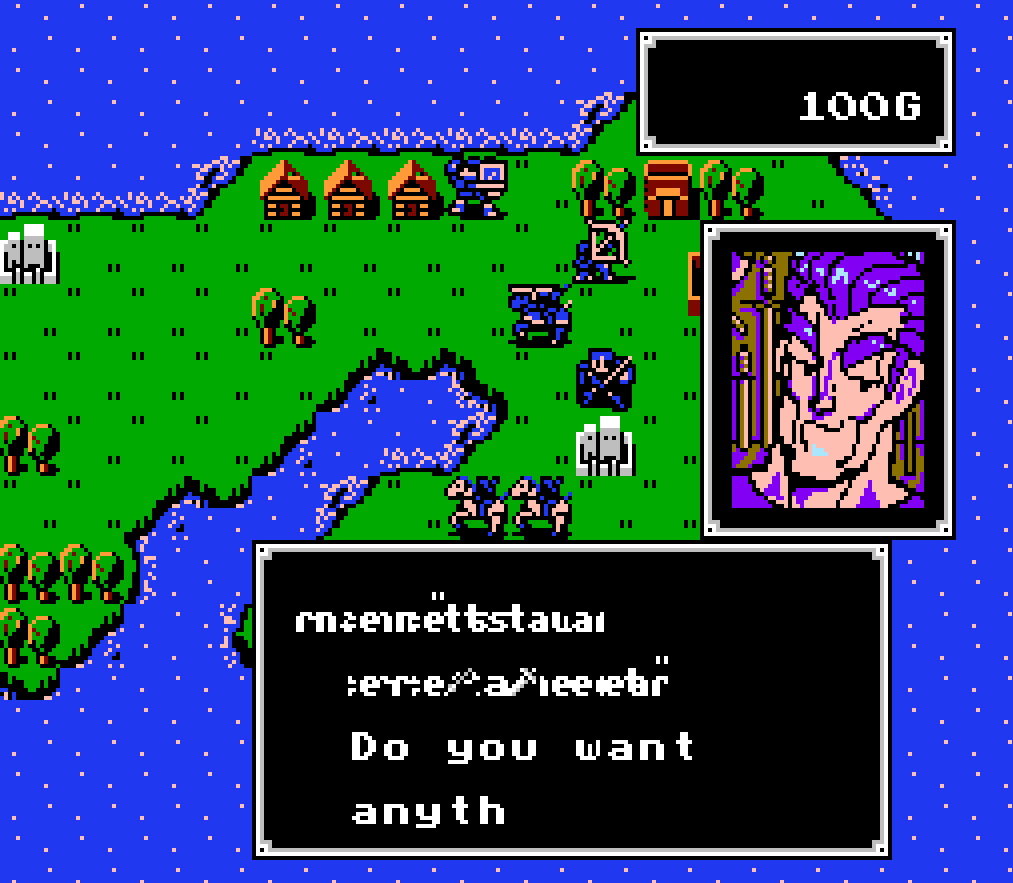
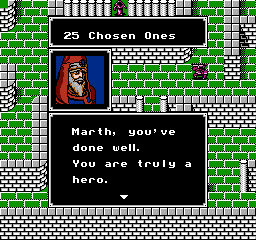
Moreover, the text that displays if you break your weapon in the arena is similarly untranslated, as well as Volzhin’s boss quote. There’s another instance where Marth says “sur” instead of “sure,” and the Chapter 24 narration mistakenly reads “Thanks through Marth” instead of “Thanks to Marth.” That said, those are mostly minor issues, and the game was still beatable to the end without anything like major bugs or crashes.
Following the trend with other games, in 2012, FE4 received a more complete fan translation done by Dark Twilkitri Net Translation Division, the same team that did the FE6 patch previously mentioned. If you first played FE4 before 2016, chances are this is the patch you used. As I mentioned before with the j2e translation, this patch uses Jay and Boo’s script and improves upon it, or to quote the page:
❝This project is an attempt to take Jay’s Fire Emblem translation and make it actually playable. It looks great, though it’s difficult to tell from the site exactly what is finished and what is not.❞
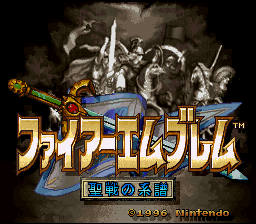
A general point of interest from the page is the fact that Twilkitri admitted that he’s a programmer, not a writer, so a lot of the changes were technical rather than anything script-related. The changes he did make to the script were mostly tweaking it to use Commonwealth English spellings.
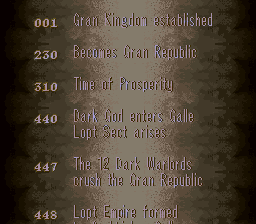
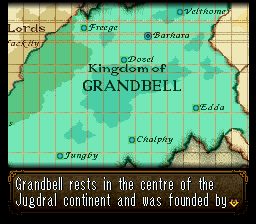
Another revision was the removal of all-caps that were meant to portray yelling, which makes sense; I can see how to a reader it can come off as hamfisted or out of place. Regarding the text formatting, another change was the change to the text font. Whereas the large blocky text font was used for about six years’ worth of patches and respective revisions, this one used the slimmer font used in the NTSC version of FE7, and this helped with fitting more dialogue in a single text box.
When it comes to dialogue text specifically, in SNES games they natively use VWF, or Variable Width Font. And for that, I’m going to use another FE1 example.
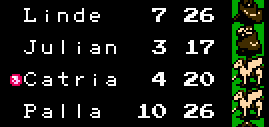
In this screenshot, there’s no apparent issue with this, but if you wanted to change the amount of space each letter takes up. That’s where VWF comes in. Instead of having each letter take up a unified 8×8 block, you can have the size of the blocks vary between different letters. For example, the “l”s in Palla would take up a 3×8 block while the rest of the letters take up larger blocks, which in turn would result in saving a lot of space in each text box.
Since FE1 is a Famicom game, it can’t take advantage of VWF without some major workarounds—It’s not impossible, but just extremely difficult to implement—but dialogue for SNES and later games don’t have to worry about all that. That’s why more modern SNES patches will usually opt to use thinner and thinner fonts in order to take better advantage of space and to look nicer overall.
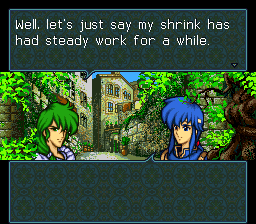
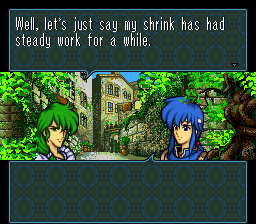
The left image is from the oldest J2E Renegade patch, while the one on the right is from the Dark Twilkitri Net Translation Division patch.
In this next section, I wasn’t sure if I wanted to include this, but in 2012, FE9 received an English patch. You’re probably wondering, “Why would FE9 even need an English patch? Was it not already released in English?”
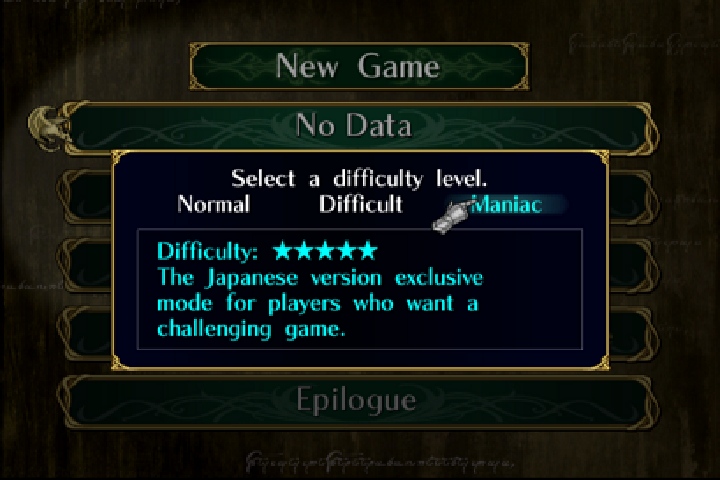
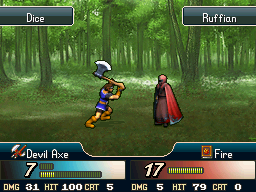
Well, the Japanese version of FE9 had an extra difficulty mode called “Maniac mode,” which was removed in the worldwide releases of the game. I assume this was because the localizers simply thought it wouldn’t appeal to English audiences, and well, they were right.
This patch, made by shadowofchaos, was a simple translation that made this removed difficulty mode playable in English.
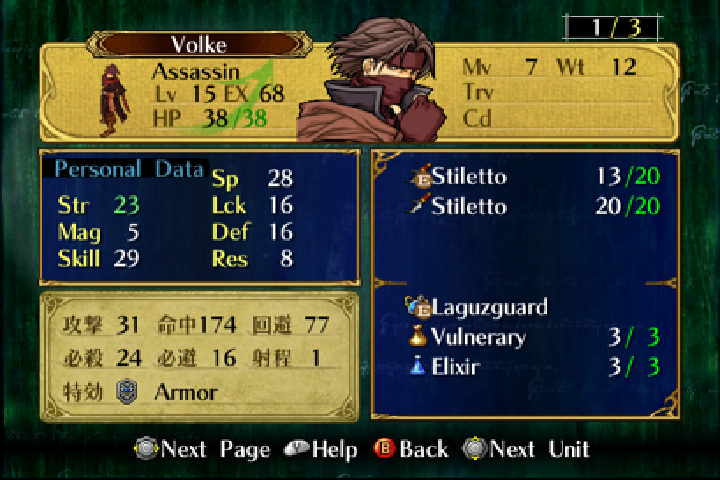
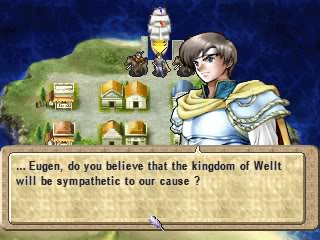
In the year 2012, the first Tear Ring Saga patch came into existence. This patch was done by a group known as ayashii gamesubs. This patch was originally started as a project by alamone in 2008, but there was very little progress until 2010, when they restarted the project as an open translation. The first half of the game was translated by FireLizard, the person responsible for translating the dialogue of FE5 and 6. The second half was translated by users Oboro and Runan, and in 2012 the whole game was translated, and a beta patch was released.
This patch was very rough and had a ton of errors, such as inconsistent character names between scenes, broken line text, and some dialogue that was straight-up incorrect. For example, an early game cavalier, Kriess, refers to themselves as “Ezekiel’s wife.”
What’s interesting is that in the readme file, they say they’re aware of all the bugs present in this patch, and they hoped that this patch could merely stir up interest in Tear Ring Saga to bring in people to fix these issues, and in that sense, it was successful in doing so.
The fandom was experiencing another major turning point around this time with the birth of Fire Emblem Universe, also known as FEU, which would go on to become the primary hub for Fire Emblem modding, graphics, and ROM hacking, and is still active to this day.
One of the earliest major projects on FEU was a hack known as Tactics Universe. Like many projects of the era, it began as a forum community hack, similar to FESS7. The project was spearheaded by ArchSageX, now known as Archibald, and was intended both as a way for users to test their modding skills and as an opportunity for community members to contribute to a larger collaborative project.
A number of eager users joined to help with modding, sprite art, and writing, most notably Swordsalmon and Blazer. However, the project was never completed. Eventually, the project’s main hacker, Blazer, took it upon himself to finish it and reworked the project into The Last Promise, the first fully playable and completed Fire Emblem ROM hack.
Today, The Last Promise is somewhat “infamous” for its amateur-type map design, weird balancing, and writing that embodies high-school angst mixed with adorable earnestness. But it’s difficult to overstate just how influential TLP was when it was released. It inspired countless aspiring ROM hackers and encouraged many others to get involved not only in the hacking scene, but in the Fire Emblem community as a whole.
As Fire Emblem ROM Hacks moved forward, so did fan translation. In late 2012, the final Japanese-exclusive game, FE12, finally received a fan translation. The patch was produced by the Heroes of Shadow hacking group. It translated the game in its entirety while containing very few bugs. Like the FE6 patch before it, it was widely regarded as an exceptionally polished and professional fan translation. Even today, it remains the patch most commonly used to play FE12 in English.
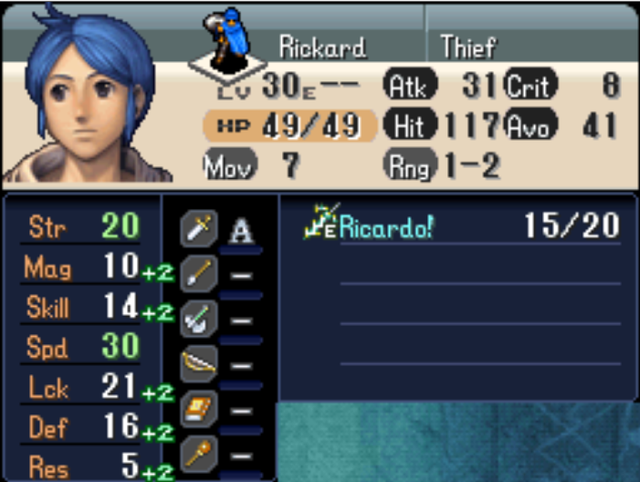
This patch uses FE11’s script as a reference, so that the two games could have consistent terms and names for returning characters—except for the generic replacement units—locations, events, and items.
However, one thing that FE11 was known for was its ornate and decorative writing done by Brian Gray. FE12’s English patch wasn’t able to replicate Gray’s style in its script, and at the time, a lot of the people working on the project were amateurs, so one of the few complaints about the FE12’s fan translation was that the script felt plain in comparison.
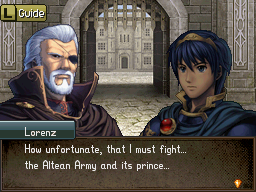
For example, in FE11, Navarre’s battle quote in Japanese was something that translates directly to “I feel bad killing you, but it was your mistake to come here. Now die!” but the English version localized this quote to “Will it be tears or blood you weep first?”
FE12 introduces a character named Samuel, who imitates Navarre’s original battle quote in FE11, but the translation group missed this detail, so Samuel just retains the original Japanese dialogue.
This patch was originally created by Blazer on July 13th, 2010, around the same time he was still working on TLP, with the aim of creating a simple menu patch until an official localization came out, similar to the previously mentioned FE11 menu translation by aznanimefreak1.
After a year and no localization in sight, Blazer then formed a team called “Heroes of Light and Shadow” to make a full English Patch for FE12. Eventually, VincentASM would spearhead this translation project as Blazer had to deal with the classic enemy of fan projects: Real Life Circumstances.
For the most part, though, fan translations typically take very few liberties when it comes to translating terms and concepts. Usually, changing things tends to rile up a lot of the fans, and in particular, when it comes to character names, people especially get angered. In fact, the act of getting angry over character names was so commonplace that it would end up coining the term “namewanking.”
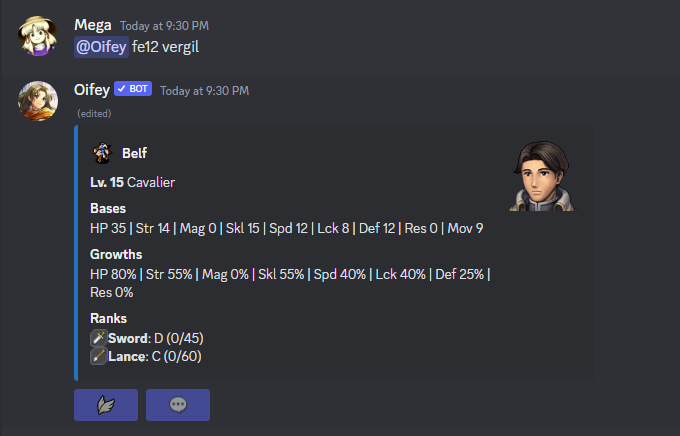
I mention this now because one of the first instances of namewanking came from one character named Belf. On the Serenes Forest project thread for the translation project of FE12, one of the people working on the team proposed an idea of possibly renaming ‘Belf’ to ‘Vergil,’ and believe it or not, this very minor character sparked one of the biggest flame wars in Serenes Forest’s forums’ history. In fact, this discourse got so heated that it resulted in the team exclusively posting updates on their blog rather than Serenes Forest.
The Awakening Era is a term I use to mark the period between the release of Fire Emblem Awakening and the explosion of popularity that followed Three Houses. This era marked a pivotal moment, not only for Fire Emblem but also for the fandom at large, and it was the time when Fire Emblem could actually be considered mainstream. The immense popularity of Awakening, coupled with its representation in Super Smash Bros., not only propelled Fire Emblem to new heights of recognition for future titles but also reignited interest in the older games.
Following Awakening’s success, it seemed like new Fire Emblem content became an annual occurrence. This started with FE Cipher, followed by Fates, the introduction of Amiibo figures, the mobile game Fire Emblem Heroes, and the remake Shadows of Valentia, among others. Such a continuous flow of Fire Emblem content was unprecedented in the series’ history.
During this time, there was a huge newcomer boom, which resulted in a growing divide between the “casuals” and the “elitists.” While people often treat this as the fandom’s biggest internal split, it wasn’t exactly unprecedented; similar fractures had already emerged when FE7 was first localized.
As the fandom grew, the way people interacted with one another also began to change. IRC chats gradually gave way to Skype chats, which remained popular until around 2016, when Discord began to take over as the primary platform for group discussions.
At the same time, dedicated forums began to decline in popularity, with much of the community moving to social media instead. This kinda resulted in the idea of a central FE Hub essentially dying out in favor of more personalized chatrooms, servers, and platforms. The closest thing we have nowadays is r/fireemblem, a Fire Emblem subreddit where a lot of assho—er, *ahem* I mean, “fans”—congregated to discuss the series.

Aside from that, there’s also Twitter, where people post art, cosplays, share thoughts and opinions, and since it’s X, there’s also the occasional ragebait post sprinkled in. Nowadays, there’s also BlueSky, where people do much of the same. Smaller communities also formed on platforms like Instagram and Tumblr, while sites such as AO3 provided a place for fans to share fanfiction.
The early parts of this era were also when a number of Fire Emblem YouTubers, or FETubers, began gaining popularity, for better or worse. This gave rise to a newer way for the fandom to discuss and create content for the series; aside from Let’s Plays, there were also LTCs, unit and character analyses, showcases for fanmade music and covers, and ROM hacking showcases.
As the fandom’s online presence expanded, so did the number of resources dedicated to documenting the games. Several Fire Emblem wikis were created, with the two most notable being Fire Emblem Wiki and the vastly inferior Fandom wiki.
There were also a number of cross-community projects that brought fans together. Fire Emblem Compendium, for example, was a collaborative project where fans contributed a piece of artwork for every Fire Emblem character. EmblemCon similarly brought the community together through an annual online convention centered around the series.
When it comes to fan translations, both Awakening and Heroes significantly influenced the translation communities. These games made numerous references to older Fire Emblem content and provided official names for previously unlocalized terms and characters.
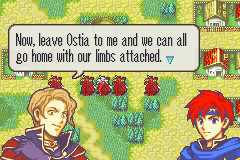
One of the first English patches that came out in this era was Gringe’s FE6 patch in 2013. Gringe was an experienced manga translator at the time and set out to produce a translation that could stand alongside an official localization in terms of quality. The patch polished the game’s dialogue, cleaned up the menu text, and standardized character names to match those used in The Blazing Blade and Awakening.
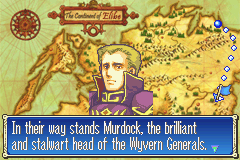
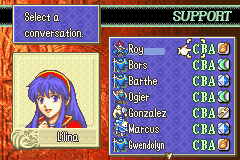
Gringe’s FE6 patch would eventually receive its own major update in 2021, following the release of Fire Emblem Heroes and the introduction of many more official English names and terms. Version 1.1.3 incorporated these newer official names, including changing Wendy to Gwendolyn and Milady to Melady; the former change also required implementing a slimmer font to accommodate the longer name.
The update also addressed several loose ends from the older versions, including a glitch affecting Hugh’s recruitment and untranslated text in the Link Arena. It additionally introduced a new Support Rereader option.
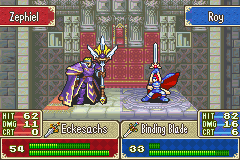
The next major patch was the Gharnef patch. Despite its name, this wasn’t a translation of an Archanea game, but rather an addendum to DTNT’s FE4 patch, created by a user named Gharnef between 2013 and 2014. Its primary purpose was to update the game’s terminology to match the names and terminology that had become official by the time of Awakening. Serlis, for example, became Seliph, Lachesis became Raquesis, and Scathach became Ulster.
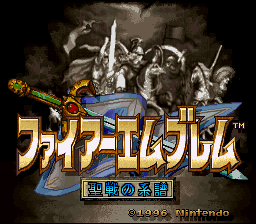
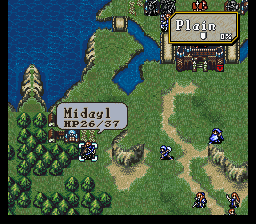
Before Project Naga was released, the Gharnef patch was the version most people used to play FE4, and it served as a substantial improvement over the original DTNT translation. Ironically, Twilkitri of DTNT had also wanted to create an update that would bring FE4’s terminology in line with Awakening, but Gharnef beat them to it. You just can’t win against Gharnef, huh?
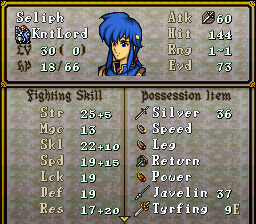
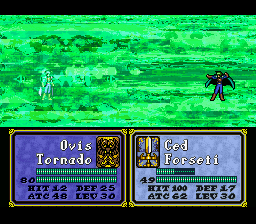
In August of 2014, Quirino came back to release an update to the FE3 English patch done by RPGuy and VincentASM. What began as a relatively simple project to take advantage of FE3’s variable-width dialogue font and slim down the text gradually expanded into a more comprehensive overhaul, with additional features and improvements added to make the patch feel more polished and professional
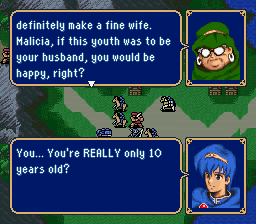
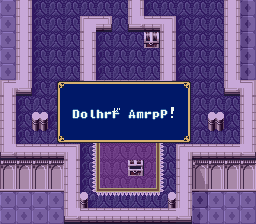
The patch used the official English names established by Awakening and Shadow Dragon. Since Quirino was from a PAL region, it also used the European localizations, resulting in names such as Shiida, Nabarl, and Doluna instead of Caeda, Navarre, and Dolhr. For characters who still lacked official English names at the time, such as Marisha, Arlen, and Phina, Quirino borrowed the names used in the Heroes of Light and Shadow patch for FE12: Malicia, Elrean, and Feena, respectively.
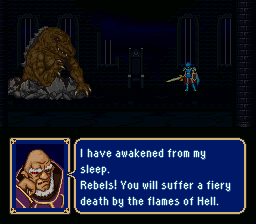
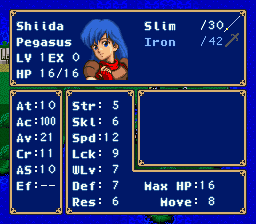
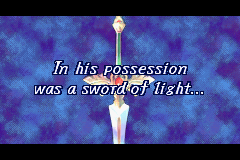
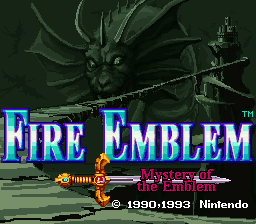
Apart from names, it would also implement the modified title screen used in the very first FE3 fan translation I mentioned in this blog post. It also translated the pop-up messages that appear when obtaining items or gaining levels so they no longer just showed garbled text, and fixed Marth’s name in the menu so that it could be displayed in full rather than being truncated to “Mar.”
Overall, Quirino’s patch represented a significant improvement over the earlier RPGuy and VincentASM translations, although it was far from perfect. It still contained a number of bugs and glitches that would remain until 2019, when Robert of Normandy released a dedicated bug-fix patch.
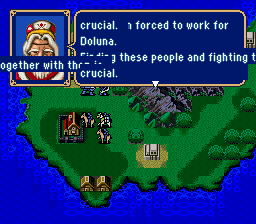
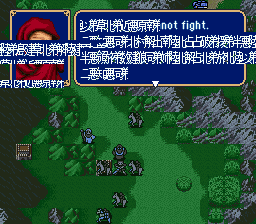
One technical limitation, however, has persisted even to the present day: FE3’s large, blocky menu and battle font. Because the font takes up so much space, item names and menu options often have to be shortened to fit within the game’s character limits. The Wyrmslayer, for example, becomes “Wyrmsly,” while Ridersbane is shortened to “Ridersbn.” Hackers have continued to look for ways around this limitation, but for the time being, it remains one of the major reasons FE3’s fan translations feel less polished than the more recent FE4 and FE5 patches, which were able to implement slimmer fonts for their menus.
In 2014, a basic menu patch was released for Fire Emblem Archanea Saga: The Capital Falls, the first part of the four-part BSFE Archanea Series of games for the Broadcast Satellaview add-on for the Super Famicom, available for a short time in Japan only. What a surprise for this series.
These games served as prequels to the events of FE1/Book 1. This translation patch was worked on by js394 , formerly known as joesteve1914, and reused font assets from VincentASM and RPGuy’s FE3 patch.
Through updates, aspects like character dialogue would be translated as well, and work would begin on the second BSFE game, The Red Dragoon, but in February of 2017, these plans would be officially canceled.
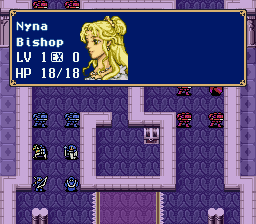
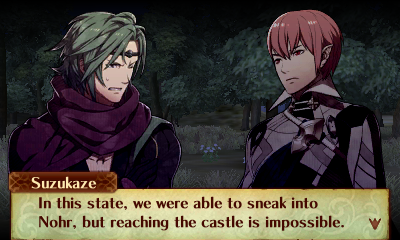
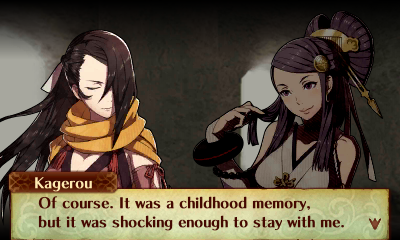
In 2015, Fire Emblem Fates came out in Japan, and as the game was taking several months to be localized, a fan translation project was created by the group called Team If. When Nintendo revealed that some features would be cut from the game in localization, like the funny skinship minigame or certain controversial name changes, such as renaming a character named Harold to Arthur, for some godforsaken reason, Team If reaffirmed its commitment to releasing a complete, faithful English patch for Fire Emblem Fates.
Unfortunately, this project was canceled in March of 2016 and was picked up by a different team also going by Team If in December of 2016. Sadly, this new team also canceled this project in August of 2017. R.I.P.
On May 14th, 2016, the 20th anniversary of FE4’s release, the Project Naga patch was released for FE4, and it would serve as one of the most prominent English patches for the FE fan translation scene. As opposed to other FE4 patches that used Jay and Boo’s script, this one was retranslated from the ground up by Bookofholsety, Gringe, and Amielleon.
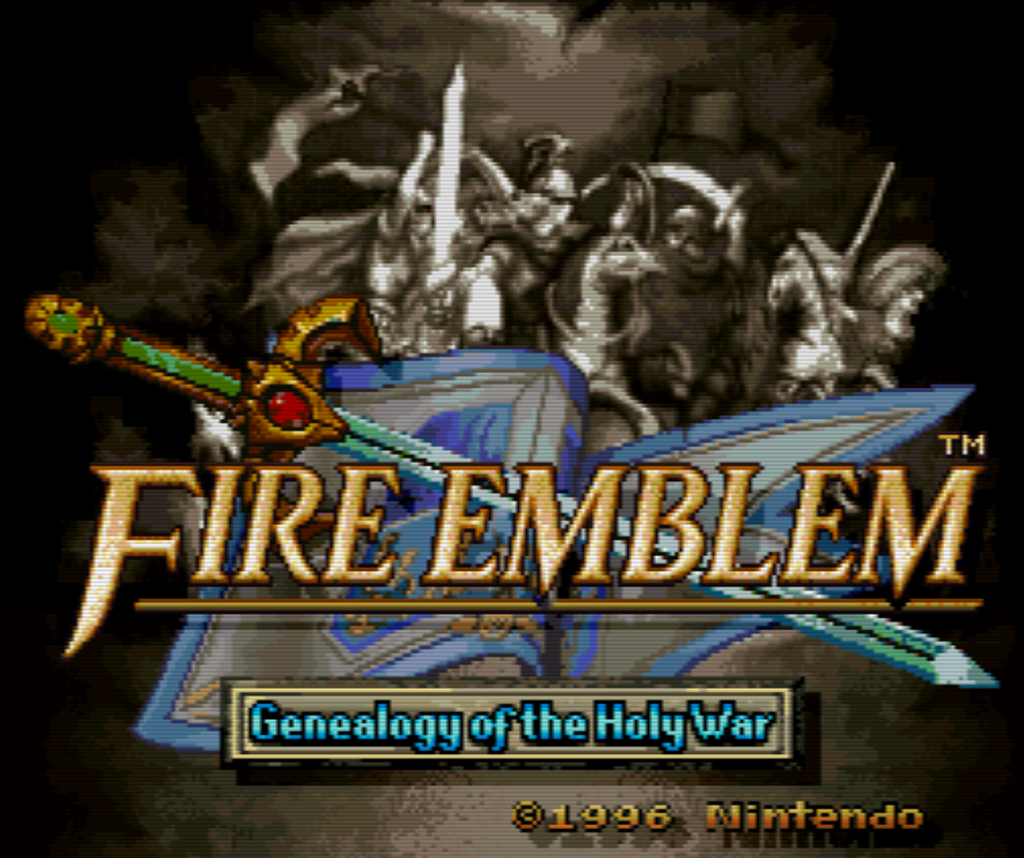
In addition, like previous patches, Project Naga took advantage of the Variable Width Font to make the text look a lot smoother and to fit more text in the game’s dialogue boxes, but unlike other patches, this was the case for the game’s menus as well. In particular, they used Earthbound’s text font but stylized it to have a black outline around it to make it pop out more. This resulted in the game looking much more professional and visually appealing.
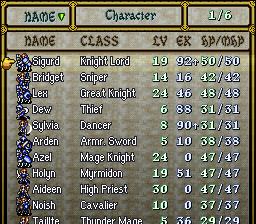
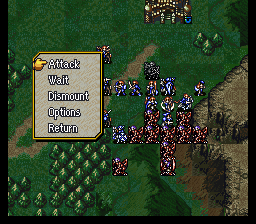
Additionally, Project Naga came with various bug fixes, such as the epilogue now being fully functional, the Chapter 4 Sylvia glitch being fixed, and the Seliph authority glitch being fixed.
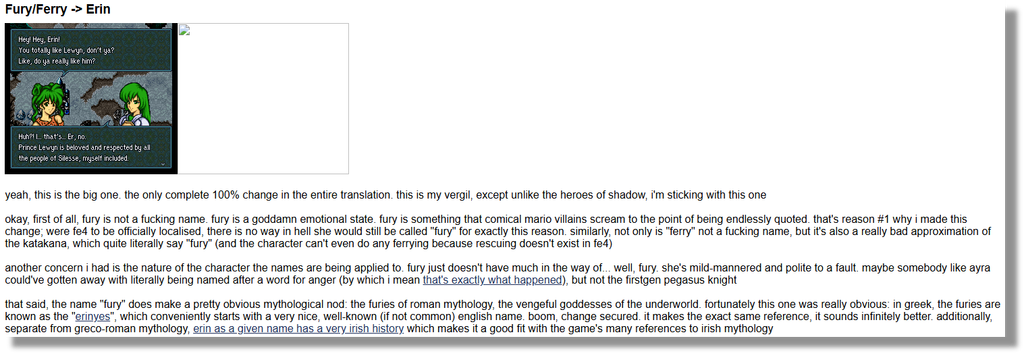
Moreover, like the Gharnef patch, this patch updated the names to match the ones used in Awakening, like the aforementioned Raquesis and Ulster. Similarly, a few names were also changed altogether; one of the funniest ones being a Bow Knight in the arena, who was named Mario in Japanese, being renamed to Luigi in this patch. But there were similar changes like Briggid being renamed to Bridget, Delmud being changed to Dermott, and Corple being changed to Cairpre; however, the most notable name change was renaming Fury to Erin.
Previously, I mentioned the concept of namewanking with Belf, and similar controversy pervaded especially surrounding the Jugdral games in this era. During the process of translating FE4, many people had issues surrounding the renaming of the character Fury to Erin.
The name Erin comes from a shortening of the Erinyes, chthonic goddesses of vengeance in Greek Mythology. The Roman counterparts of these goddesses were called Furies, which is where the name Fury came from. Ironically, bookofholsety would later get validated when the character appeared in Fire Emblem Heroes, using the name Erinys, the singular form of Erinyes.
At the time, though, discussions were pretty heated regarding this topic, as shown in BoH’s response below:
That said, this was just a dumb but funny piece of translation history, and similar discussions and arguments persist even to this day. While I find Erin to be a reasonable change, some issues I had came from the class names. A lot of the classes were renamed to be consistent with the names used in localized titles. However, what I didn’t like was the fact that certain class names that didn’t share the same names initially were changed to match separate but similar classes.
For example, classes like “Free Knight” and “Arch Knight” were changed to match similar classes that appear in Tellius, being “Sword Knight” and “Bow Knight,” respectively. Despite not sharing the same names in Japanese.
Additionally, classes like “Sword Fighter,” “Bow Fighter,” “Axe Fighter,” “Mage Fighter,” and “Thief Fighter” were renamed to similar classes that appeared in other games: Myrmidon, Archer, Fighter, War Mage, and Rogue, respectively. Aside from removing the identities the class names had, it also scrubbed away the naming patterns.
But overall, this patch was not only a big step up from the previous FE4 patches, but FE patches in general. And it was held in very high regard for a long time.
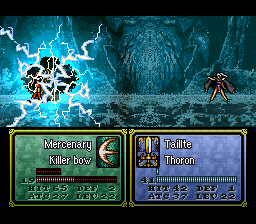
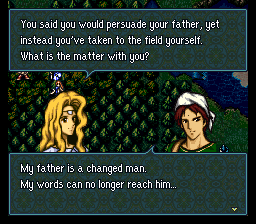
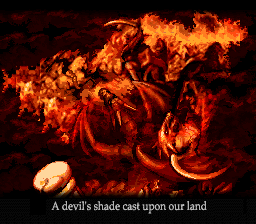
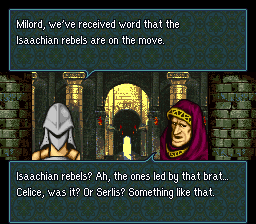
In around February of 2017, a guy named Aethin released another English patch for Tear Ring Saga. Aethin’s patch aimed to be more comprehensible, coherent, and less buggy than the previous translation by ayashii gamesubs.
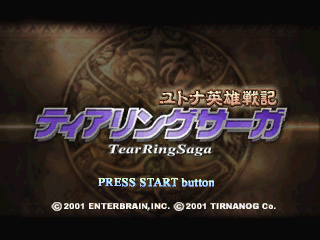
The way that Aethin approached this project was a bit interesting, at least to me. According to him, the text in Tear Ring Saga’s ISO was terribly organized: the pre-map dialogue for one chapter would be in one place, while the post-chapter dialogue could be several worlds away. Weapon names were scattered all over the place, and so on. To make sense of it all, he followed a screenshot Let’s Play by CVE on LP Archive, using it to piece together the game’s story and figure out where all of the dialogue belonged.
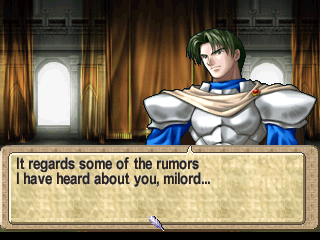
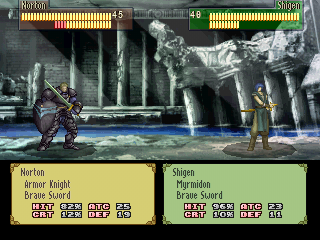
During the Let’s Play, however, CVE made no secret of their thoughts regarding many of the game’s flaws, particularly when it came to the writing. And the game happened to have quite a number of flaws and plot holes, especially with regard to the timeline. As Aethin read through more of the game, he became aware of just how numerous those flaws are, particularly with how the timeline went. At that point, Aethin started jotting down all he could about characters’ ages and timeline events, then checked Shouzou Kaga’s blog for dev notes, and from there, saw where he could make things more consistent and clear.
At that point, those changes wouldn’t really negatively affect anyone’s experience, and are honestly appreciated as long as you make it known and transparent that this wasn’t in the original Japanese version, in a readme file or on the forum post or something. But controversy with this patch arose when he took much bigger leaps when altering aspects of the story.
Some of these changes include:
Naturally, when people learned of these changes, they were more than a little upset, and things got to the point where Aethin had to make an apology thread on Reddit, and I’d recommend checking that out if you’re not bothered by spoilers or anything.
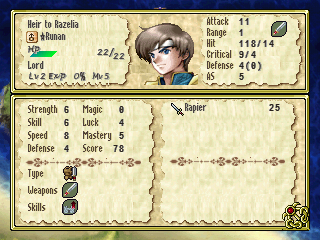
Aside from plot details, a lot of characters, classes, and items were renamed. While I don’t have much to say on the characters as I did with Erin or Vergil, the classes and items, like Project Naga, display a mindset that a lot of fan translators had at the time. While a lot of official localizations aim to appeal to a general Western audience to get them to purchase the game, with fan translations like this, the aim can vary a lot.
With Aethin’s Tear Ring Saga patch, it’s clear that he wanted to make the game more accessible to players coming to it from Fire Emblem. Much like Project Naga, the patch also renamed many classes and weapons to match their Fire Emblem counterparts, even when the original Japanese names differed. And just like with Project Naga, I’m not too big on these changes.
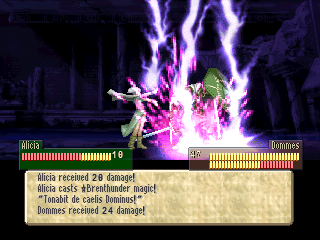
Some of these changes include renaming weapons such as Scissor Axe and Needle Spear to Killer Axe and Killer Lance, respectively, since these are the weapons with increased critical-hit rates. The Short Sword was renamed Slim Sword, while the Hand Spear became Javelin, with the more powerful weapon actually called Javelin in Japanese being renamed Spear. Brenthunder, a reference to the Bren light machine gun, was also renamed Dire Thunder.
Some items received similar treatment. The Healing Drop became Elixir, since it is the item that restores the user’s HP to full. The actual Elixir, which revives the user upon death, was instead renamed Azoth. Classes were also brought in line with their Fire Emblem counterparts, with Rook Knight becoming Cavalier, Bow Fighter becoming Archer, and Mamluk becoming Nomadic Trooper.
While I don’t particularly like these changes, I can understand the idea behind them, and as a non-profit fan project, the translators can ultimately do whatever they want with a patch and listen to whatever criticism they want and don’t really have a moral obligation to be totally accurate.
That said, Aethin has expressed an interest in revisiting both this patch and his Berwick Saga patch in the future for a “Director’s Re-Cut” that would bring the scripts and terminology closer to the original Japanese. Aethin is obviously older and busier now, though, so whether that will ever happen remains to be seen. Regardless, Tear Ring Saga and Aethin’s patch both served as great gateway drugs into the Kaga Saga rabbit hole and completed what the original 2012 patch set out to do.
In June of 2016, when Echoes was announced, an addendum patch for Artemis251’s patch was released by a user known as Gaiden Guy, but this patch kind of flew under the radar, as Gaiden patches tend to do. This patch aimed to use the updated names for the characters that appeared in Echoes, but it never got too far.
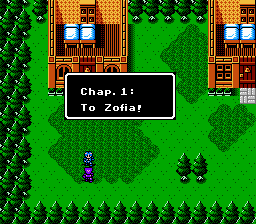
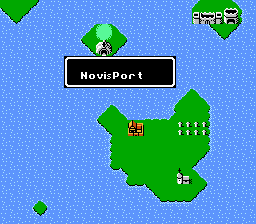
In February of 2017, js394 worked on an update to the Heroes of Light and Shadow patch of FE12. This patch aimed to fix certain typos and errors, and it also aimed to update the names to the names used in Awakening, Heroes, Echoes, and Warriors. However, this patch didn’t receive updates past Beta 2, and some areas still used the older names.
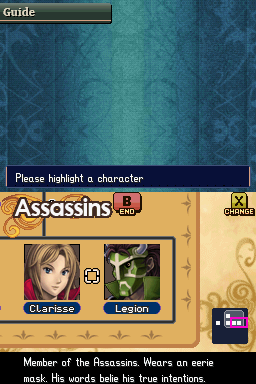
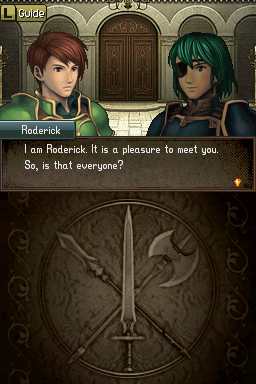
After the Japanese release of Fire Emblem Echoes: Shadows of Valentia, the ROM for the game was leaked online, so a simple menu patch was released on April 3rd, 2017 by SciresM. Once the game was officially localized, this patch was seen as obsolete, but I do remember playing through this patch on my modded 3DS while waiting for Echoes to come out officially in English.
Going to the download page now brings you to this error page, and as of now, this patch is considered lost media.
In April of 2017, FE1 once again received an updated patch by yours truly. In this patch, my primary goal was to align it with the localized names introduced in FE11. During this process, I dedicated efforts to rectify numerous typos and untranslated text segments that were present in Quirino’s patch. However, as a young and inexperienced hacker at the time, I wasn’t able to fully optimize the available space within FE1’s ROM to enhance the game’s dialogue further. I also ended up introducing new typos while attempting to fix existing ones, and didn’t even translate all of the untranslated text that Quirino missed.
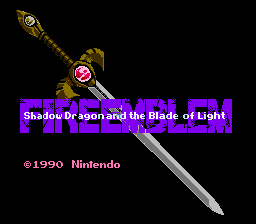
One of the funniest mistakes I made was in Chapter 13. I misspelled the word “persevere,” resulting in the game asking whether Marth could “preserve” against an army of Ballisticians.
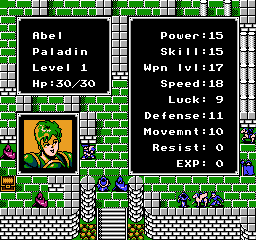
Aside from that, I also made several other changes. For example, I replaced the font used in Quirino’s patch with the font from EarthBound Beginnings. I also modified the title screen to use “Shadow Dragon and the Blade of Light” instead of “Dark Dragon and the Sword of Light.” Some weapon icons were adjusted as well, such as replacing the staff icon with one that actually resembles a staff and changing the Vulnerary icon from its original wine glass to a potion. Finally, I adjusted the text alignment on the stat screen to more closely resemble that of the newer games.
In 2020, Nintendo released an official localization of FE1 for the Nintendo Switch, which initially took the wind out of my sails to produce an update to this patch. But since that localization was only a limited release, I do occasionally still see people play FE1 using this patch, but I personally wouldn’t recommend playing this version. I eventually got around to updating this patch much later on.
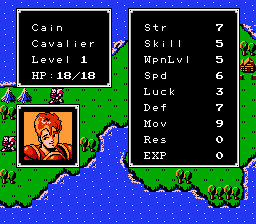
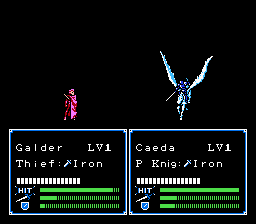
In June of 2017, ChimeraHardline posted a new menu translation patch for Thracia 776 on the Fire Emblem subreddit. This patch, like Project Naga, had a VWF implemented for all the menu items. In addition, this patch also added a 2-RN script into the game, changed the palettes for some map sprites, and made it ignore the checksum on save files. Chimera even included a separate patch to restore the 1-RN script.
One major issue with the patch was that a lot of the text rendering was throttled and didn’t appear instantly. Furthermore, there was some flickering in some unusual situations as a result of DMA/HDMA conflicts with the gradient window backgrounds.
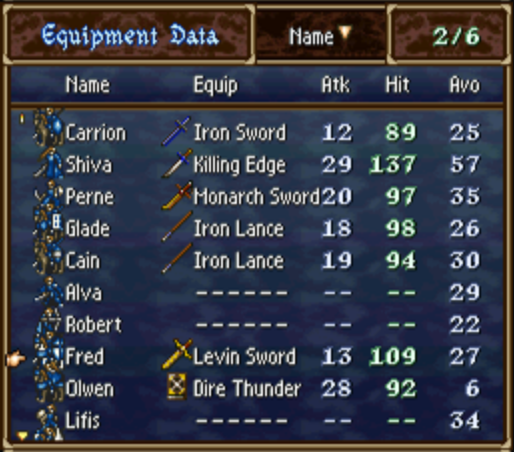
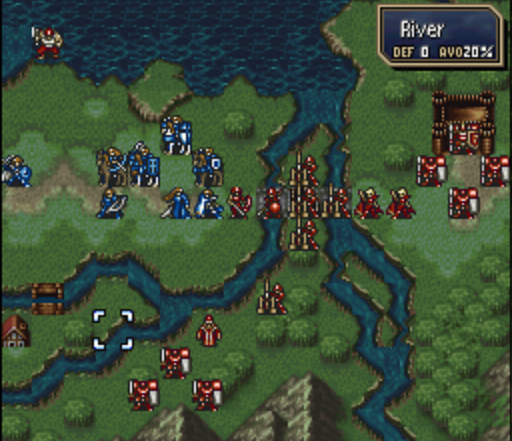
Half a year later, in January of 2018, ChimeraHardline would return, renaming this project to the Unified Thracia patch, which included a translated script in addition to his old menu translation. The script was translated from the ground up, and the dialogue in the game goes up to chapter 6.
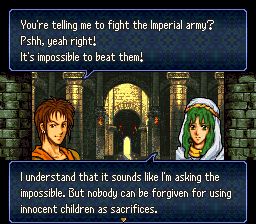
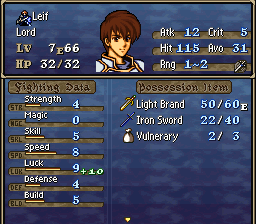
In 2018, Aethin would come out of the gates swinging with another Kaga Saga fan translation, this time of Berwick Saga. The idea for the translation was conceived in 2016, but Aethin couldn’t do much until 2017, when he collaborated with Lightgazer, who had access to the tools used in the Chinese fan translation.
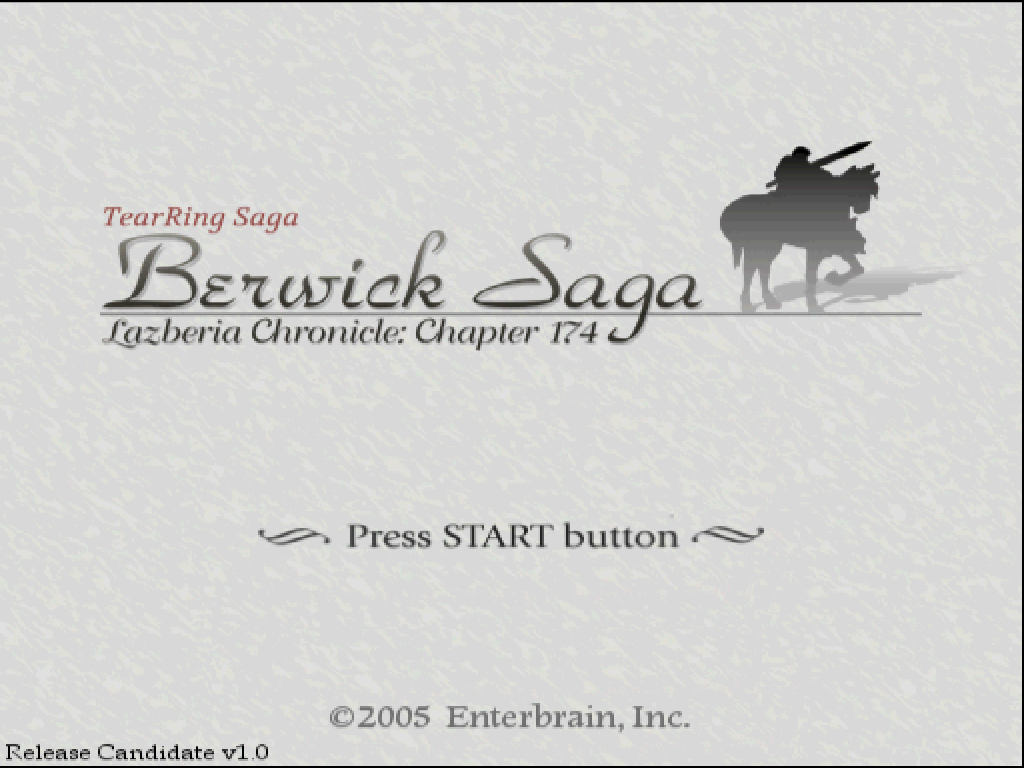
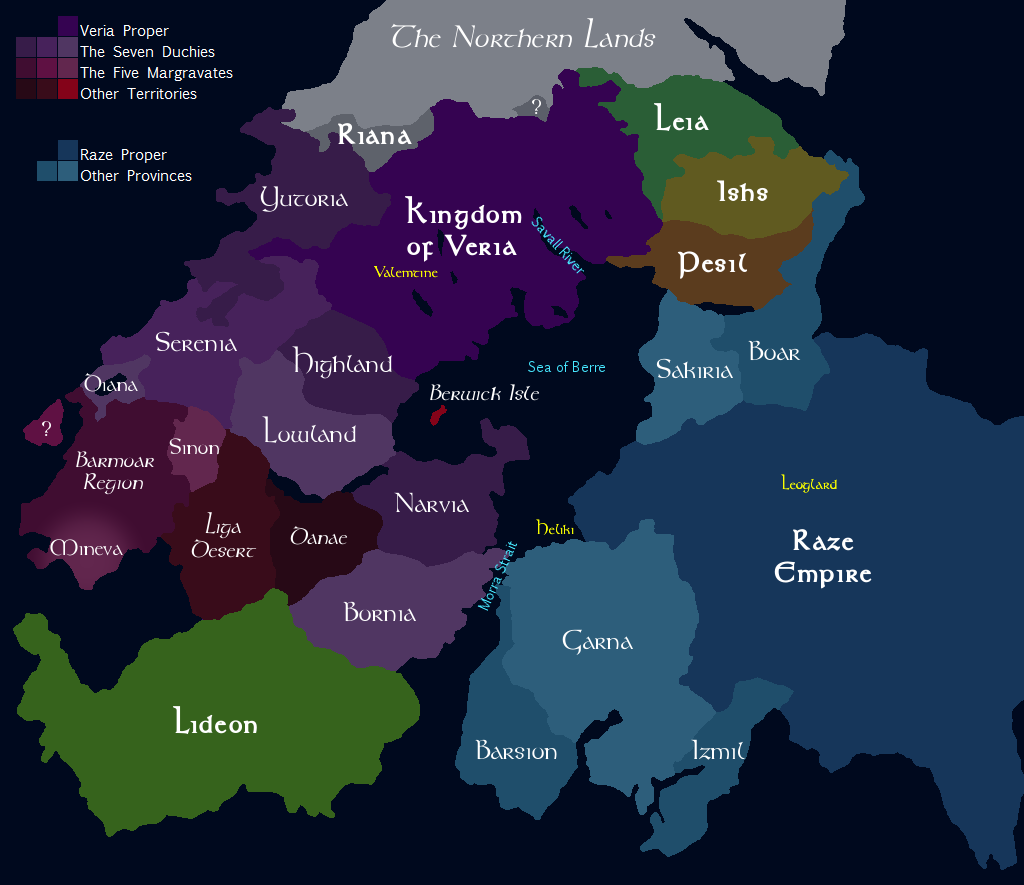
Like with the Tear Ring Saga patch, Aethin made it a point to keep track of character aspects, timeline information, and jot notes from interviews and developer notes to keep the story clear and concise. He even went through the effort of posting a world map, a timeline, and some of the backstory on the translation patches’ threads.
Similarly, Aethin also included many names and terms from Fire Emblem to make Berwick Saga more accessible to players coming from the series, much like he did with Tear Ring Saga. In this case, however, I find the changes more egregious. Berwick Saga is such a distinct game with its own identity that, in my opinion, replacing its terminology with familiar Fire Emblem terms can undermine some of what makes it unique.
For example, Berwick Saga doesn’t follow Fire Emblem’s Iron → Steel → Silver weapon progression. However, the English patch still renamed weapons such as the Light Spear and Light Bow to Iron Spear and Iron Bow, respectively. Likewise, the stronger weapon simply called Spear was renamed Steel Spear. The Light Crossbow and Crossbow were similarly changed to Iron Crossbow and Gastrephetes, respectively, while Heavy Crossbow was left unchanged.
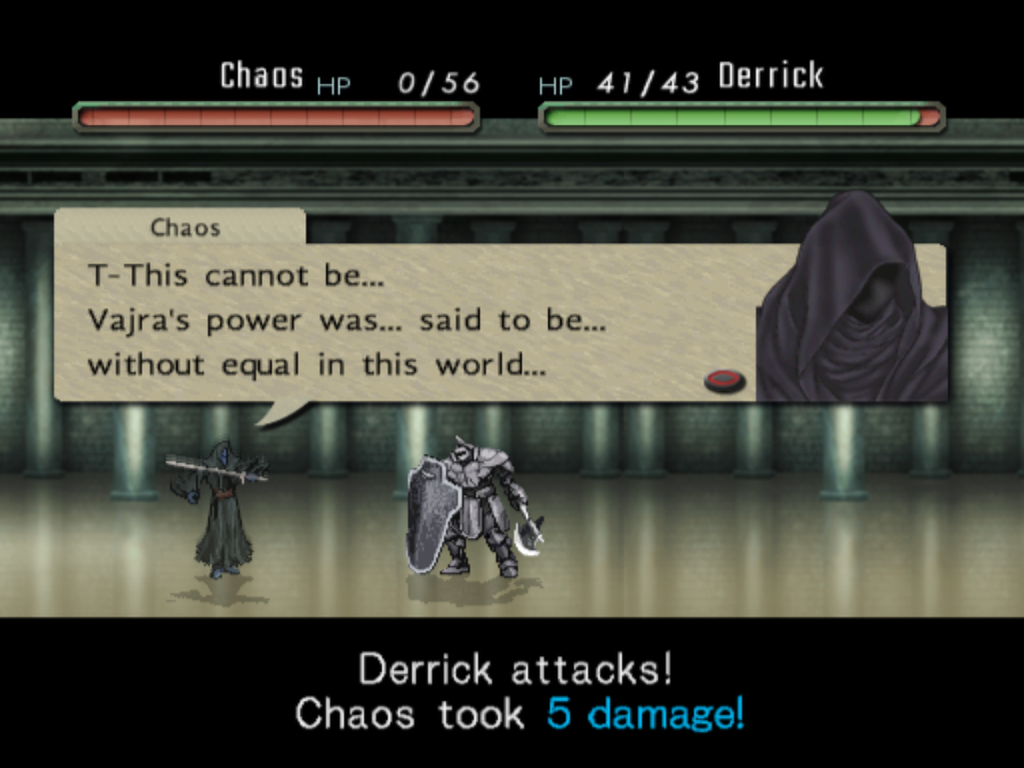
Some of the other changes, I feel, strip away more of the weapons’ and classes’ individual identities by making them sound more generic. The Charis Sword, for instance, references the Charites of Greek mythology—the goddesses associated with beauty, nature, creativity, and fertility—but was renamed Ladyblade after a similar weapon in Fire Emblem. Janura—which gets its name from Ja (蛇), meaning snake, and nura nura (ヌラヌラ), meaning slippery or slimy—was renamed to Nosferatu after a similar weapon in Fire Emblem. …Despite the animation clearly showing a giant fucking snake.
Elbert’s Sergeant Knight class was changed to Cavalier, which, in my opinion, diminishes the significance of his original class and its role in his character. Ruby and Arthur’s classes, Free Knight and Free Knight, were also changed to Chevaliere and Sword Knight, respectively, removing the reference to their status as mercenaries.
That’s not to say that the changes were all bad; however. Sensual wouldn’t work too well as a name for a sword in English, so it was renamed to Colichmarde. The various Thief classes were renamed to set them apart, like Czene being called Thief, Thaddy being called Burglar, and the enemies being called Pickpockets. Likewise, a lot of the enemy mounted classes were called Riders, while the player versions were called Knights. And the female Eastern Swordfighter class was called Myrmidon, while the male version was called Swordfighters. For the latter example, I would have preferred if they included the mention that they were Eastern, but that was likely a space limitation.
In later versions of this patch, when Vestaria Saga was officially localized in 2019, a few of the terms from that game were used in Berwick’s fan translation. So what was called Charon Lance and Mahakali in older versions were changed to Xyston and Crooked Axe in the newer version. As those weapons shared the same Japanese names, I have no issue with that.
Moreover, some story aspects were also changed to seem less off-putting to a general audience, but it was nowhere near the level of Tear Ring Saga’s. In this project, Aethin’s made it a point to document a lot of the changes he’s made on both his Tumblr and Serenes Forest accounts, and reading about the process is an interesting read in itself.
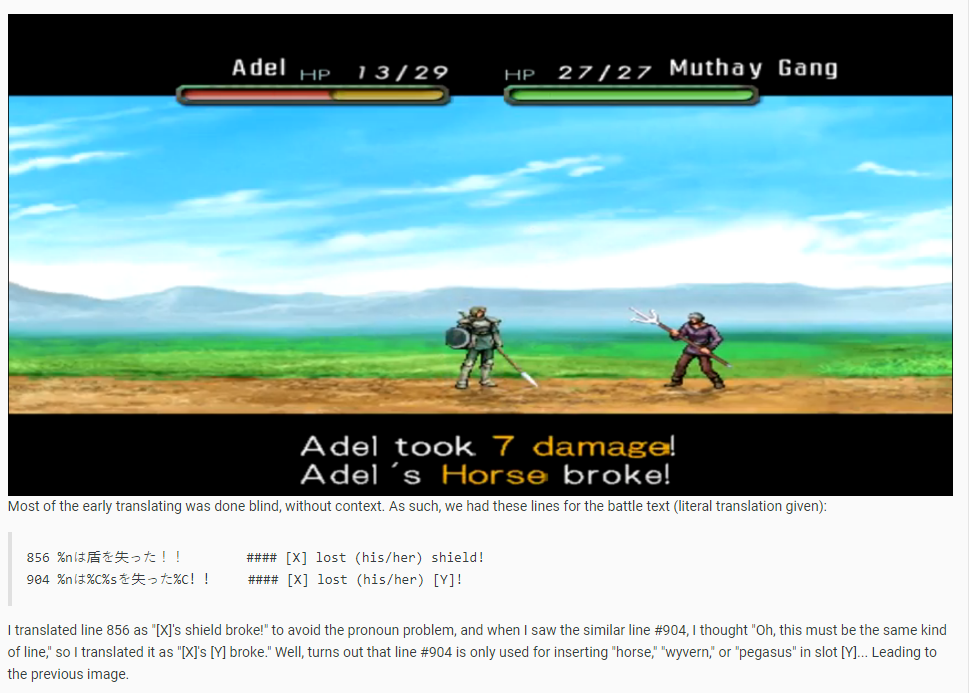
With this patch, it’s clear to see that the writing takes a page out of Shadow Dragon’s localization and similarly goes for a more poetic way of storytelling; it’s not perfect, but it’s still pleasant to read the game’s dialogue.
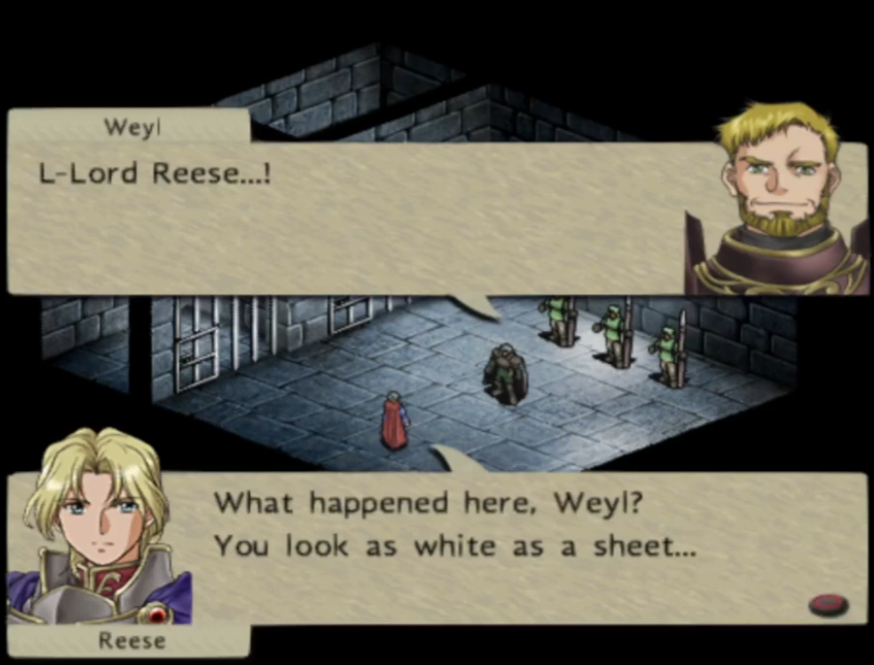
Something else this patch does is the “Using icons for item names” technique I mentioned before with FE2, but this game does it slightly differently. In Berwick Saga, units have weapon skill points that are displayed at the bottom of their stat screen. These weapons are represented in kanji, which is a logographic writing system, and means they can represent entire words and ideas using a single character, similar to an emoji or something like that.
In this case, it means a character limit of two. With that strict limit in place, Aethin decided to represent the different kanji as weapon icons seen below.
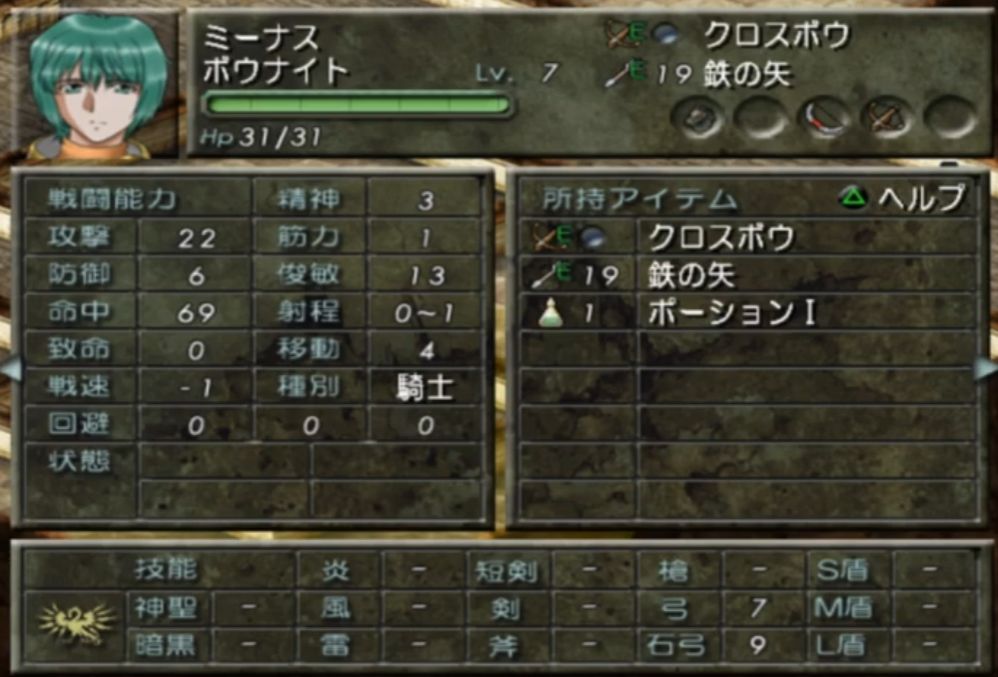
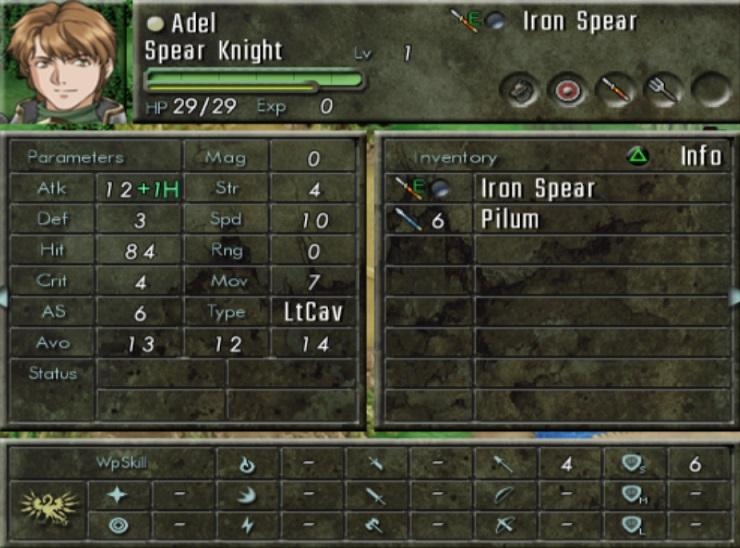
As of now, the patch is currently at version Release Candidate V2.3 and was last updated in January 2021. Like his Tear Ring Saga patch, Aethin has mentioned wanting to do another run-through and iron out some loose ends, but again, only time will tell whether or not this updated patch will come. Despite that, though, I would still highly recommend playing the game with this patch.
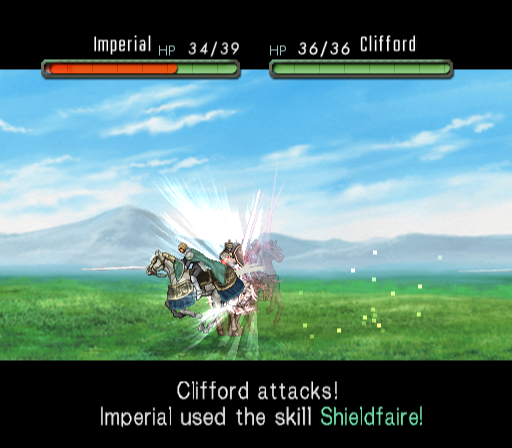
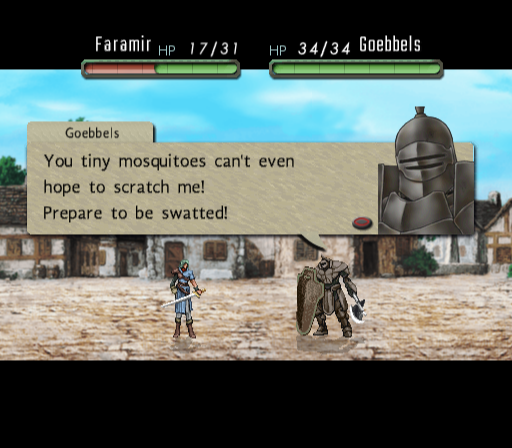
Now, Project Exile is a patch for FE5 which was worked on by a large team, spearheaded by Cirosan in May 2019. Before that, Cirosan had worked on FE11’s Full Content patches, an English patch of a PS1 game called Mizzurna Falls, and an addendum to the Mega Man Battle Network: Operate Star Force English patch that removes the voice acting.
That aside, the patch was picked up again in 2017 and wasn’t completed until 2019, with several updates released afterward to fix various bugs and glitches. It generated a great deal of hype within the community, as it was the first FE5 fan translation to be fully translated and polished to a presentable standard. Its completion was considered such a significant achievement that the project had earned a reputation as the Fire Emblem community’s “White Whale,” with other sites even publishing news articles about its progress.
Unlike the earlier Shaya patch, this project featured a script translated from the ground up by Cirosan. It also built upon the patching architecture and ROM expansions developed by Zane Avernathy and Kirb, using their work as the foundation for the project.
For the most part, this patch used terminology from the officially localized games that were available at the time. For example, the Light Sword was renamed the Light Brand, following FE7’s terminology; Dagda became Dagdar, as in Awakening; and the Fiana Militia became the Fiana Freeblades, again following Awakening’s terminology.
The patch also followed the same localization philosophy as bookofholsety when it came to renaming certain classes after other similar classes that appeared in other Fire Emblem games. For example, Free Knight became Sword Knight, Bow Fighter became Archer, and the Axe Fighter’s promoted class, Mercenary, was renamed Hero to match the terminology used for promoted classes in other games. Some weapons also received original names, like the King Sword being renamed to Kingmaker, and the Lopt Sword being renamed to the Loptrian Fang.
As for extra stuff, this initial release also modified the command window so that the Wait option appears at the bottom to prevent an accidental misinput. It also added a new display for the FCM, Ddg, and AS stats, courtesy of Co-Lead Programmer HidoranBlaze. They also added descriptions for the Crusader Scrolls, which outlined growth boosts, and added a small warning to the description of the Vantage skill about how it will cancel Wrath, which is hilarious.
For optional stuff, there’s a 0% Growths patch, Robert of Normandy’s Unit Ordering Patch, which allowed you to deploy your units in any starting location, similar to newer games in the franchise; and an optional patch that moved the Wait option back to the top.
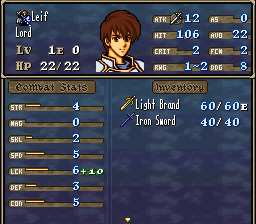
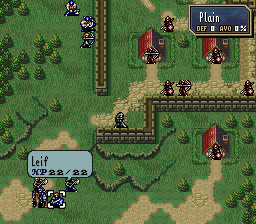
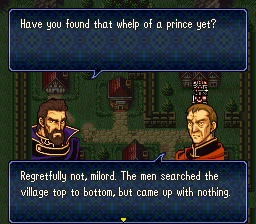
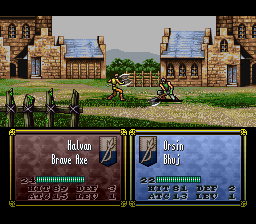
Aside from that, a lot of the more discussed changes came from the creative liberties Ciro took with the script itself. A lot of the dialogue was exaggerated, spruced up, or changed altogether, with Ciro citing 8-4’s work on Shadow Dragon, Project Naga, and Clyde Mandelin as inspirations for said changes.
In Japanese, a lot of the civilians had very standard dialogue: thanking you for rescuing their village, then giving you an item. Cirosan changed most of these to be more comedic or lively in nature. For example, one guy in Chapter 10 tells a story about how he used Pure Water to grow a tree, which became a Barrier Staff; or another guy in a different chapter talks about how he wishes he could use a Silence staff to shut up his crying kid. And no discussion of these liberties would be complete without bringing up The Ballad of Yied.
On a more minor note, he also gave accents to certain characters and NPCs like Fergus, which is standard in most official games. Furthermore, they also gave names to the NPCs and Armor Knights in Chapter 18 to make it clear who talks to whom. And fun fact: some of the Armor Knights in that chapter are named after some of the staff.
While this made the dialogue fun to read for some, a lot of people were angered by how far a lot of the changes went due to how much they embellished the Japanese script. And many complaints were inevitably made.
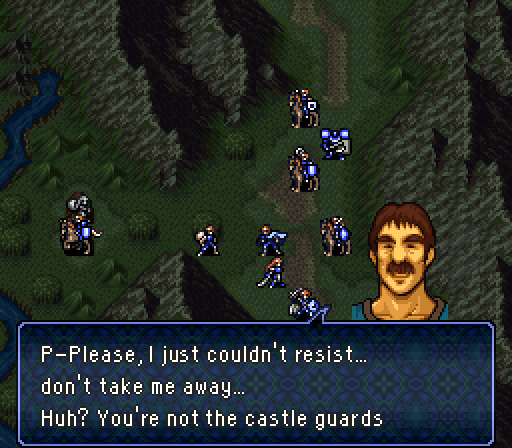
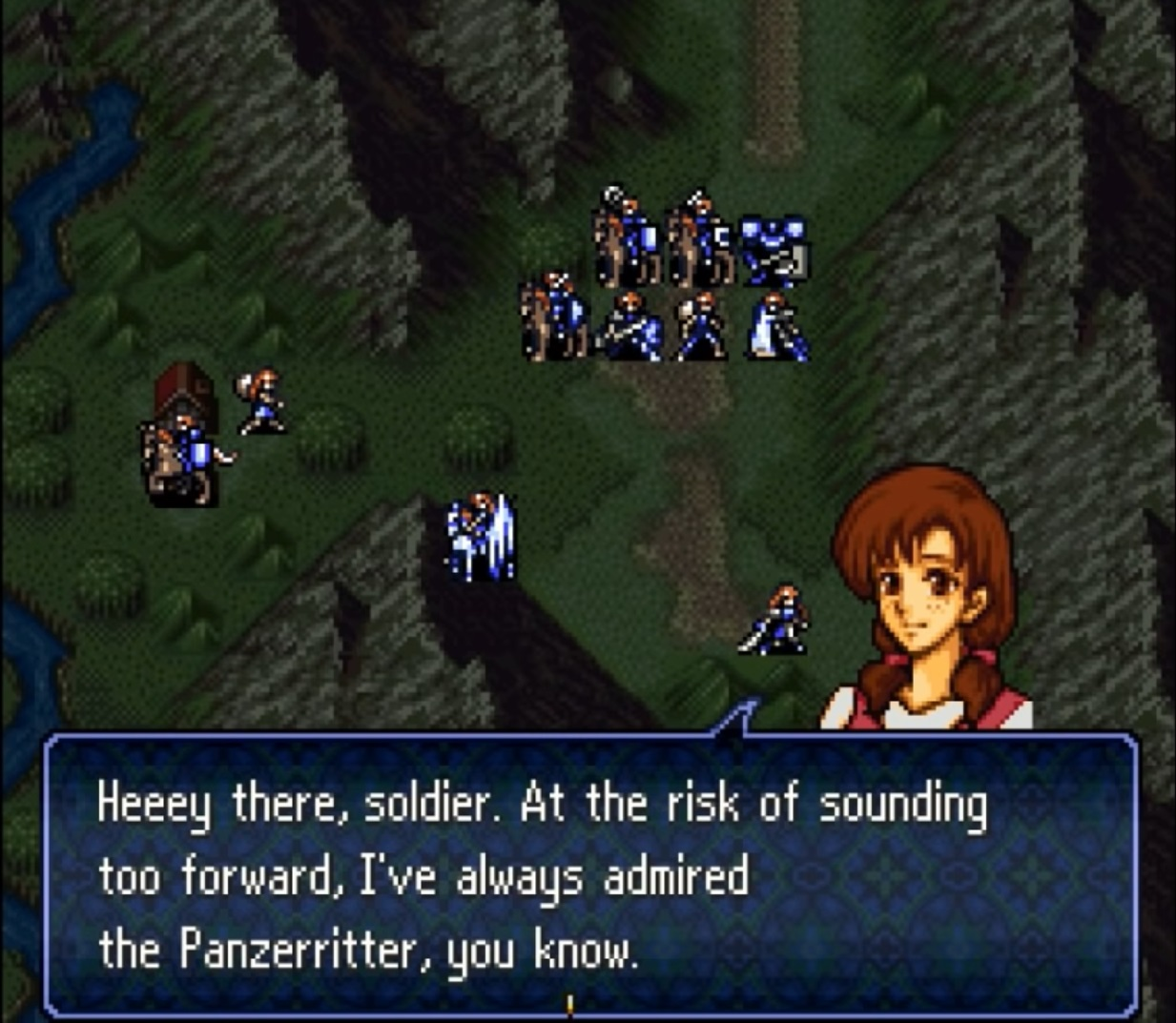
The image above is one of the most notorious changes. The one on the left is from the more faithful Shaya patch, and the right is from Project Exile. For clarity, the full text from Shaya’s patch reads as such:
Man: ❝P-Please, I just couldn’t resist…don’t take me away… Huh? You’re not the castle guards? Oh… Just forget what I said, then. Here, I’ll give you this to keep your mouth shut.❞
While the new text reads:
Girl: ❝Heeey there, soldier. At the risk of sounding too forward, I’ve always admired the Panzerritter, you know. You folks are so brave, with a body to match… Hm? Beg your pardon? You’re not with the Panzerritter? …Oh, c’mon! I had this whole spiel prepared an’ everything! Ugh, there go my plans… Look, one of the knights from the Panzerritter was by earlier, and he left this here. I thought it was the classic “pretend to forget something so you have an excuse to come back” ploy, but I guess not… Well, see that this gets back to him, will you?❞
Though, one thing to note is that this house actually wasn’t an intentional liberty, but a genuine mistake. According to Miacis, one of the team’s programmers, this mistake resulted from the fact that Cirosan did all the dialogue scripting, including which portraits to load, from scratch without referencing FireLizard’s translation, making it more prone to errors.
In other words, he saw the Japanese text, translated it, expanded upon it with full confidence in his interpretation, then inserted whatever portrait he felt fit with the localized text. And since that particular house was mistranslated without fact-checking the original Japanese script, we got the flirty girl instead of the nervous old man.
That said, a lot of criticism was leveraged towards this patch for the amount of liberties taken with the script, to the point where people consider it reaching the level of fan fiction.
Similar to Aethin with his Berwick Saga patch, there are PDF documents of the localized script with translation notes, which is also an interesting read.
In December 2019, a second FE5 patch hit the towers, this one being called Lil’ Manster. This patch was created by PE’s lead editor, Miacis, and was originally released as Project Exile: Editor’s Cut before being renamed.
This patch aimed to fix a lot of the errors and mistranslations present in Project Exile, as Miacis expressed that the original script didn’t go through a full review before release. In addition, many members of the server claimed that Cirosan was, in layman’s terms, hard to work with, as he frequently ignored feedback and suggestions and was generally seen as pretentious.
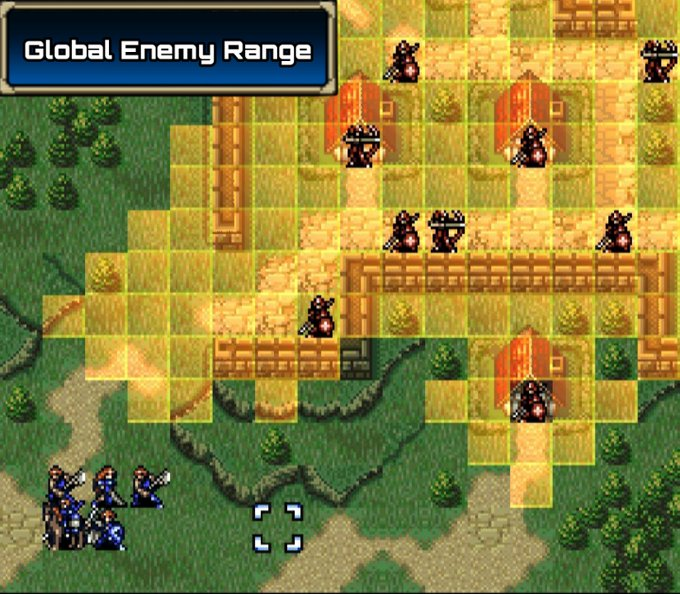
According to Miacis, when it was clear that PE wouldn’t get a final update anytime soon, PE: Editor’s Cut was released using the script fixes that were prepared for the French version of PE. Aside from script edits, it also included a lot of Quality-of-Life features such as:
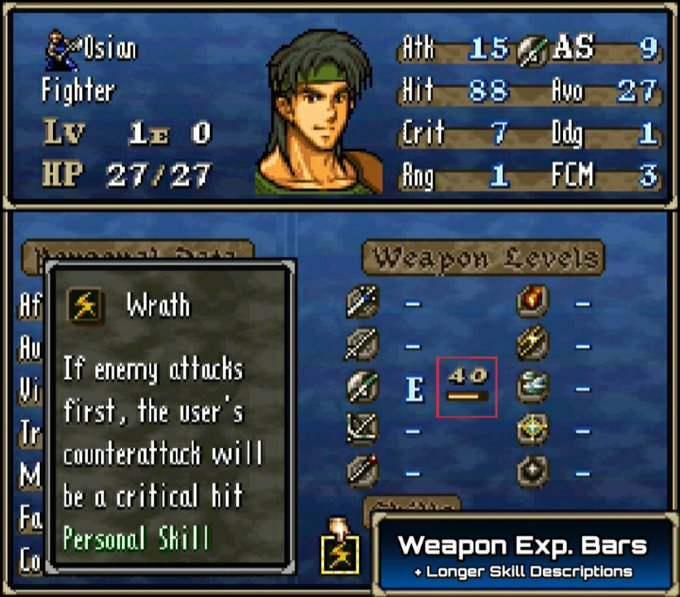
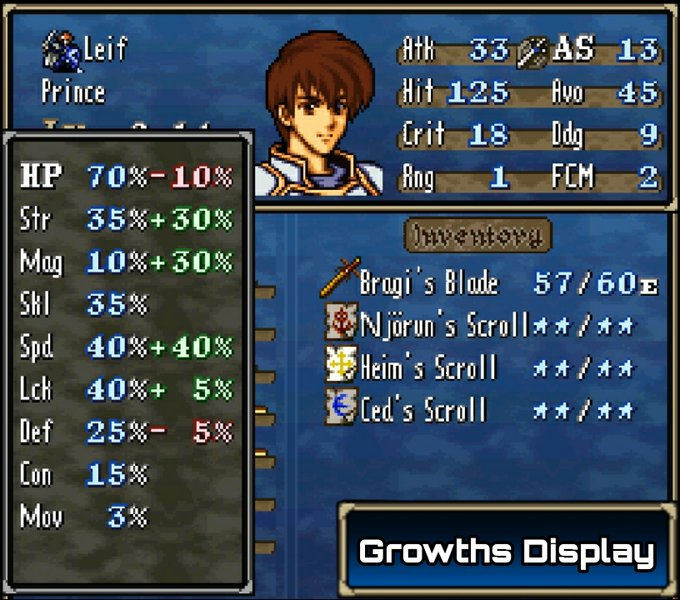
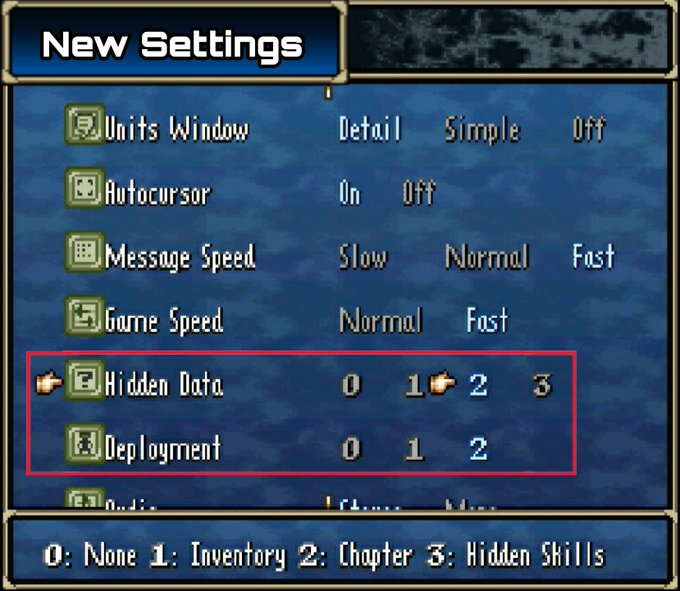
Aside from that, since LM is still being updated, the patch has been able to update names to the ones seen in entries like Heroes, as that game continues to get new units. Unfortunately, though, there was a lot of internal conflict with this patch, and the drama surrounding it is some of the most well-known regarding a fan translation in the community.
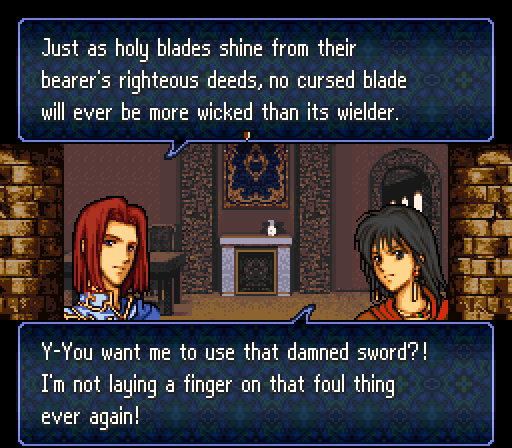
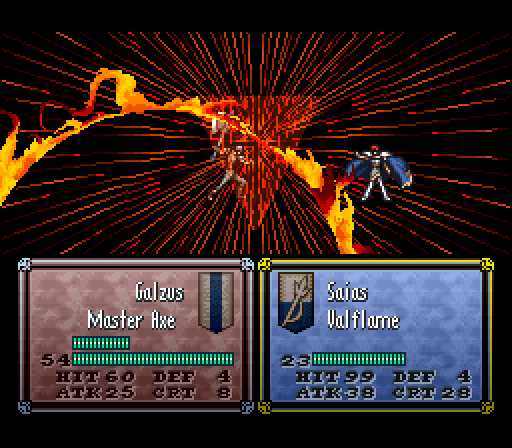
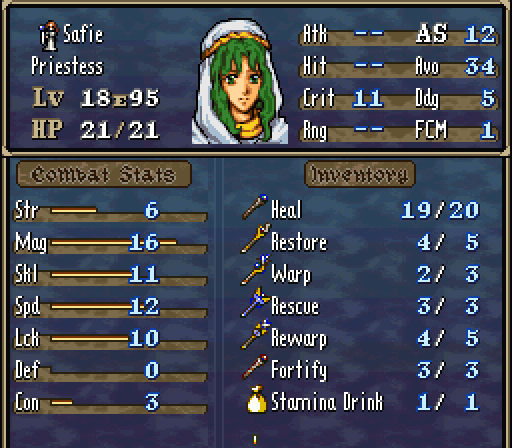
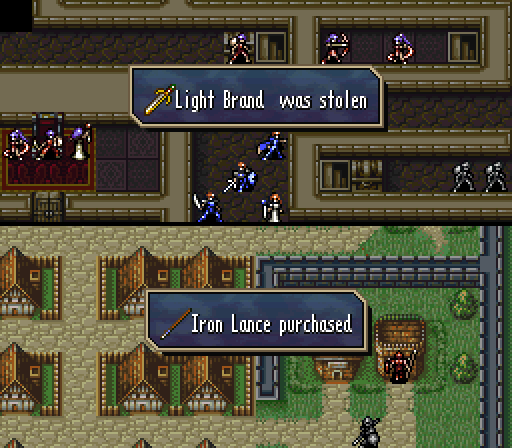
When PE: Editor’s Cut was first released, Cirosan was more than just a little bit enraged that his script was used as a base. On the SF thread, he ominously stated:
❝You didn’t have my permission to release this! This is uncalled for, I’m still working on the final version [of Project Exile] right now, and I even gave a deadline of the 15th of next month! You have no right to release a project using my script without my permission or knowledge!❞
Cirosan was livid to the point that he vehemently argued with Serenes Forest, FEUniverse, and r/fireemblem’s mods to have the PE: Editor’s Cut removed from their sites. After hearing Miacis’ side of the story, SF and r/FE kept the patch on their sites as long as the name was changed. This is where the name Lil Manster, a play on Lil Monster, first started being used for this patch.
FEUniverse, however, asked for Cirosan’s approval before releasing it, which effectively prevented Miacis from posting the patch there. Following this, Cirosan locked the original PE thread on SF, then deleted it. Then he changed the credits of Project Exile, demoting all Editors to Feedback, which allowed him to kick them all out of the Romhacking.net credits list.
At this point, it should be noted that the internal conflict with Cirosan and Miacis wasn’t just over the release of this project, but there was also a lot of drama surrounding the Discord server.
Following this, a Japanese ROM Hack called Super Thracia got a menu patch on SF, with Miacis helping out with the project. Cirosan, being the well-adjusted person he is, filed a DMCA claim in his name against Lil’ Manster on Dropbox. Then Miacis counterclaimed.
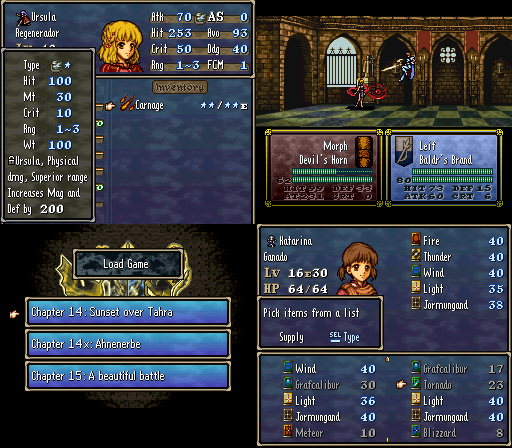
Eventually, because of this, PE was taken down from FEU, Super Thracia’s menu patch was not allowed to be posted there, and Mia was told not to host Lil’ Manster on FEU. After that, a guy on Reddit noticed the DMCA claims and posted a thread on it about FE being taken down all over the internet, which drew in more chaos.
At this point, things escalated: Zane forbade other people from using his tools, people on FEU turned against Miacis, and much of the community had several comments, threads, and videos about this controversy, a lot of which is now lost media.
Eventually, things got sorted out when Miacis discussed and explained the situation with several people. Zane re-allowed people to use his tools, as long as further projects using them remain private. Both the counterclaims went through, and the delay for Cirosan to sue had passed. Super Thracia was re-allowed on FEU, and Zane also permitted Mia to release FE5 Overclocked, a separate ROM hack which used Zane’s tools.
Someone posted Lil’ Manster on ROMhacking.net, which Ciro swiftly flagged for plagiarism. Later on, Miacis posted the patch herself on ROMhacking.net in accordance with the site’s guidelines, and five years later, in 2025, Lil’ Manster was then allowed to be hosted on FEUniverse.
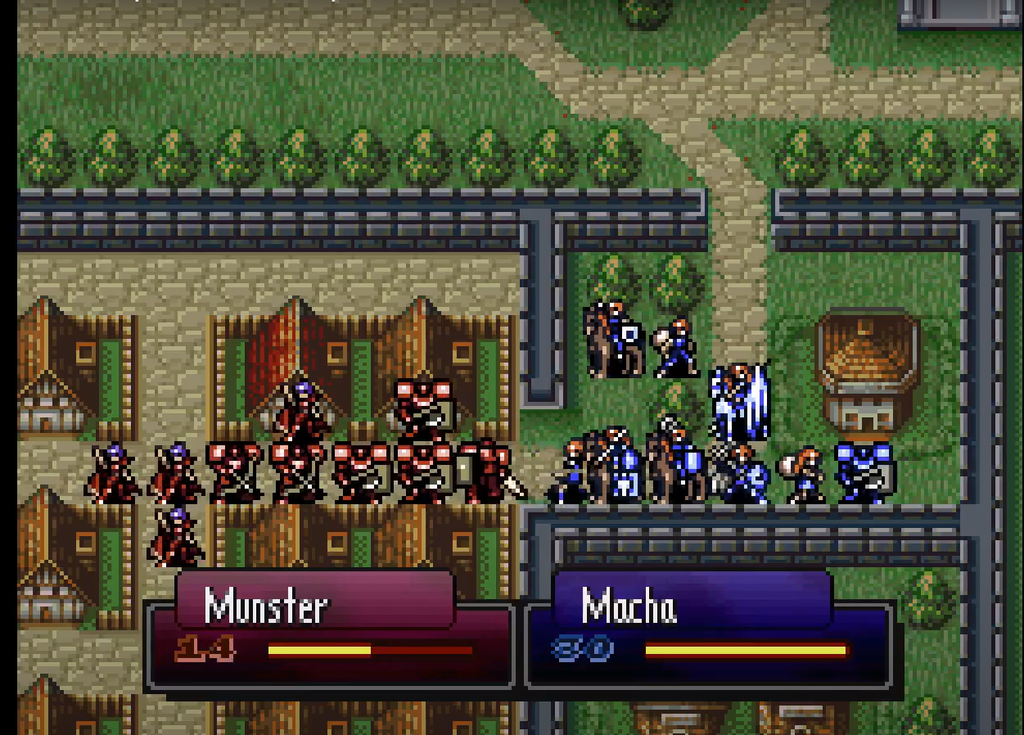
With a whiplash in tone, I’ll discuss another patch that kinda flew under the radar in August 2020. This patch is for all of the BSFE Satellaview games. These patches were done by Darrman, a user who helped me a lot when working on my FE1 patch, as well as working on a few other translations on his own, like the menu translation of the FE4 Binary hack, the menu translation for the GBC FE bootleg game Fire Emblem: The Reincarnation of Light and Dark, and a menu translation of Biraku Emblem…so yeah, as you can tell from that resume alone, he’s pretty based.
The patches for the BSFE games are fairly simple; since the original broadcast with CG artwork and voice acting is unreplicable, all there is to translate is the stat screen, death quotes, village dialogue, and boss quotes. It also used a lot of the same romanizations found in RPGuy96’s patch.
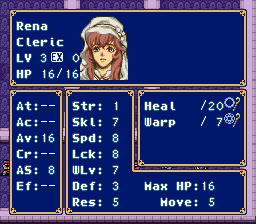
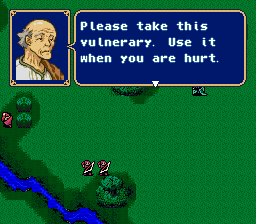
This patch for BSFE came out of nowhere, since the Satellaview games aren’t games talked about much outside of passing conversations and jokes. Not to mention that people would, more often than not, experience BSFE via FE12’s “modernized” versions of these games. But it was a pleasant surprise to see the original games get some attention and affection.
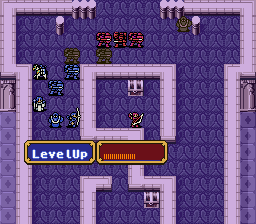
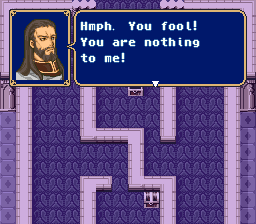
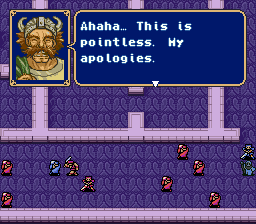
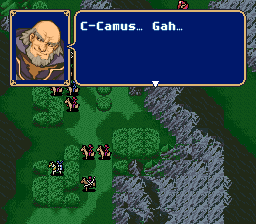
The next patch is another FE1 patch done by Polinym in 2021, which was retranslated from the ground up, rather than being built up from previous patches. This translation aims to be more accurate to the original Japanese dialogue and terminology and uses FE3 Book 1’s text as a base.
Outside of being more accurate, the biggest selling point of this patch is that Polinym uses ASM in order to expand the text boxes to display more text in a single text box. This allows for up to 23 characters to be displayed in a line over the measly 16 and leaves less room for any truncations or abridged dialogue, which was prevalent in many older NES patches. As such, Polinym’s patch is usually the go-to base patch used for people wanting to make some kind of translation for another language or hack.
One of the common criticisms I hear for this patch is the fact that, in its aim to be accurate, it would opt to use straight romanizations or interpretations of the Japanese names, rather than using the official English names. Like Mars over Marth, Marich over Merric, and Zagaro over Sedgar.
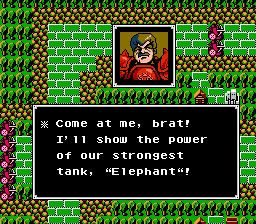
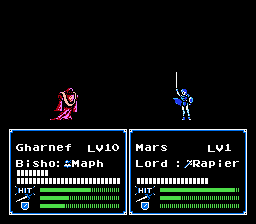
For a lot of the names, I don’t really mind, but with Marth, I find that choice to be a bit odd. For one, a lot of Japanese media did use Marth, even before Super Smash Bros. Melee. But secondly, the Japanese name Marusu (マルス) is meant to be a corruption of the standard Japanese spelling of Mars, or Māzu (マーズ).
So, similarly, Marth is a derivation of the name Mars, the same way terms like March, Marcus, and Martial are derived from the word Mars. Hell, even the newest game at the time, Fortune’s Weave, has a character named Mars, whose Japanese name is Māzu, not Marusu.
That part isn’t a huge deal, though; this patch is a nice alternative for people who want a more faithful experience to the original. That said, the biggest common criticism comes from a house in Chapter 24…
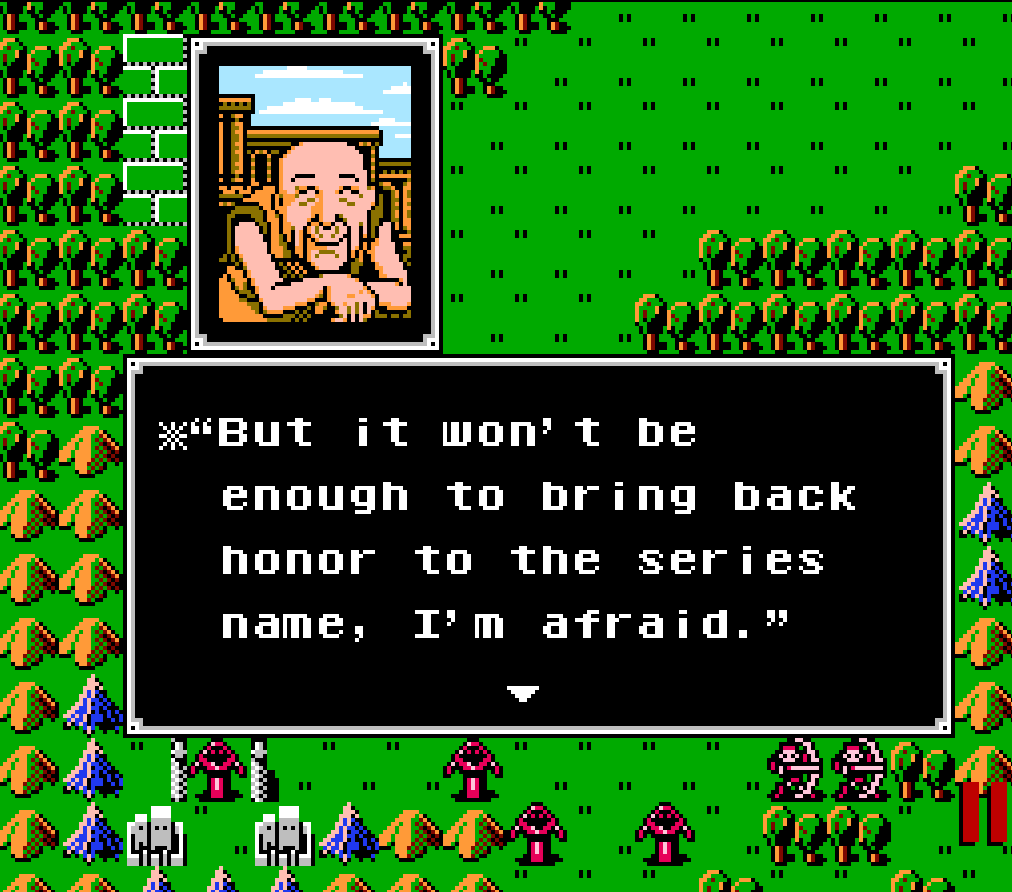
Similarly, Gharnef’s death quote also has a cheeky line where he says something along the lines of “I’ll see you on the SNES!” Which, in a patch, I’d chalk that up to just being an unfunny creative liberty, but in this case, it’s just really bad for a patch that claims to be accurate.
It also just makes me irrationally mad when people use “anime game” in that context, like, my brother in Christ, these games come from Japan; of course it will have “anime,” or more accurately, Japanese influences. But that’s neither here nor there. Polinym did address these criticisms in version 1.4.1 of this patch, and from what I heard, these liberties were removed.
Beyond this patch, though, Polinym later released various other FE1-related projects like a new randomizer for the game, an FE1 editor, and a full ROM hack called Time For Tom – Thomas and Jake’s Excellent Adventure.
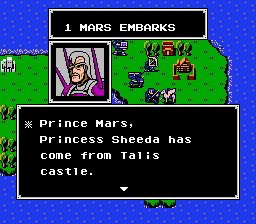
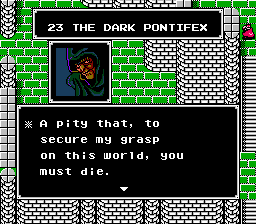
In December 2021, a user known as Rotted_Fish announced a new retranslation project for Fire Emblem Fates, which is now renamed Project Re-Fates. This translation sought to restore the altered and cut content in the original Japanese game and also aimed to fix the errors or mistakes found in Team If’s latest release. However, over time it became less of just a retranslation and more of a complete overhaul, to provide a fresh new narrative experience without stepping too far into fanfiction territory. They mention on the main page that this mod takes inspiration from Radiant Dawn’s localization, without repeating a lot of its same pitfalls.
As for new features, the patch added new scenes based on the official manga. All characters now start with their PRF weapons; many weapon and class names were relocalized; new weapons and supports were added; same-sex S supports were added; and Nyx now starts as a Witch.
The Modern Era is a term used to refer to the years following the release of Three Houses; for me, that specifically refers to around 2021 onward. When things like the COVID lockdown happened, many games such as Three Houses exploded in popularity. At this point in time, Fire Emblem was officially considered mainstream. Every game going forward would be released internationally; we’d get more spin-offs, the community would only get bigger and bigger, and we’d continue to get more and more fan content.
From then on, the only fan translations we’d get going forward were either touch-ups or addenda to previous fan translations, or just reverting localization changes seen in the official games. The first patch from this era is an FE1 patch called Project Elitist. This was a patch that was hosted on Serenes Forest and created by AnAsshole.
This patch, like Polinym’s, aimed to be faithful to the original Japanese dialogue and naming conventions. A lot of the names are similar ones you’d see in official romanizations, though some interpretations are ones I’ve never seen used before, like Theda as opposed to Sheeda, Shiida, or Caeda; Ulf as opposed to Wolf; Radhi as opposed to Radei, Raddy, or Radd; and Malik as opposed to Marich or Merric. The patch also translates Marth as Mars 🙄, and the General class as just “Leader.”
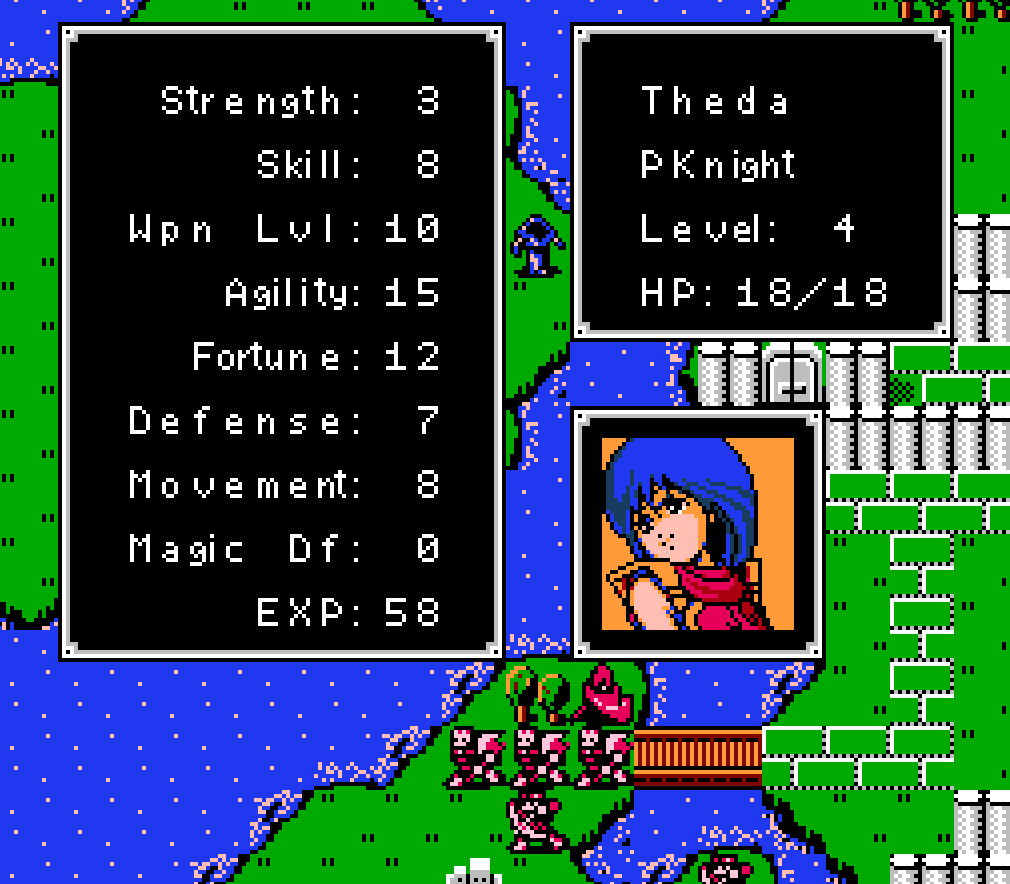
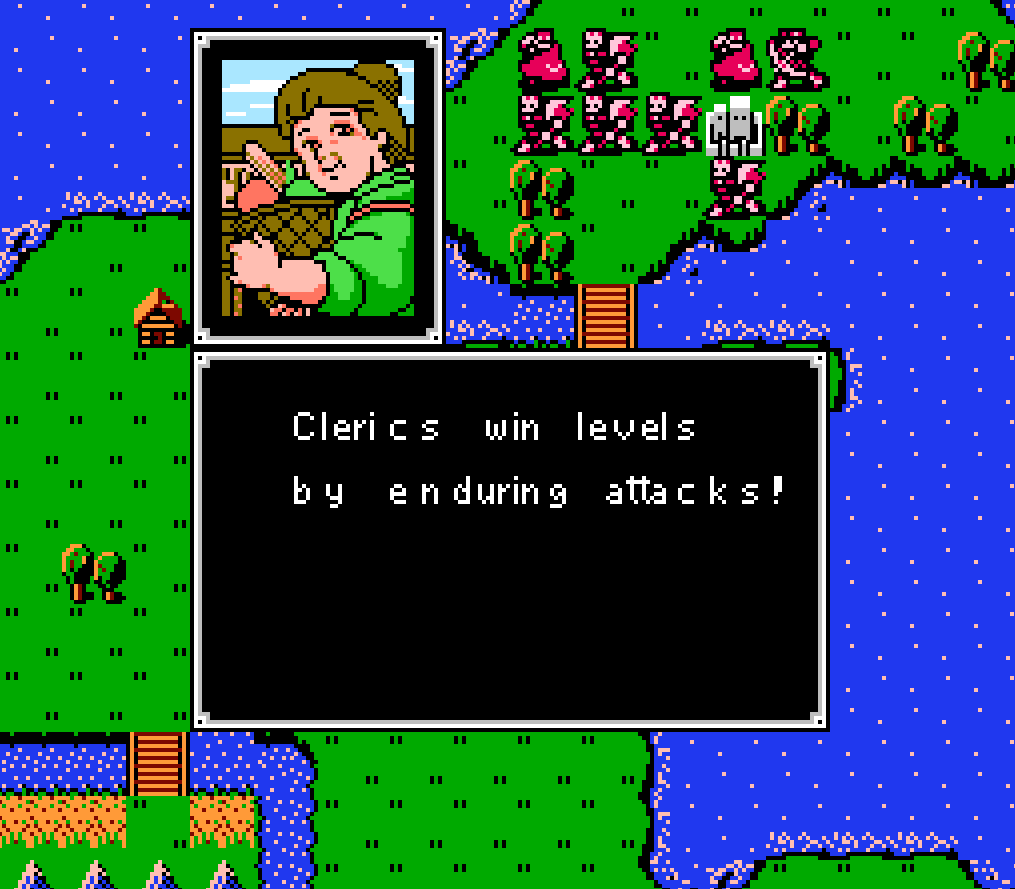
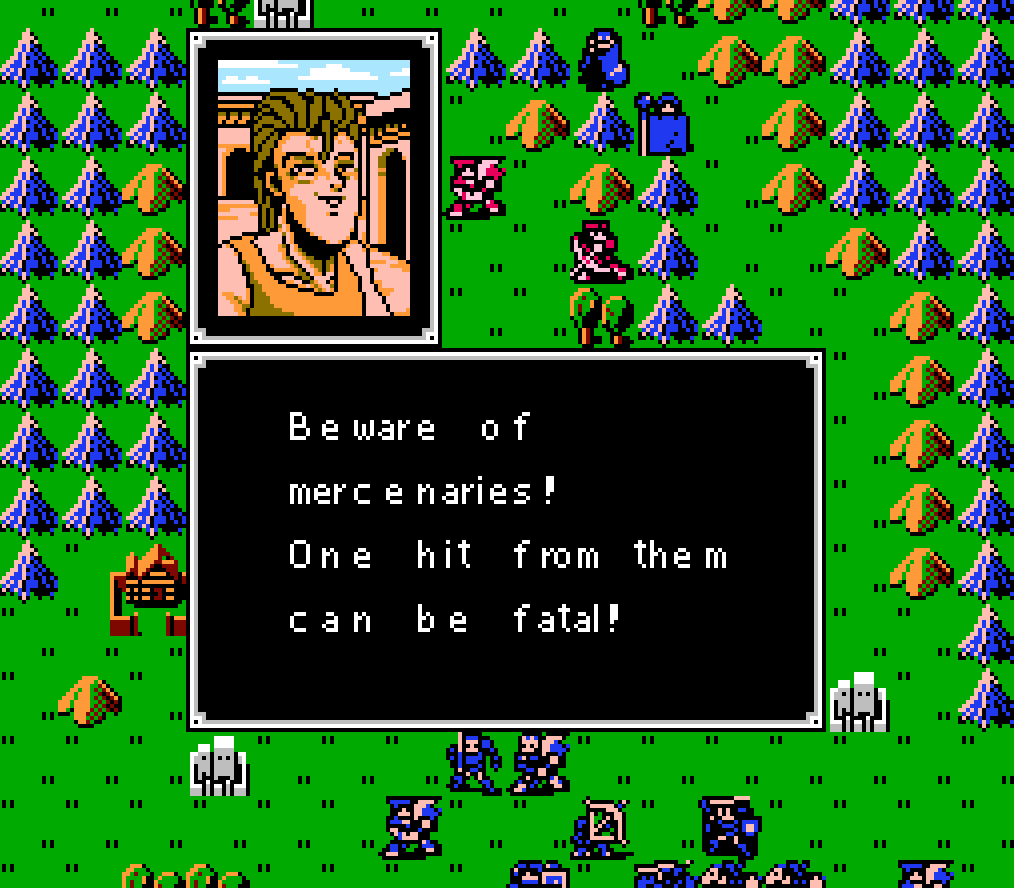
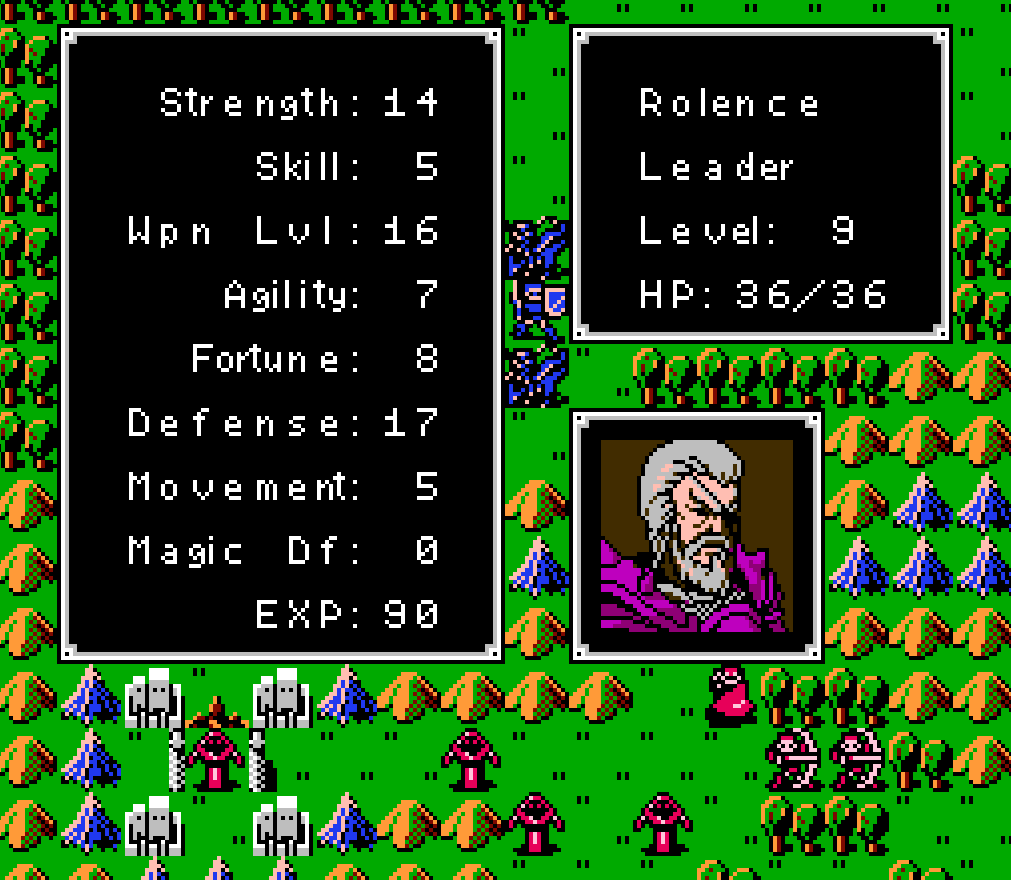
That said, if you don’t like those names, the download comes with two versions of this patch. An Elite version and a Paragon version. The Elite version is just the faithful one, while the Paragon version is a quick edit that uses the official localized names. That said, though, neither version, at present, has translated the story past Chapter 3.
In terms of the font used, it’s not the most visually appealing, but that’s mostly due to the fact that it’s restricted by space limitations, requiring heavy use of bigrams. But in a vacuum, the font itself looks pretty good when it’s not scrunched up together. You can see that in the image below with the word “Bowgun” or “HandLn.”
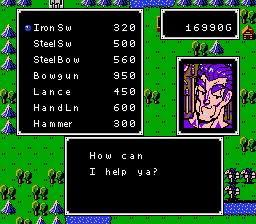
Beyond that, AnAsshole also translated the FE1 Manual and provided that in the download page if you want to check it out. It’s not much different from the official manual that came with FE1’s 2020 localization, but I do like how he included screenshots using his patch for the game screenshots, and edited them to make them look indistinguishable from actual scanned images.
On January 18th, 2023, a user by the name of Lopo made an update patch for FE2 which set out with a similar goal as Gaiden Guy’s patch, though this one is a bit more complete. This patch, unfortunately, flew under the radar, but it’s an impressive patch in itself, considering that, in terms of free ROM space, FE2 is way more limiting compared to FE1.
Speaking of FE1, I provided the modified EarthBound Beginnings text font that was used for this patch, which further sets it apart from other FE2 patches. This patch is still in its early beta stages, though, and still has some errors and terms that aren’t fully updated.
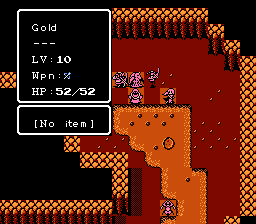
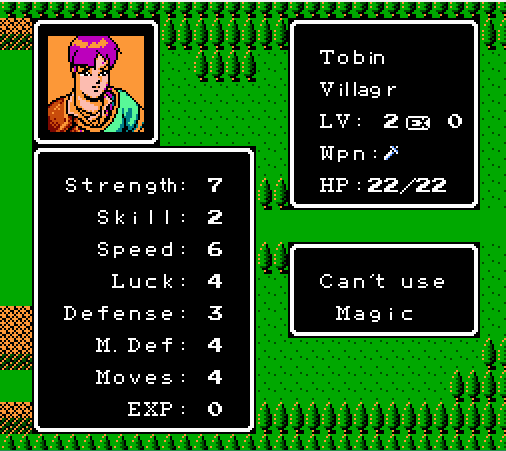
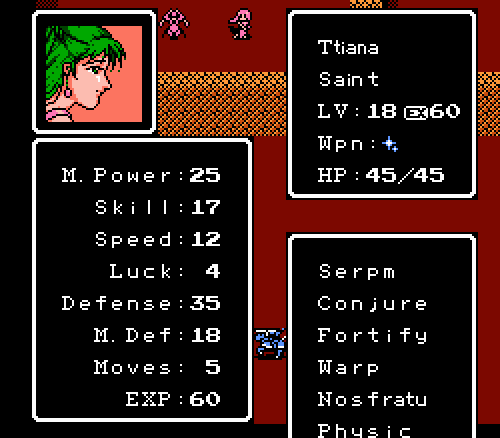
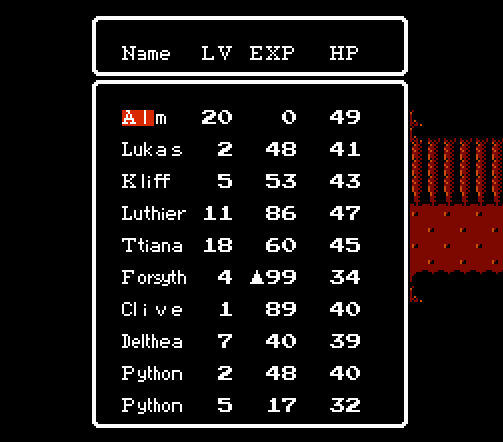
Upon Fire Emblem Engage’s release in January 2023, the game received a lot of controversy due to its localization changes. Similar to Fire Emblem Fates, a lot of the dialogue was rewritten, some characters were altered, and so on. Off the top of my head, there was Framme and Goldmary’s B support, which was basically completely rewritten because I guess they figured Anglos were too sensitive to read a support about a person who was insecure about their figure.
Some individuals are indifferent to such changes, while others strongly object to them. And there was no shortage of videos discussing these changes…
In response to these changes, a user by the name of cris1010, who was dissatisfied with the alterations, took it upon themselves to create a mod aimed at preserving the game’s faithfulness to the original Japanese script. This patch became known as the Engage Uncensored Patch.
It’s important to note that this patch did not set out to retranslate the entire game; rather, its focus was on restoring character supports, wake-up sequences, and a selection of battle conversations to their original form.
The creator of this patch has claimed that they wish to make this patch available for other languages, but as of now, they’ll need people who speak those languages to aid them. However, ironically enough, this uncensored patch had to be censored with its v1.2 update, as a moderator from GameBanana demanded it be changed due to S-supports and wake-up conversations regarding Anna and Jean, characters who are depicted as underage.
Due to this, the full uncensored patch was only available on Loverslab briefly, but then it was removed promptly for the same reasons. And as of now, the full uncensored patch is only available on Varis or GbaTemp.
As you’d expect, though, people were enraged at the GameBanana mods by this. And while I normally think it’s abhorrent to make heavy accusations towards people like this, if the sole thing that had to be censored in this uncensored patch was the fact that you can’t romance two characters who are around eleven years old, and you’re still angry about that, I think you may have to take a seat right over there.

Changing subjects, the next patch I wish to talk about is another FE5 patch, which was released on March 4th, 2023. It was a simple patch made by a user named Lethyrs, I don’t know if this patch was made previously but they decided to upload it much later, or if this is an entirely new project, but it is an addendum to the FE5 Shaya patch, which removes the garbled and Japanese characters from the menus and makes them more legible.
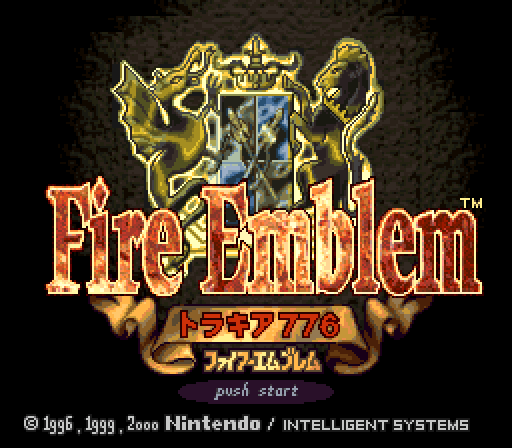
A lot of the work for the menu screen was borrowed from the Big Iro—er, the Luxifer Angel’s menu patch of the game, and honestly, if you’re nostalgic for the Shaya patch but don’t want to play the Shaya patch, I guess this is a decent alternative.
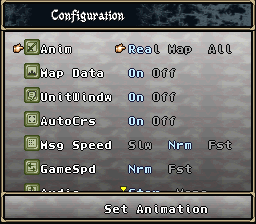
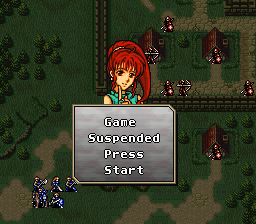
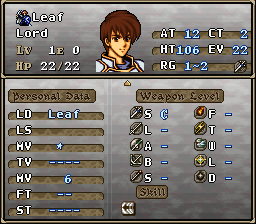
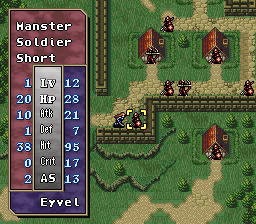
In December of 2023, a user named silvertail76 released a mod for Fire Emblem Echoes, which was another delocalization mod. According to them, they felt that 8-4’s script was disrespectful to the original Japanese script, claiming that they cared more about fine-tuning the script to their own personal preferences than communicating the story that the original authors wrote.
There isn’t a lot else to discuss regarding this retranslation; it’s just Fire Emblem Echoes, with a script that was directly translated from the original Japanese dialogue. It did get some minor pushback due to people saying it’s a waste of effort, how the dialogue reads as machine translation, or just clowning the guy for pasting a Tolkien quote on the download page, but beyond that, there isn’t much else to say.
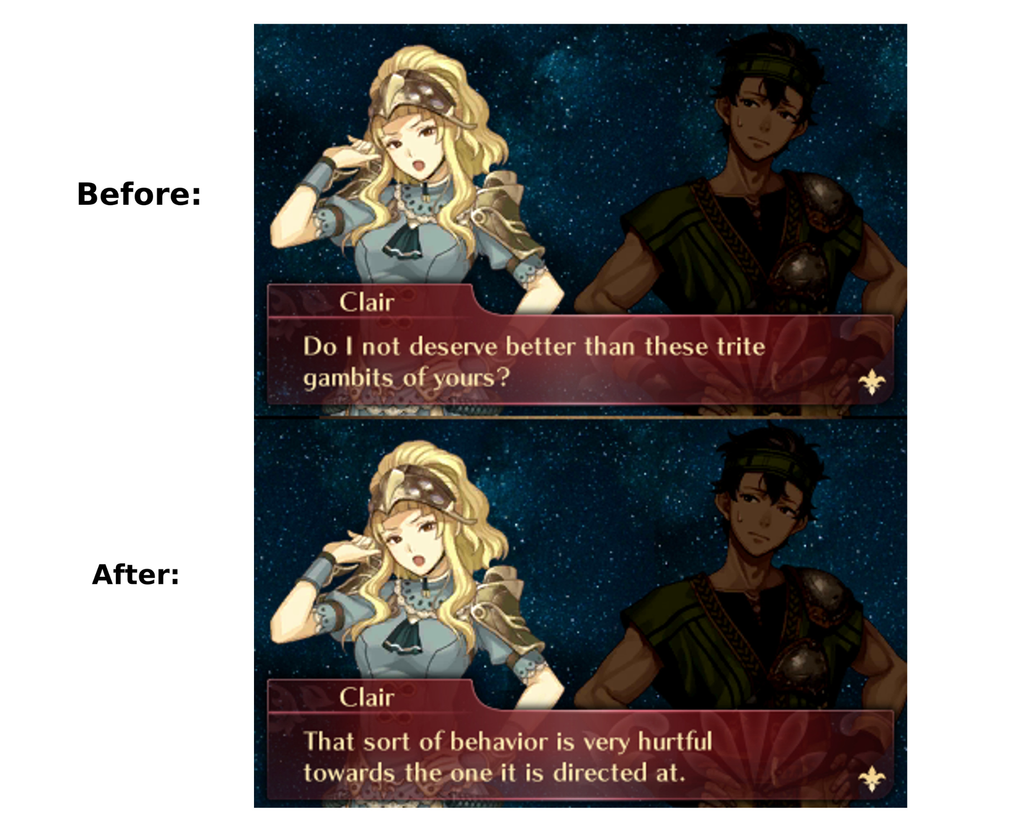
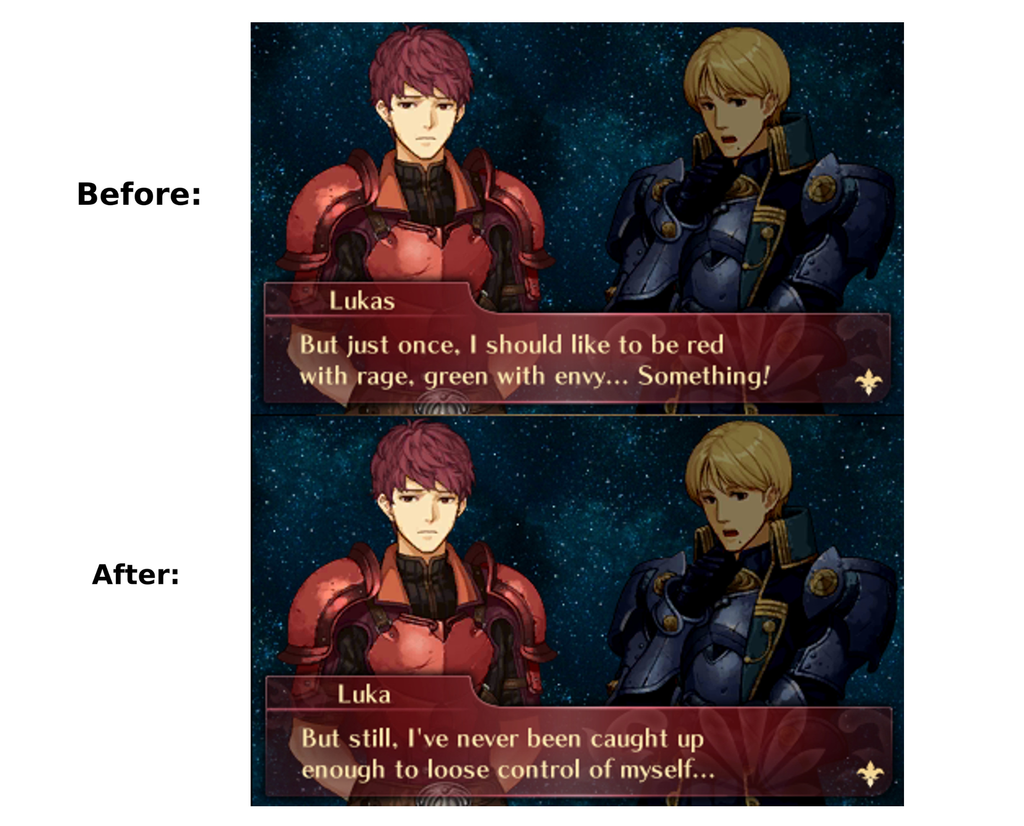
In the following year, in December of 2024, a user named KrashBoomBang released Heroes of Light, not to be confused with Heroes of Shadow, a new complete localization of FE3. According to Krash, the patch aims to bring FE3 up to the same level as other fan translations while injecting some more life into the script and improving the visuals. The patch initially began development in 2019 by Lopo and flasuban, and was worked on on and off.
Eventually, Krash took over the project after Lopo expressed being burnt out. He used text editing tools developed by RobertTheSable and began work. Later on, CedAodh joined, making a few big fixes to the project: Firstly, he reduced the space between letters in the dialogue font, giving more space. But secondly, he showed Krash how to move text entries around in the ROM, allowing them to better take advantage of the extra space in the ROM.
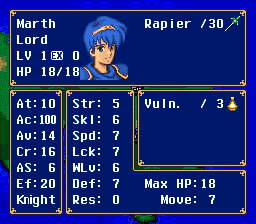
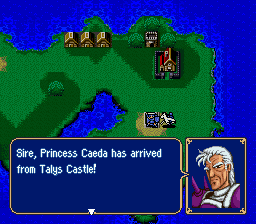
I do need to emphasize, though, that this project is a localization rather than a direct translation, and this is important to mention because there are a lot of liberties. I’d argue that the changes here are more jarring than some of the ones seen in the original releases of Project Exile.
Krash has made it clear that these changes served a few purposes: adding information from official localizations, emphasizing ideas that are already present in Japanese, making connections a bit clearer, and giving characters and scenes more personality where appropriate.
He also emphasizes that the overall goal was to make the script fun to read, in a similar vein to Project Exile, Shadow Dragon, Echoes, and Vestaria Saga. And while I can sympathize with this perspective, and I do enjoy Krash’s writing overall, as I said, a number of the liberties are rather jarring.
Off the top of my head, the biggest issue people have is with how Marth’s advisor, Malledus, is presented. While he was a pretty normal character in Japanese, Krash made him into a comic relief character, giving him a running gag where he introduces himself every time he appears, and is mostly a brown-noser to Marth…which is kinda cringe.
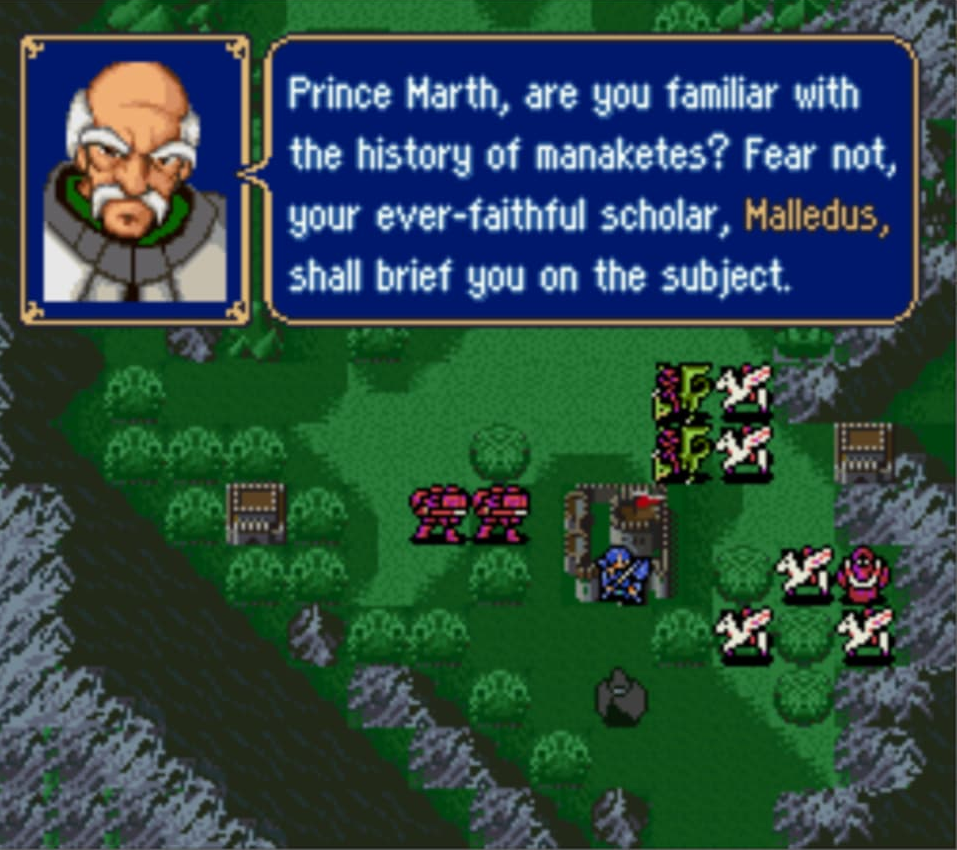
I mean, I don’t mind humor being injected per se; I just feel you’d have to be very tactful with it. It’s best done in cases where the original dialogue was already meant to be lighthearted or comedic, or if changing the speaker’s tone has no bearing on the overall experience, like it’s a nameless villager in a filler chapter or something.
For example, in Phina’s recruitment, Phina makes a joke about how Navarre wearing purple feels tacky and that red is more his color. Which works because the original dialogue was already meant to be on the sillier side.
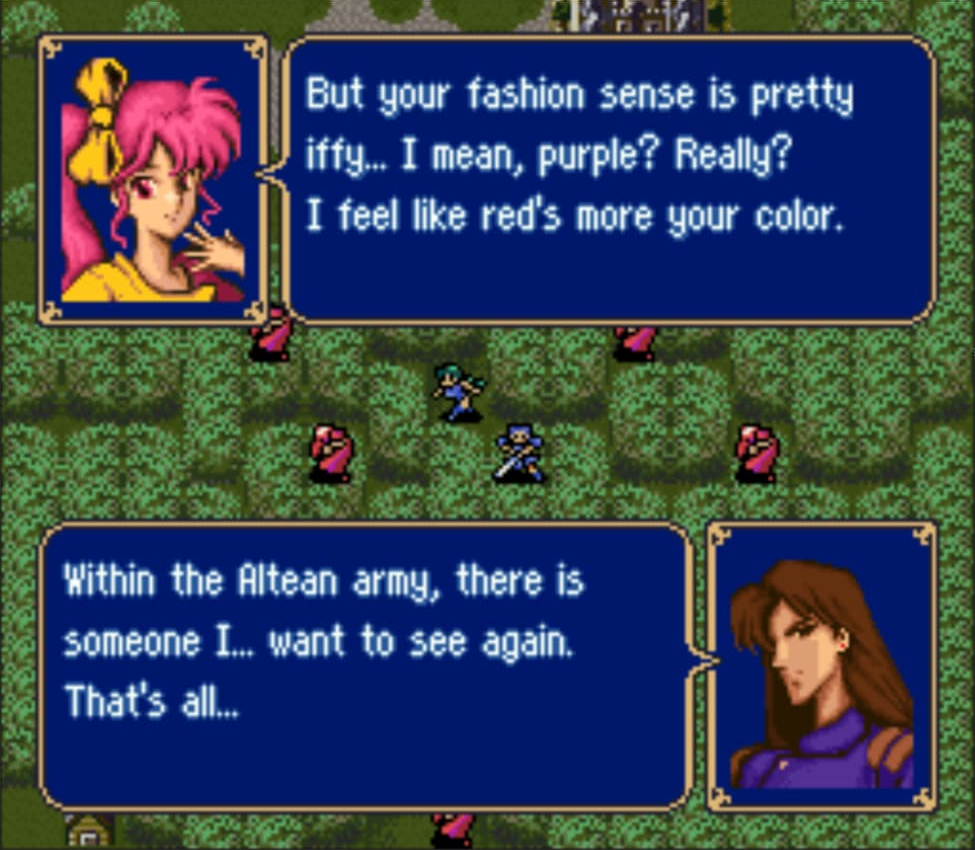
That said, many interactions also lead into what I feel come off as fanfiction-y or headcanon-like, which, I mean…yeah, it’s a fan project. But, at the same time, it results in the potential spread of misinformation regarding character personalities and lore details if people aren’t aware that the dialogue was changed. But if you’re aware that many changes were made and just want to play FE3 with a story that’s more fun to read, this is a fine fan translation.
Later on, in April of 2025, Polinym released a patch simply called Fire Emblem Shadow Dragon and the Blade of Light – Nintendo Switch Edition. As its name suggests, it’s a patch for FE1 that lifts the English script used in the 2020 Switch localization.
The patch uses the same font, same script, and same names. Though the full script was just barely too big to fit in the ROM. Polinym had to use bigrams to fit some text. Additionally, the only place he had to outright remove dialogue was the Gotoh village dialogue.
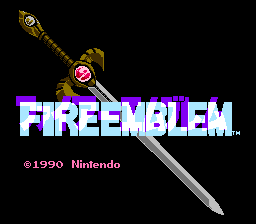
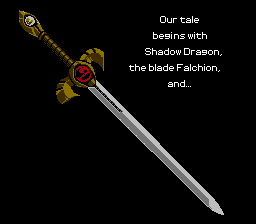
Some battle dialogue is also incomplete, and the ending crawl and epilogues were untouched. The game also has some minor bugs, but overall, it’s a good patch if you prefer the official names over the more faithful ones.
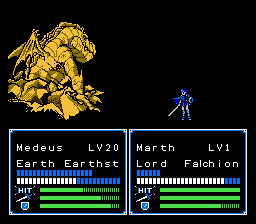
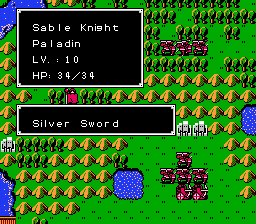
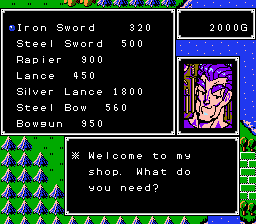
In the same month as the previous patch, a new FE2 patch called Project Dumasday was released by a user named Norikins. It was an addendum to the Artemis251 translation, but heavily modified. It featured a slightly expanded script, the font from the official FE1 localization, names from Echoes, and some typo/bug fixes.
The text isn’t the most polished, though, with many of the complaints coming from the kerning between the characters
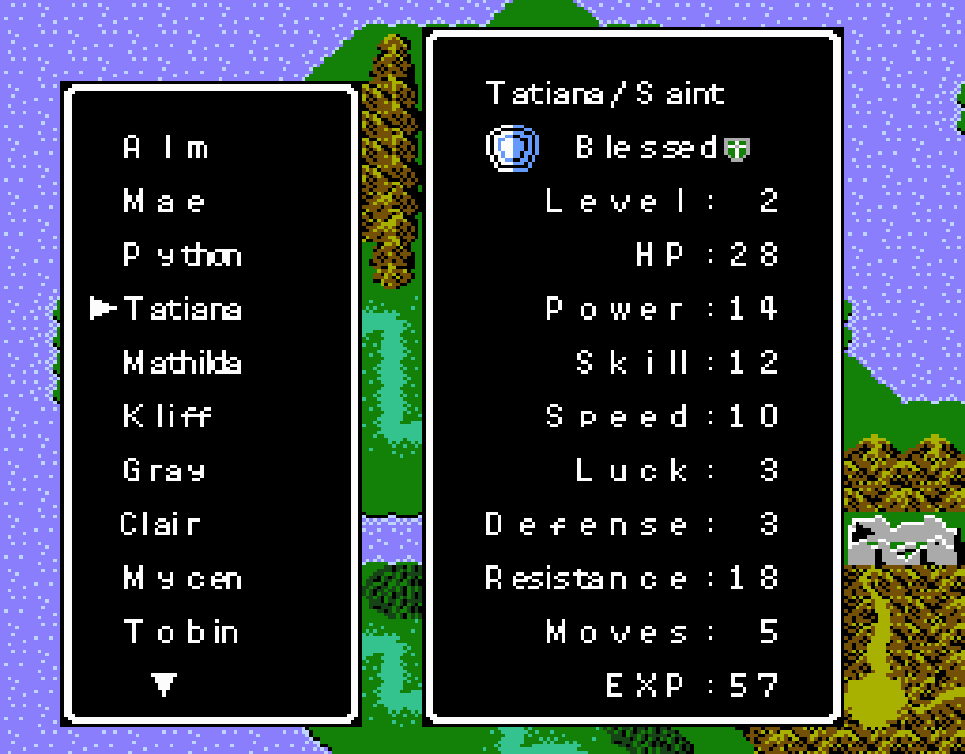
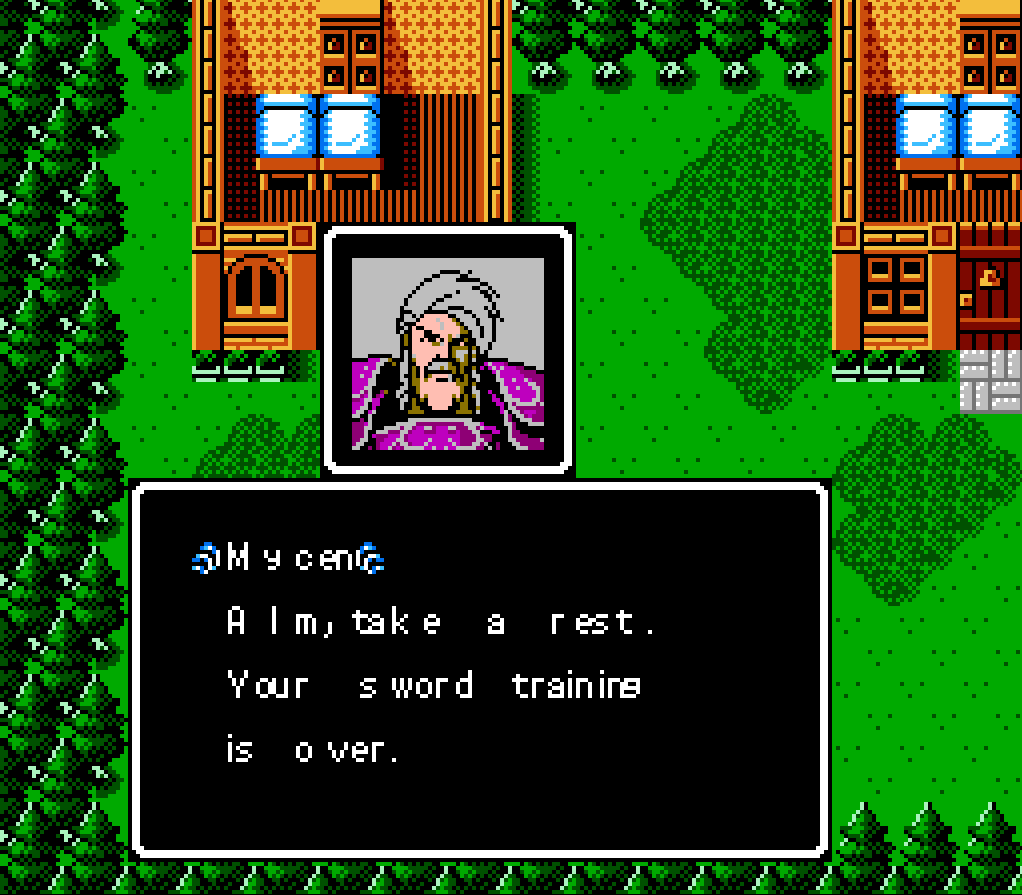
By May 14, 2025, Project Naga had been in open beta for nine years. In that time, later official releases such as Heroes and Engage had introduced updated localized names and terminology that made some of Project Naga’s localization choices outdated. The patch had also accumulated its fair share of typos, bugs, and criticisms over the years, while bookofholsety seemed unlikely to return to the project and continue development.
Since Project Naga’s initial release, however, the project had also spawned several versions for other languages. A German version was released, followed by a Spanish version, while Miacis was also working on a French version. With the development of newer hacking tools, the idea eventually emerged to use these tools to create an updated English version as well. The result was Lil’ Nordion, an FE4 patch built upon Project Naga.
The project was headed by LilinaGaming, who handled the translation, localization, text extraction, and graphical editing. Miacis handled build and repository management as well as script editing, while NMC contributed translation and localization work and assisted with playtesting.
My friend ThePsyShyster contributed translation and localization work. They also have a separate Tumblr post where they discussed some of the bolder name choices, which I definitely recommend checking out.
Ultimage handled the hacking using his FE4 disassembly tools, while Tchuu designed the logo.
As I implied before, LN features the more modern localizations seen in Heroes and Engage. For example, Noish is now Naoise, Holyn is now Chulainn, Jungby is now Yngvi, Anphony is now Infini, Shield Sword is now Safeguard, and Earth Sword is now Lands Sword.
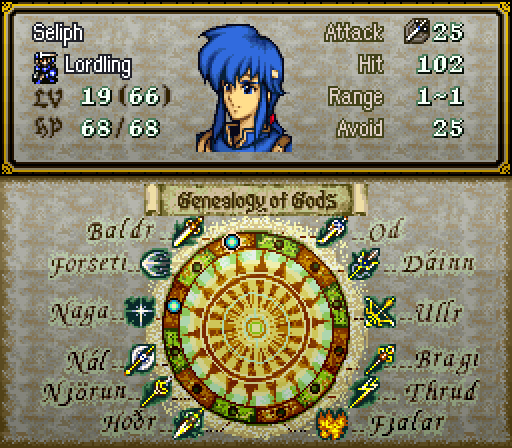
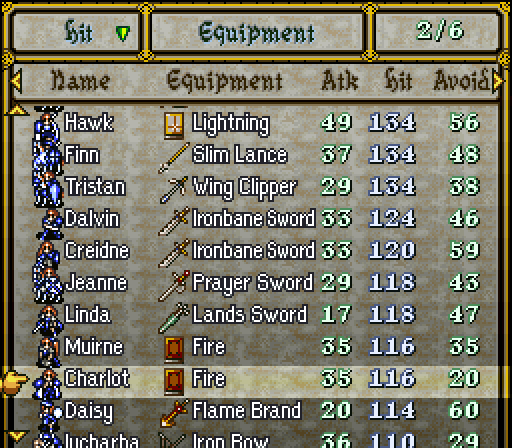
Some of the issues I had with PN were also addressed; for example, they reverted Sword Knight to Free Knight, Bow Knight to Archer Knight, Myrmidon to Sword Fighter, and Rogue to Thief Fighter, retaining the identities the classes had in Japanese.
A lot of the other liberties came down to making certain naming references clearer, like Palmarch being changed to Polemarch, Coulter to Gortach, and Buchanan to Bakunin. The most unforgivable change, though, is reverting Luigi to Mario. 😭 What did they do to him?
One change I don’t like much is that they changed Duke Knight to Banneret. A Knight Banneret is a knight who leads troops under a banner, which is extrapolated from the root word of Duke, dux, meaning leader in Latin. It was changed due to the liberal, generic enemy usage and the fact that there are no in-game dukes in this class. While I can understand the reasoning, I’d prefer if they still used the term “Knight” in it to keep the pattern, though because Forest Knight was changed to Ranger due to following FE8’s localization choice of that class, peace was never an option.
They also changed the Lightning Sword to Levin Sword, which was to differentiate it from the Lightning tome or the Light Brand. Which makes perfect sense, but it still makes me sad, because the official games make it a point to differentiate Lightning Sword (いかづちの剣 lit. Ikazuchi no ken) and Levin Sword (サンダーソード lit. Sandā Sōdo). Y’know, before Engage’s localization fucked it up. Maybe that localization is as bad as people say…
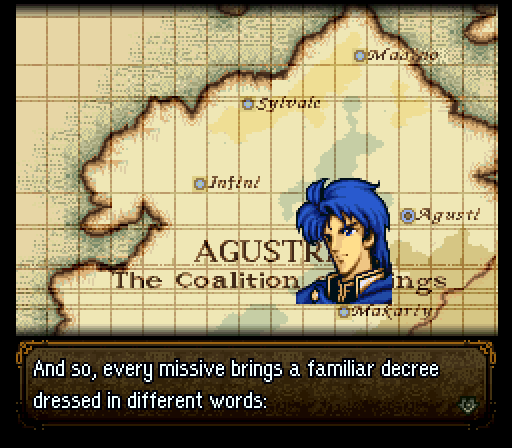
I’ve seen a lot of people complain about the name Ironbane Sword, but I quite like it. It was a change made to make the name more accurate to the Japanese name, Iron-Cutter Sword (ざんてつの剣 lit. Zantetsu no ken). In Project Naga, the sword was renamed to Armorslayer to have it fall in line with the similar weapon that appears in other games, but the two weapons have different Japanese names, with the traditional Armorslayer being called Armorkiller (アーマーキラー lit. Āmākirā) in Japanese.
Some bug fixes were made, like the jealousy bug being removed—though it can be re-added with an optional patch—and some visual polish, like tweaking the EarthBound font used in the initial release. I also like the character, the skill descriptions, and stuff added. It’s pretty charming.
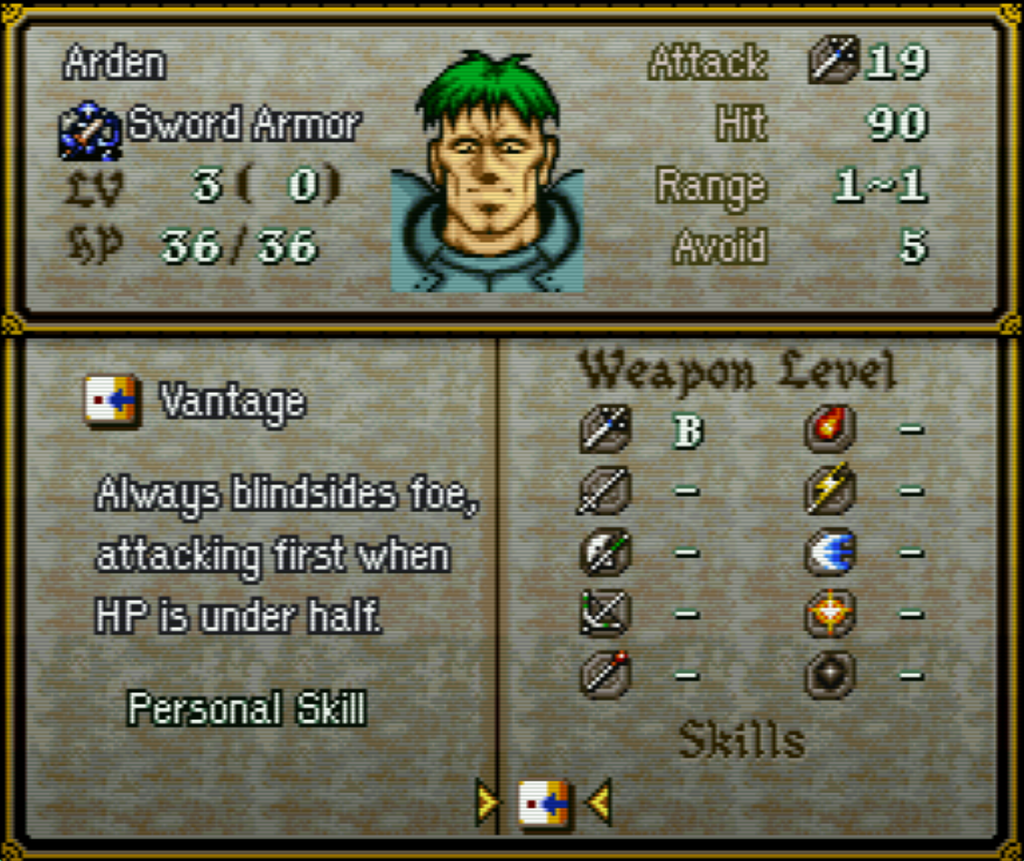
This patch also includes the Lil’ Nordion Public build files, a GitHub repository that lets you use Lil’ Nordion as a base for your own FE4 projects without starting from scratch. All in all, it’s a cool update patch that I’d recommend.
In March 2026, Akaneia Refined was released onto the world, an FE3 patch by Galap. Compared to Krash’s translation, it takes far fewer liberties. Meanwhile, compared to Quirino’s and RPGuy’s patches, its writing feels much more natural. Galap also took a very multi-pronged approach to the project. Rather than just consolidating everything into one single patch, Akaneia Refined includes a number of QoL improvements, bug fixes, and enhancements, which are available as separate patches.
One of these is the Hit Rate patch. Normally, FE3 displays hit rates with a cap of 100%, even though the actual hit value can be much higher before the opponent’s Avoid is factored in. This makes calculating the actual hit rate unnecessarily difficult—y’know, as if anyone is going to be doing math while playing Fire Emblem. This patch removes the cap, allowing the game to display the unit’s actual Hit value in menus. For example, if a unit has 150 Hit with a sword equipped, the menu will display 150 instead of simply showing 100.
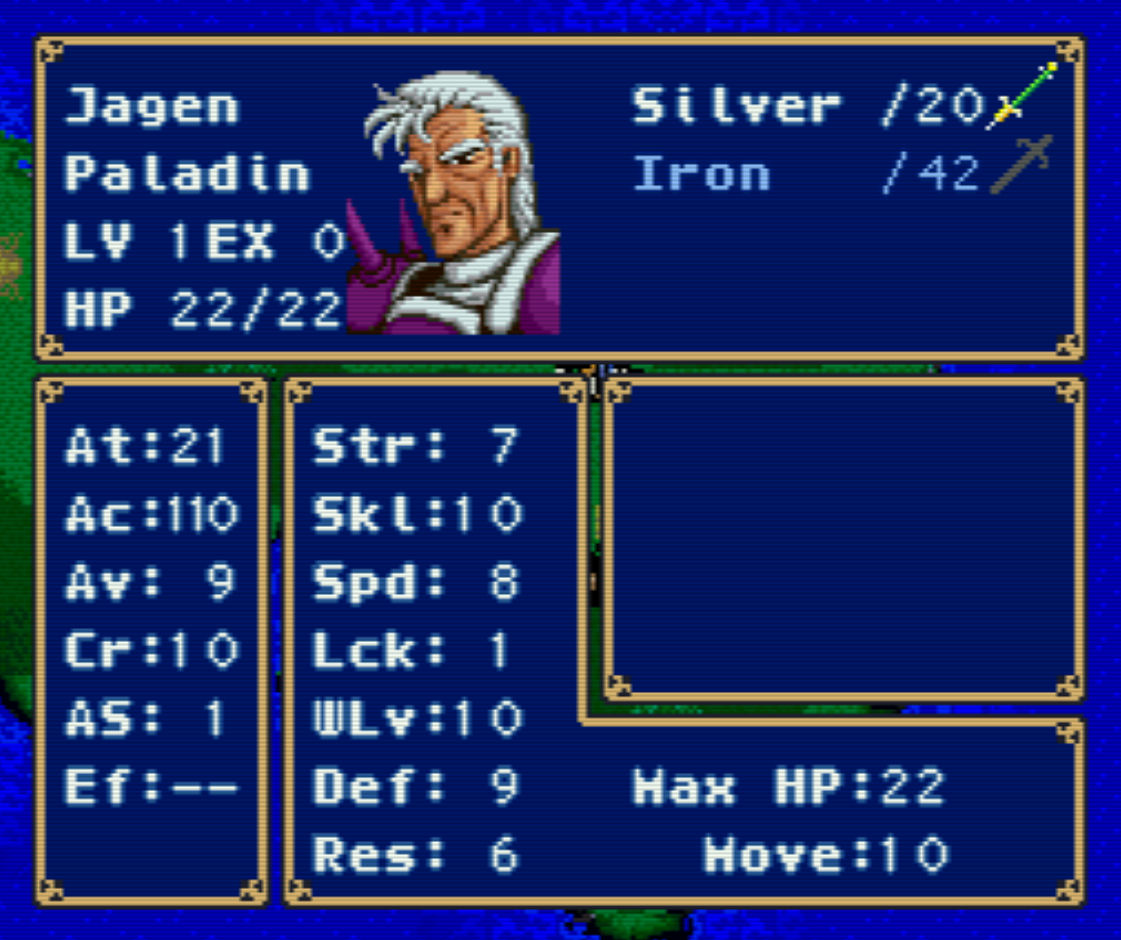
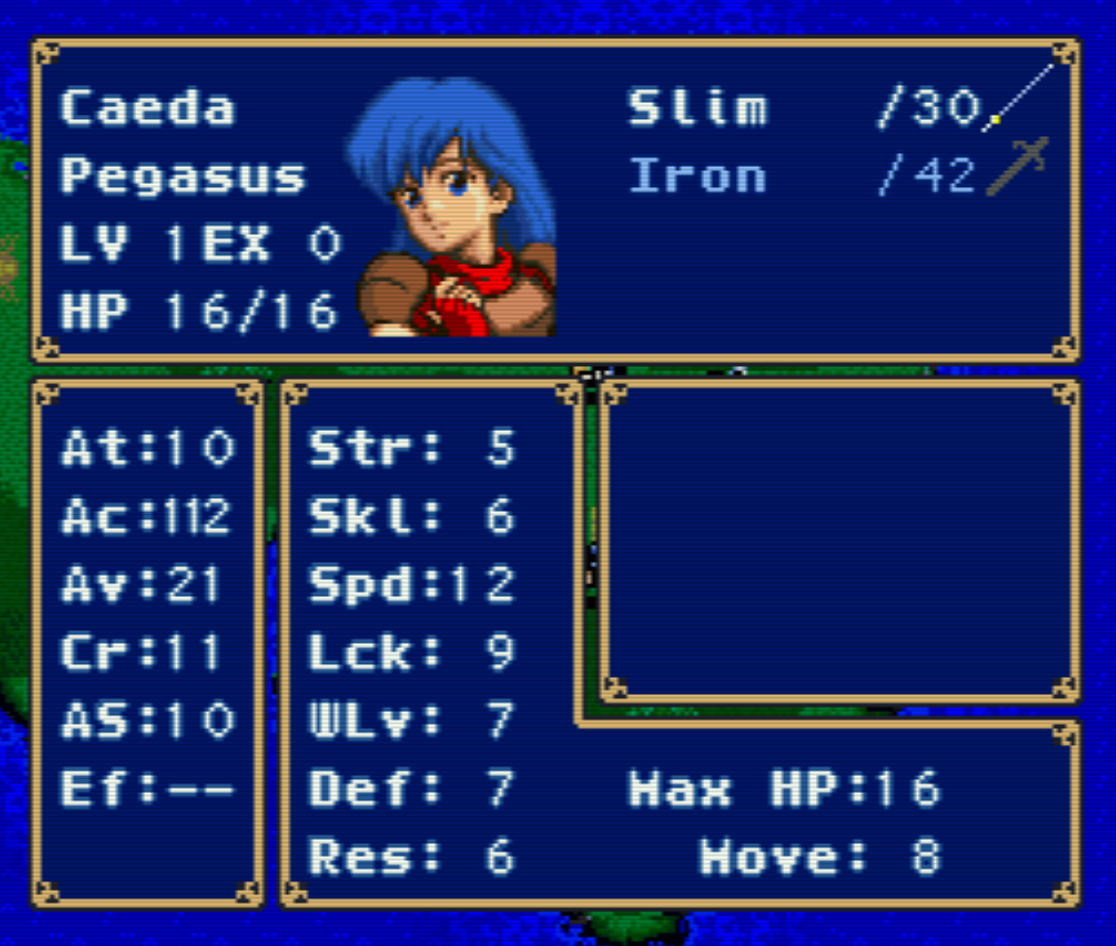
Next is the Palette patch. In the base game, custom palettes are only used for a handful of General bosses and Sheena. This patch gives every character their own custom palette, and I really like this patch; now Jagen can finally stride onto the battlefield with the sexy purple armor that both the base version of FE3 and FE11 deprived us of. It makes me wonder why this wasn’t included in the base game to begin with.
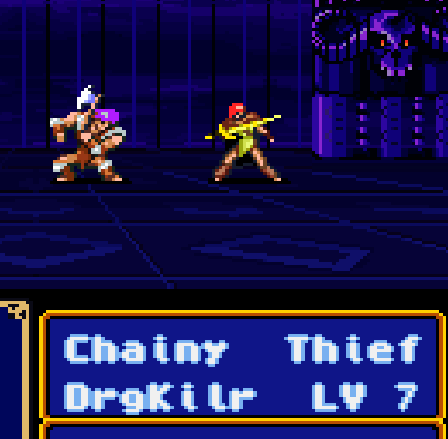
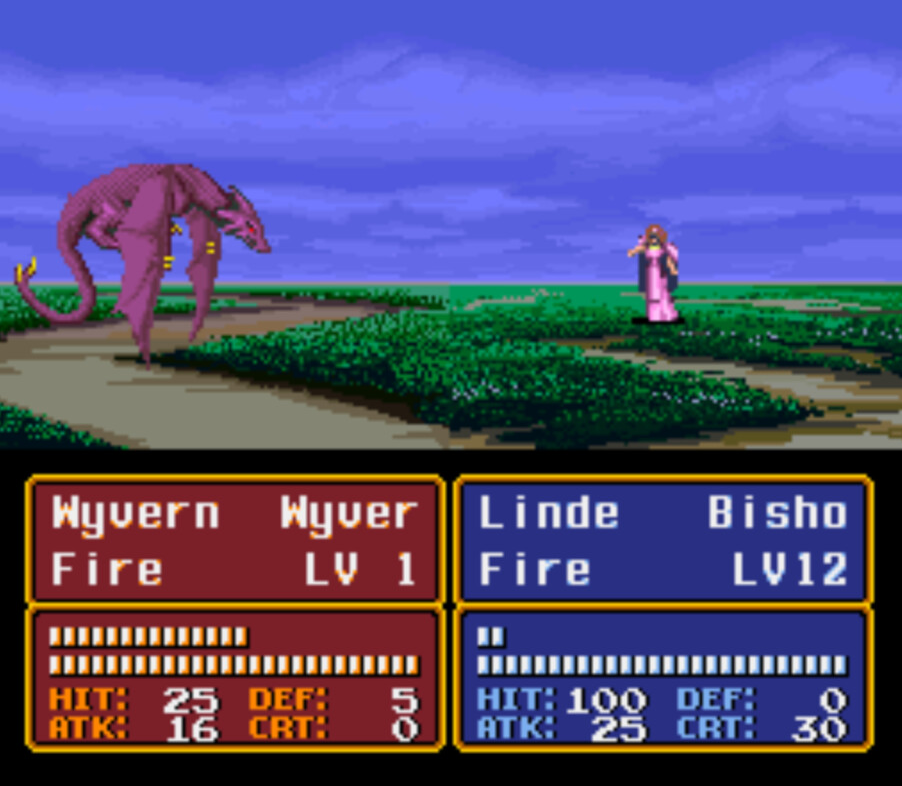
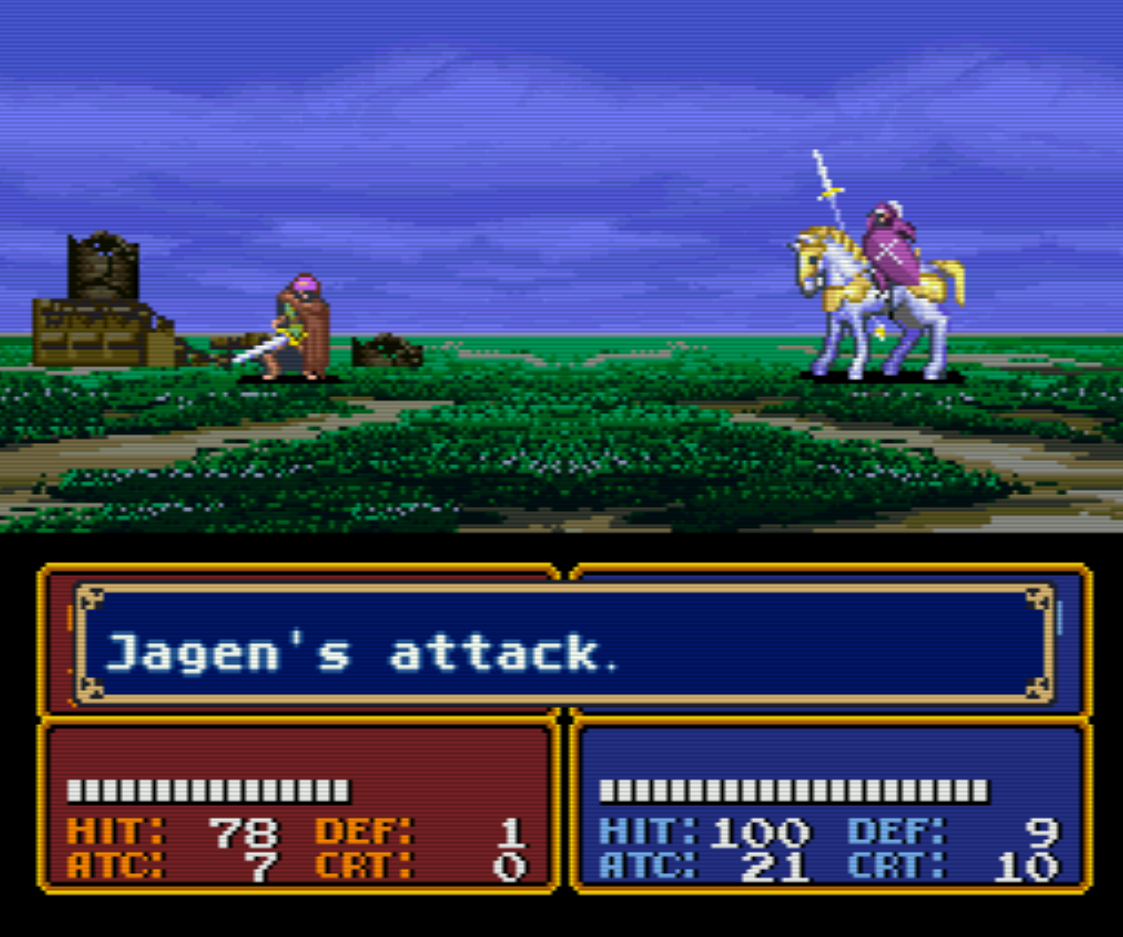
Then there’s the Capricorn patch. In the base game, a bug causes the Capricorn Astral Shard to provide no growth bonuses at all, effectively making it useless. This patch fixes the bug and restores its intended growth bonuses.
The RNG patch addresses another issue with the original game. FE3 uses a fairly primitive RNG system that produces noticeable patterns rather than truly random results. This is particularly apparent with level-up stat gains, where characters are limited to a relatively small number of possible growth patterns. For example, Marth has a specific set of level-up patterns that can be found here. The patch replaces the game’s original RNG algorithm with an improved one, eliminating these predictable patterns and making the results more random.
Lastly, there’s the Horse patch, which just makes the Horseman class weak to Rapiers and Ridersbanes.
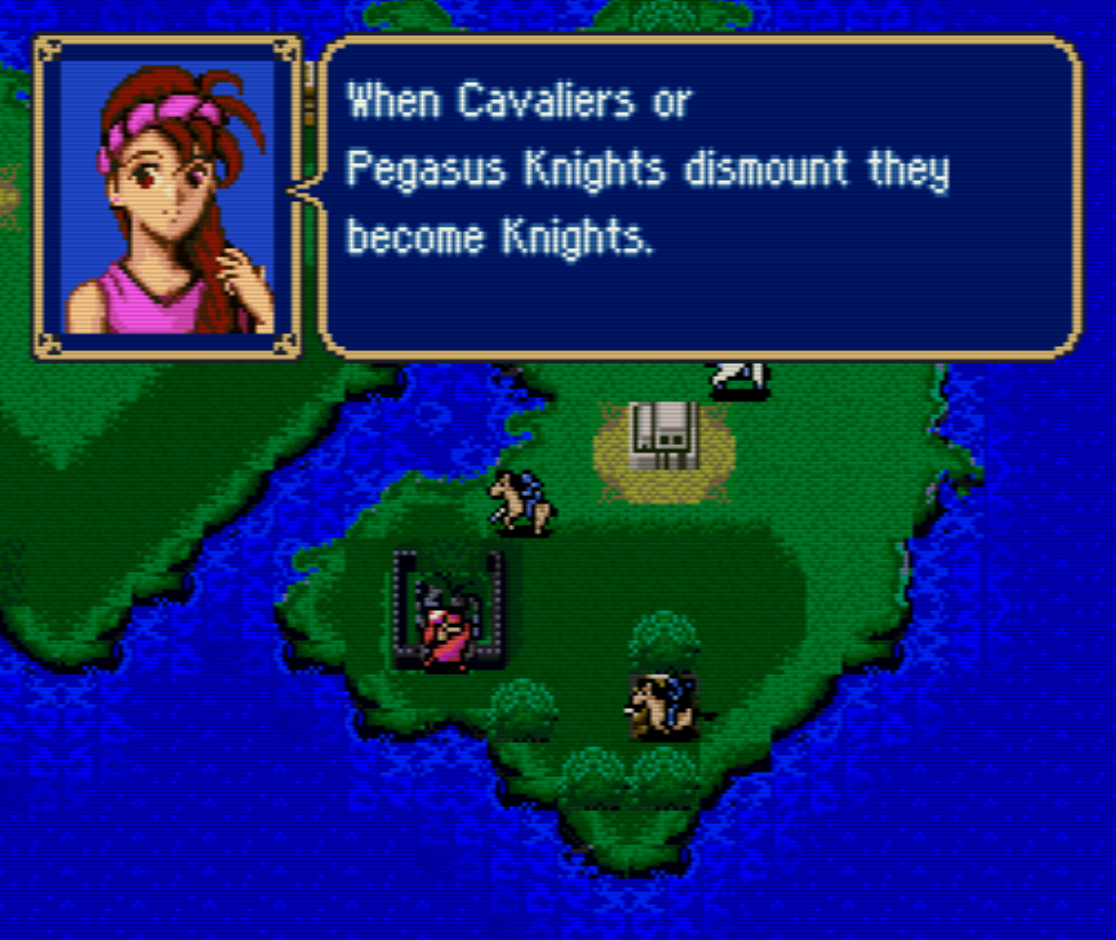
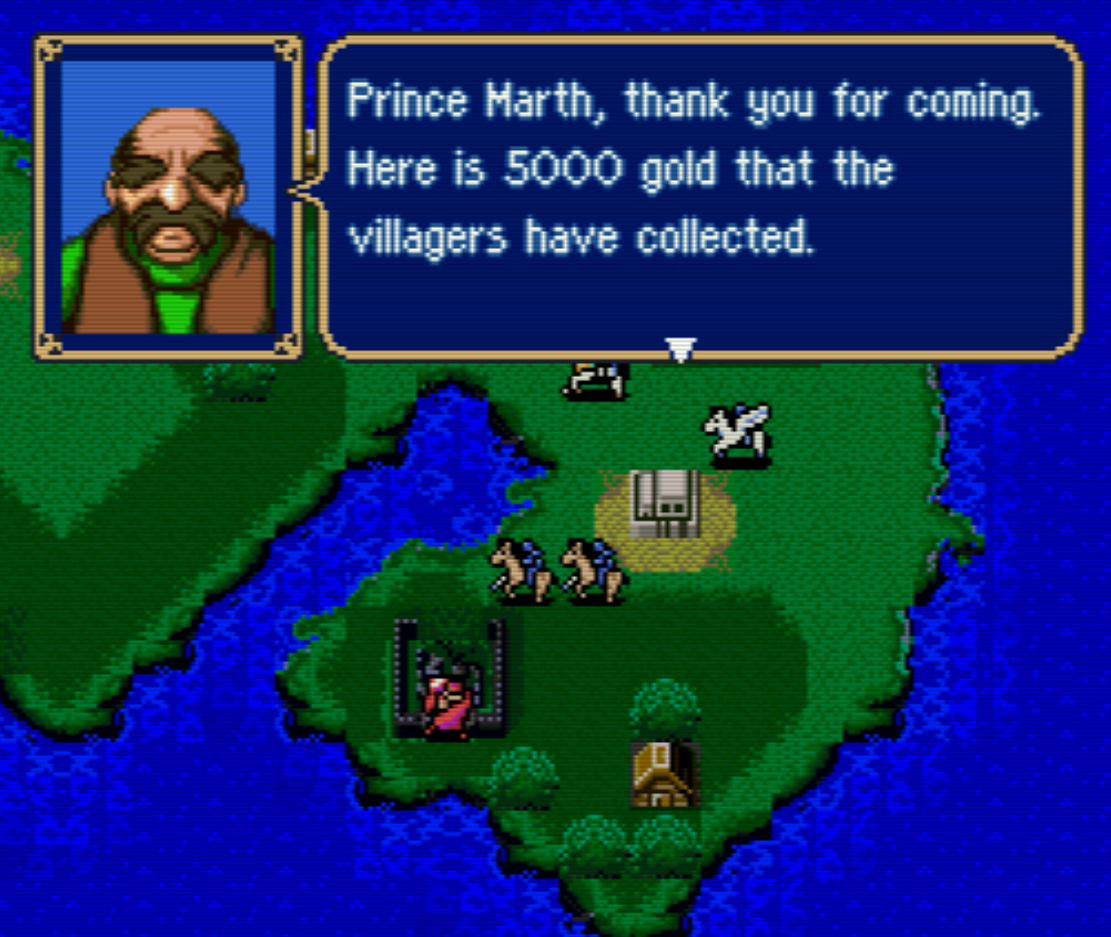
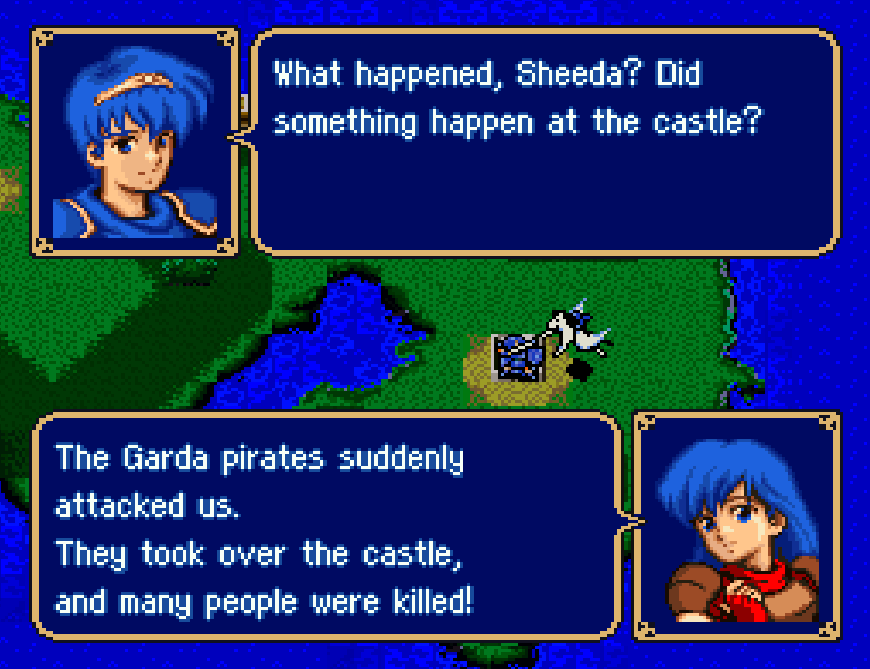
After that, on July 13th, 2026, I released a patch called The Divine Accord. A set of patches that update my older FE1 patch from 2017 and update Artemis251’s FE2 patch.
The idea for the patch, at least in terms of updating FE1, was on my backlog for several years. I was never happy with the original patch, as it had a severe lack of polish, introduced errors in and of itself, didn’t remove a lot of the mojibake, and didn’t offer too much in either faithfulness to the Japanese games or consistency with other FE games, besides the character names.
For a long time, I really wanted to update the FE1 patch, but never got around to it as I was busy and felt it wasn’t too necessary, as my old patch was at least “good enough.” Furthermore, around 2020, the official localization was announced, and I felt that a new patch on top of that would be redundant. Additionally, Polinym released another patch of FE1, with the aim of being more accurate to the original Japanese text, which further justified my reasoning that an update would be unnecessary.
Even though the official game was a limited release, Polinym eventually also released a patch that uses the official script in 2025. So, I decided that there was no reason to update my FE1 patch, plus I didn’t want to have, like, a Final Fantasy situation where there are, like, a million patches for the same game.
Later on, I considered working on a patch for FE2. As that game had much less text than FE1, it wouldn’t be much of a time sink, since now that I’m an adult, my free time is much more limited.
At that point, I decided to make my own patch for FE2. I originally wanted to retain the font used in Artemis’ patch, but longer names such as Tatiana, Luthier, and especially Mathilda made it impossible to use that font while also using four glyphs for their names. I ended up switching to the thinner font used in my OG FE1 translation.
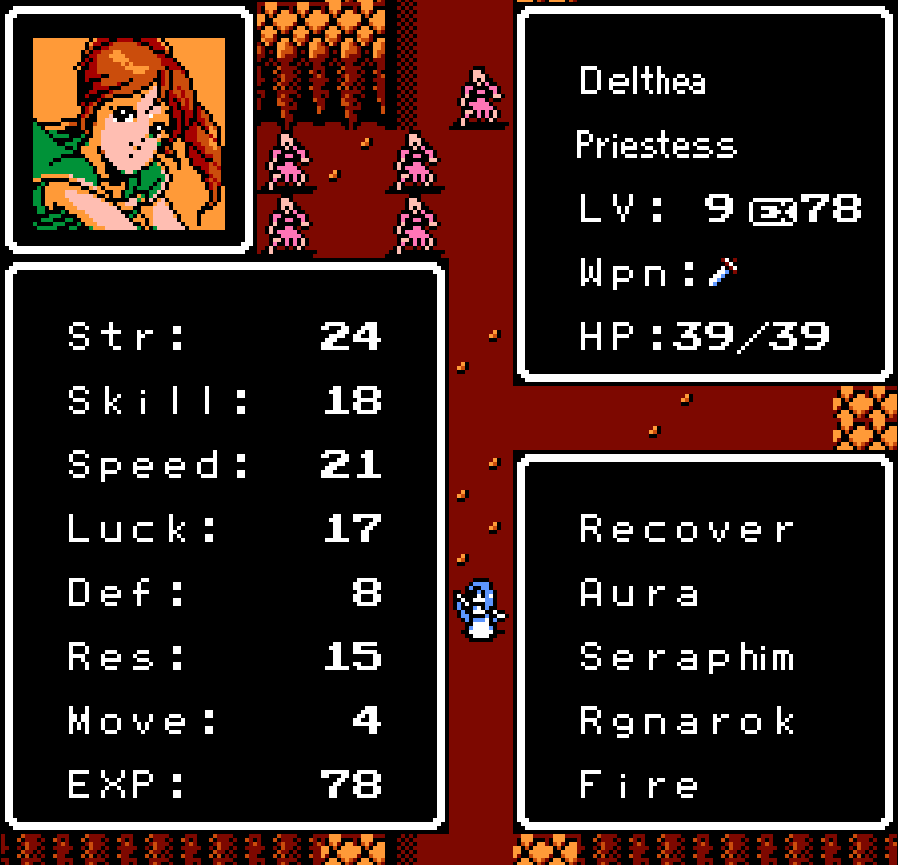
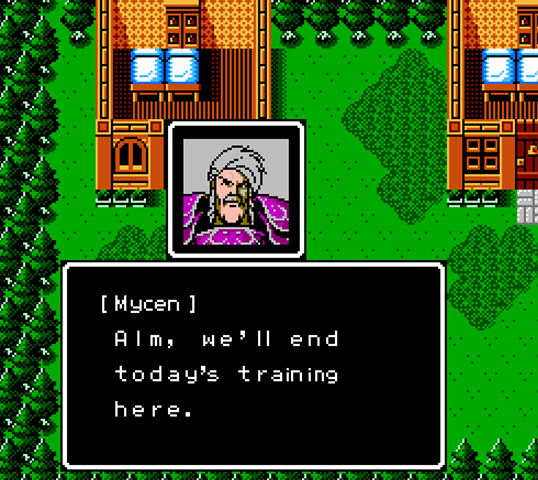
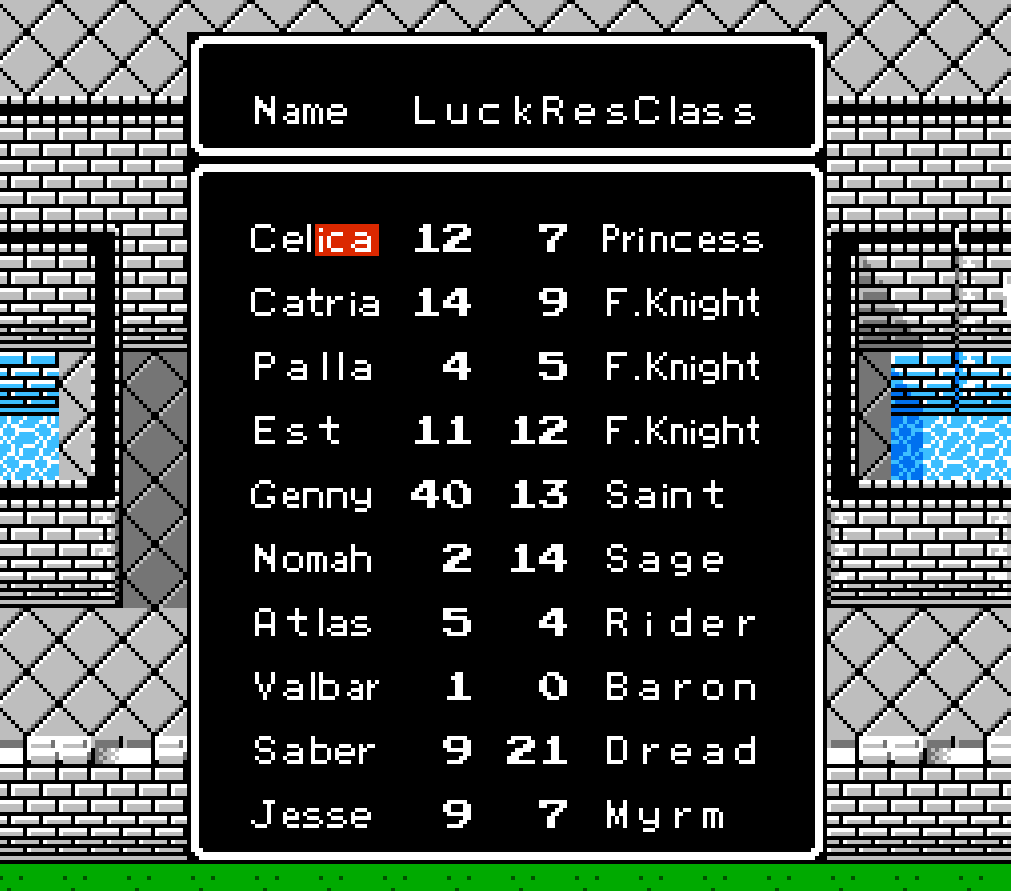
When nearing the end of this FE2 project. I noticed on the occasional instance that I run into someone playing FE1, they’d opt to use my patch over Quirino’s or Polinym’s. And considering my thoughts on that initial patch, I felt that if people decided they wanted to go out of their way to play my patch over the alternatives, I may as well give them the best experience they could get.
And after a few days, I thought to myself, “What the hell, I have been ruminating on these thoughts on updating my FE1 patch for a while; I may as well throw that patch together with FE2’s patch.” It’ll be like the Temu version of releasing Mother 1+2, Langrisser I+II, Final Fantasy I+II, Super Mario All-Stars, or Growlanser Generations. So, the name I went with for the patches was The Divine Accord, which is the localized name of the Gods’ Pact in FE2. In FE2, it describes Duma and Mila agreeing to divide Valentia into two regions. However, in the case of this project, the Accord instead refers to the division of the FE1 and FE2 patches.
With the FE2 patch, its translation is a very straightforward update. Some errors and typos were addressed from Artemis’ patch; for one, High Knight was changed to Fiend, Loso became Lawson, Zombie was changed to Revenant, and the message that told you that the area was reclaimed was changed to more accurately tell you that your inventory is full.
Additionally, in the older FE2 patches, in the battle text, the game would always say “Got [x] Group XP!” in addition to the regular EXP your unit got. But this was actually a mistranslation. In Japanese, the text says “[x] kai hitto!!” This just translates to “Hit [x] times!!” telling the player how many times they hit the enemy, just like it does in FE1.
While the game does have Group EXP, it is not equal to the amount stated by the battle text. The mistranslation likely comes from misreading the kana that spell out kai as 会 (group) rather than 回 (times), which is a weird mistranslation because in Japanese, it wouldn’t be grammatically correct. Since you’d end up with “Hit 2 Groups.” Then you’d have to do some gymnastics to turn that into “Group EXP.” So, I fixed it in this patch.
One detail I want to add, though, is that for the shield icons, I thought it would be cute if I reused the little shield icon from FE1’s battle screen as FE2’s shield icon. That’s not too important, but I was proud of myself for coming up with that idea.
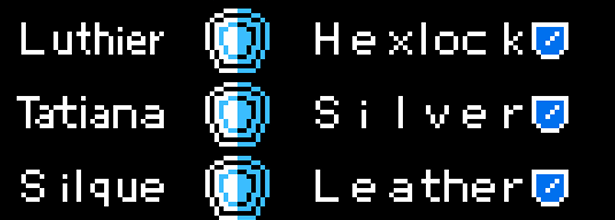
FE1’s ROM has a lot more space, and with all the various options one has to play FE1, I tried to spruce up the game a bit, like some graphical changes, and writing similar to FE11, but not a 1:1 text dump, since FE11’s localization is guilty of rewriting or embellishing some characters, and having the dialogue feel a bit too meticulous and purple prose-y, as opposed to more natural speaking. I didn’t want to take as many liberties as the FE3 Krashlation, but I still wanted the dialogue to be fun to read, so I tried my best to strike a balance between Nintendo Treehouse’s FE1’s more straightforward official localization and 8-4’s prose FE11 localization.
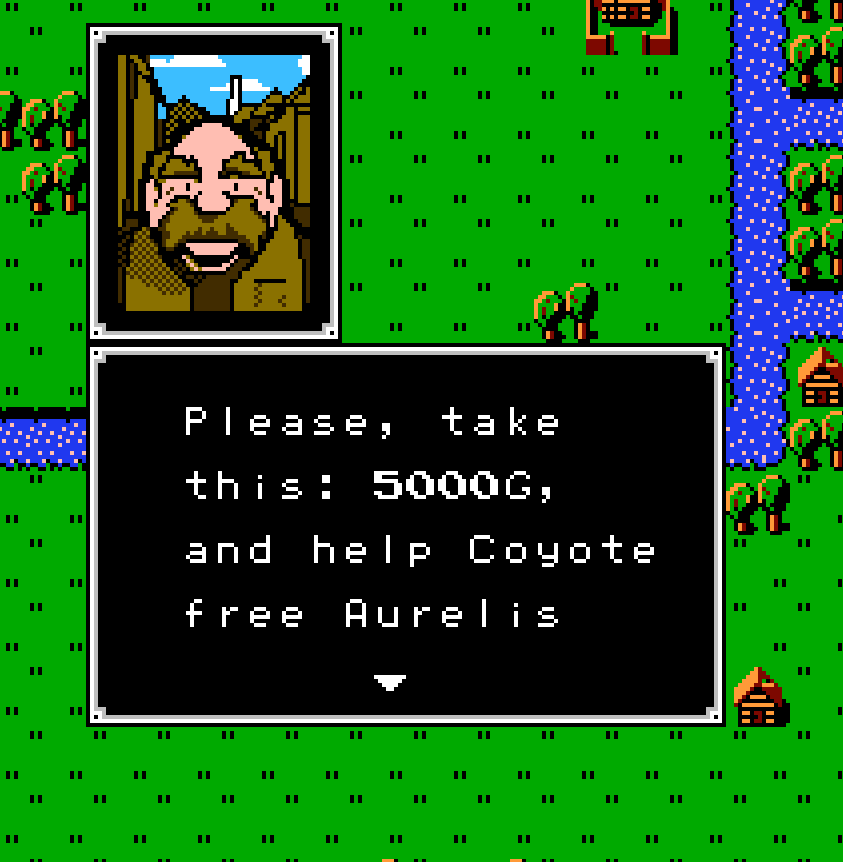
I also redesigned the title screen’s subtitle, as I was never happy with the old one I did in 2017. I changed the color from white to yellow, replaced the “and” with an “&,” as that’s what the official title uses, and used a more gothic font, inspired by Castlevania.
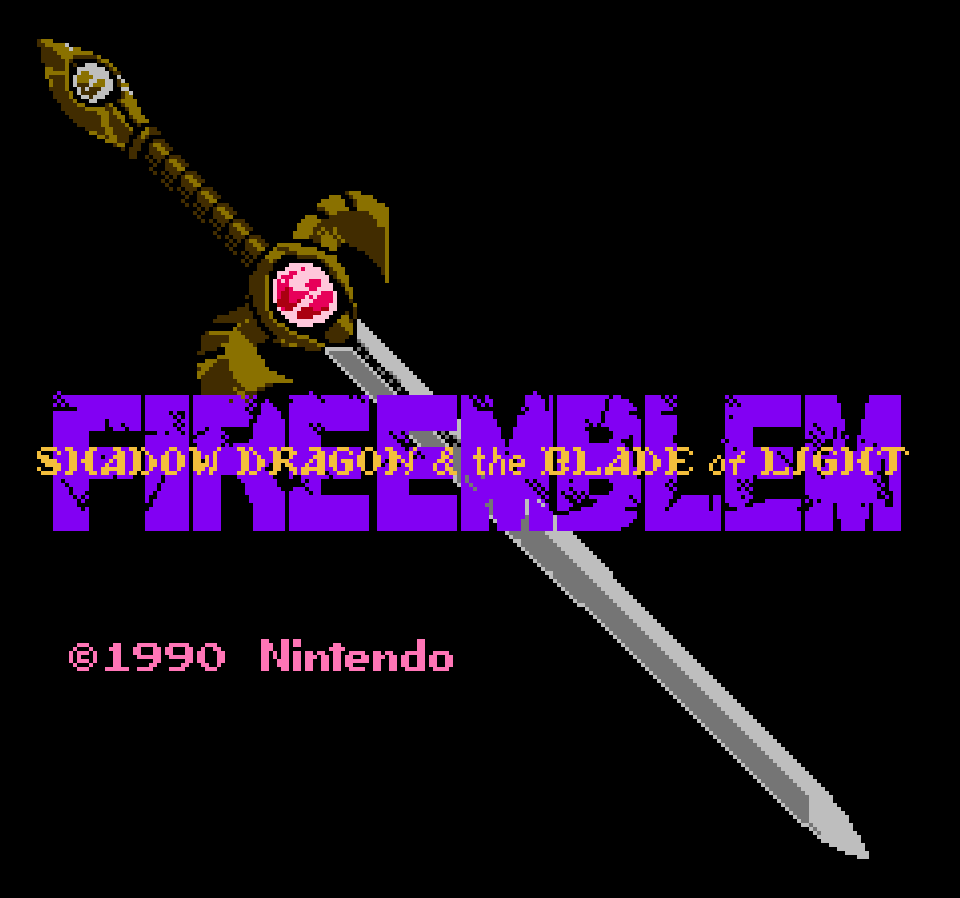
The intro sequence that originally read “At first, there are Dark Dragon, Falcion Sword, and…” was a big source of headaches. Originally, in 2017, I wanted to change Dark Dragon to Shadow Dragon and call it a day. One problem: that did not fit. I tried repointing it to a different location in the ROM, but when I found the pointer and changed it, nothing happened. That’s when I learned that the text was completely hardcoded, so I just lazily replaced Dark Dragon with “Medeus.” But that looks unprofessional and frankly bad. I wanted to do something else. My solution was to rewrite the intro completely. I didn’t use the localized one because it would have taken too many glyphs to fit the whole thing, so I thought of my own that got across the same message. My solution became:
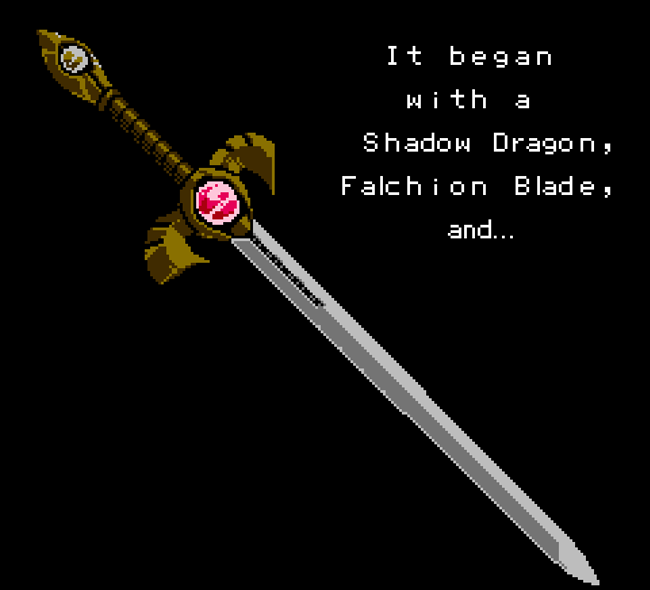
Additionally, I gave more characters death quotes; the only exception is Marth. I felt that, in the original game, a character as important as him not having a death quote was something worth preserving.
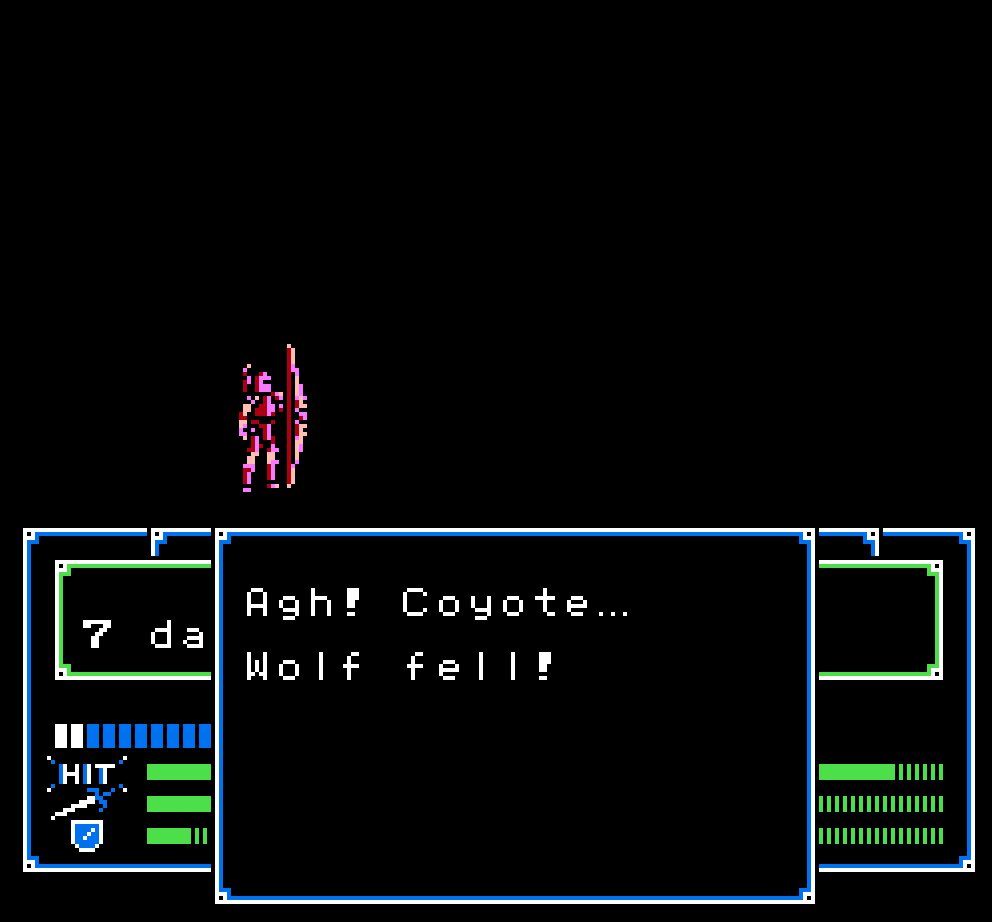
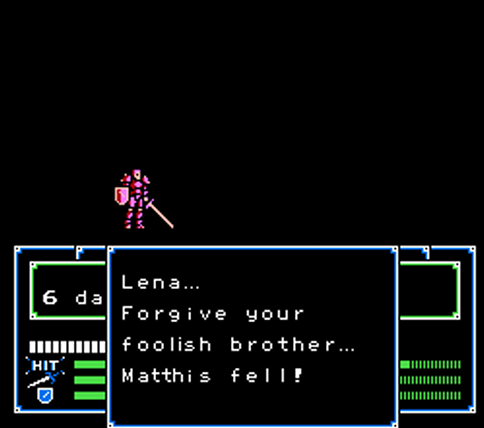
I expanded some NPC dialogue to explain lore details and better explain gameplay mechanics, as well as adding more stuff like accents and stuff, as seen in the official games. Moreover, I know a lot of people prefer the larger font used in Quirino and Artemis’ patches, so I added an optional patch that uses a similar blocky font, inspired by the font used in Dragon Dragon Warrior 1. I didn’t want to use the same font used in the original Quirino patch, and wanted to use a more unique font from another fantasy game. I felt using a font like that would better establish the fantasy vibe of the overall game and make that experience stand out a tiny bit more. I hope you can see my vision.
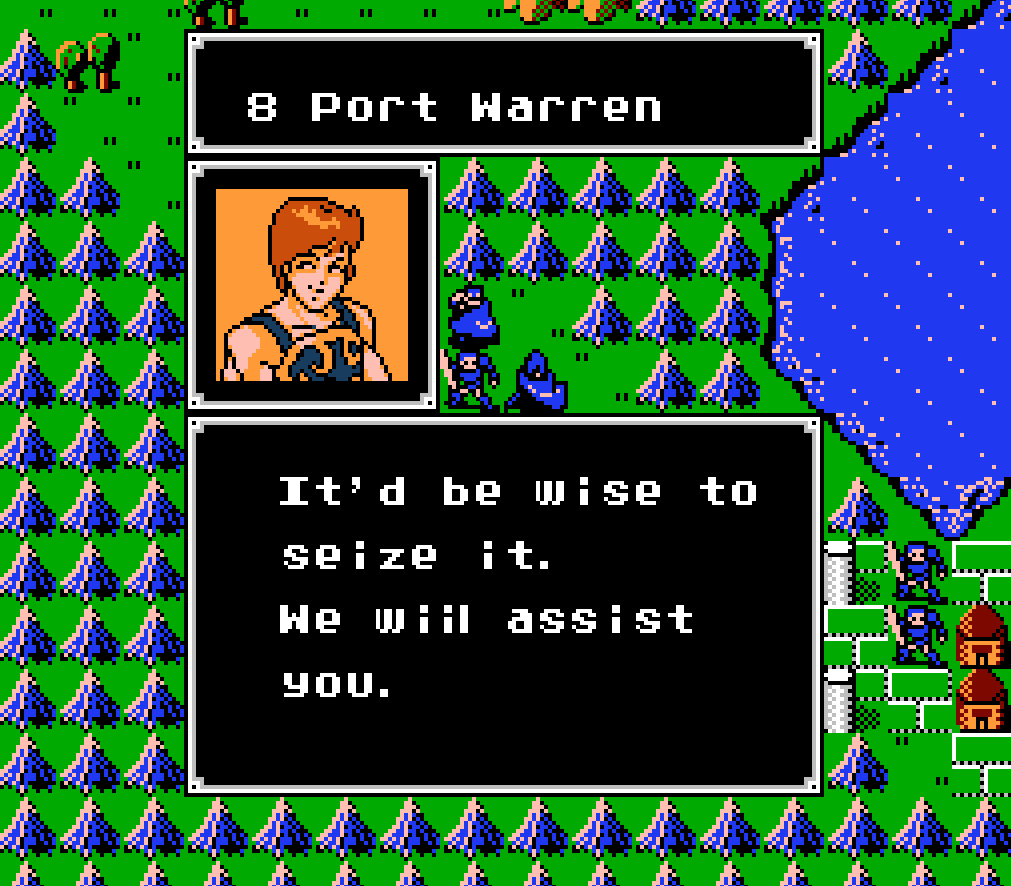
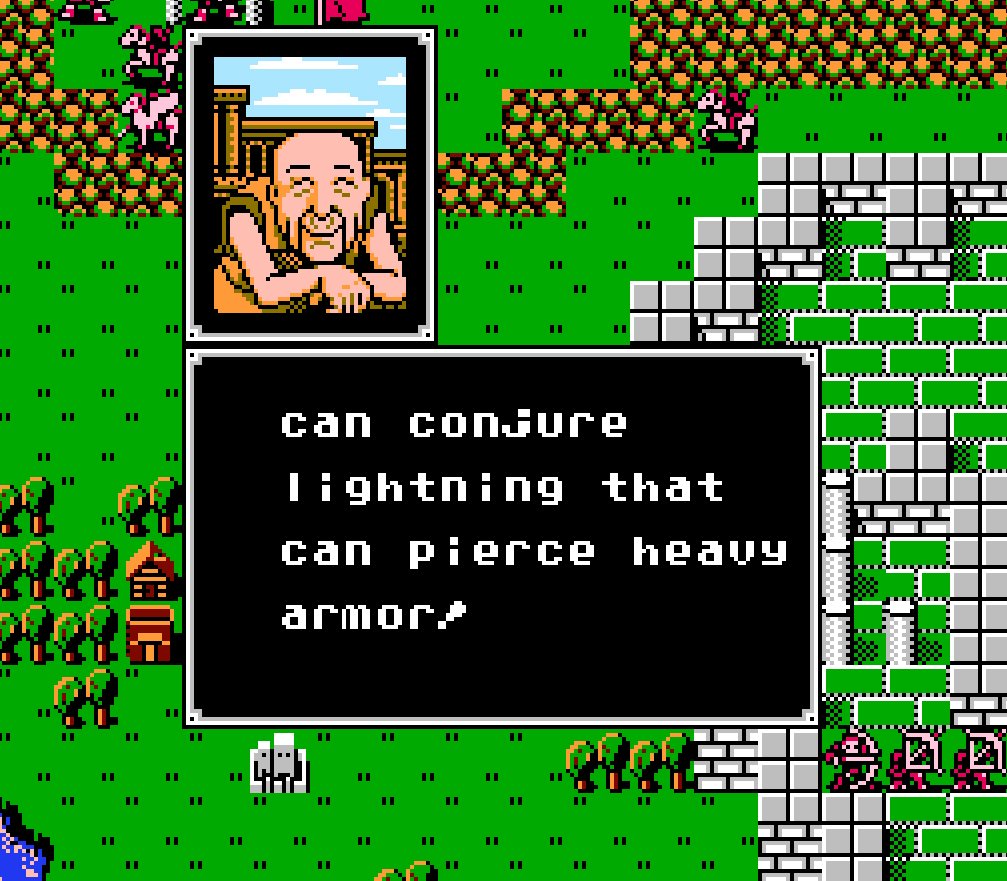
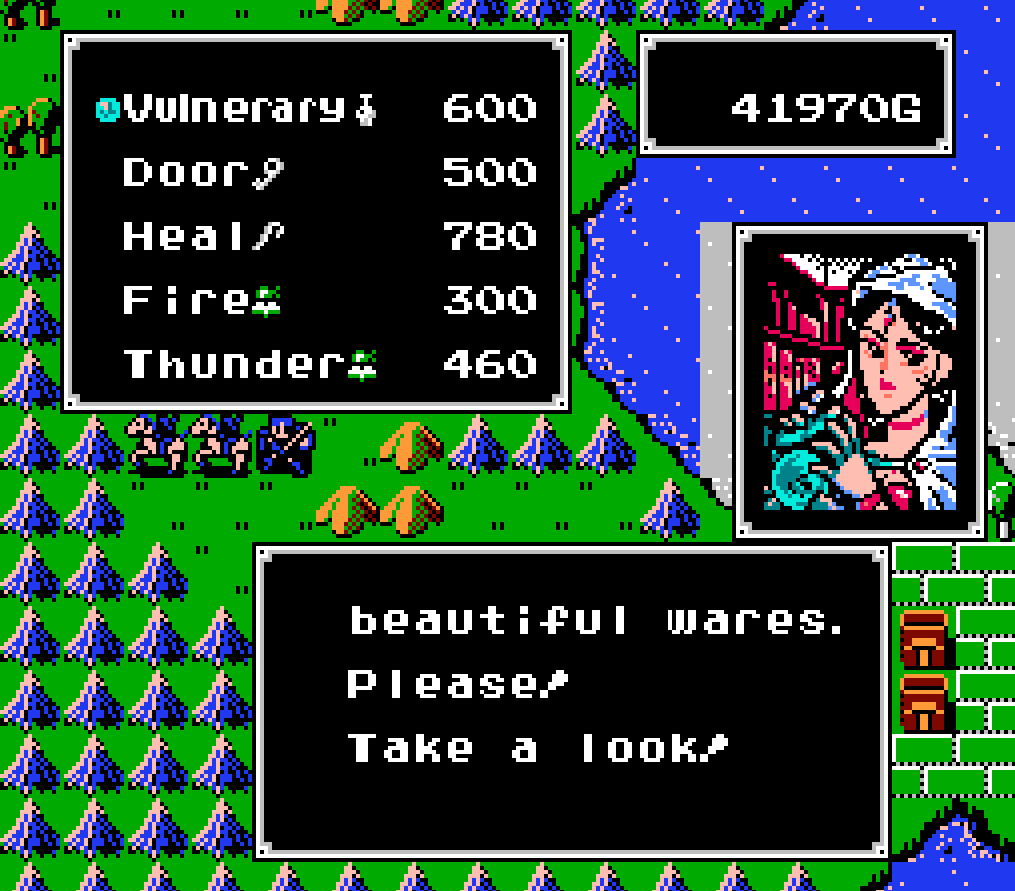
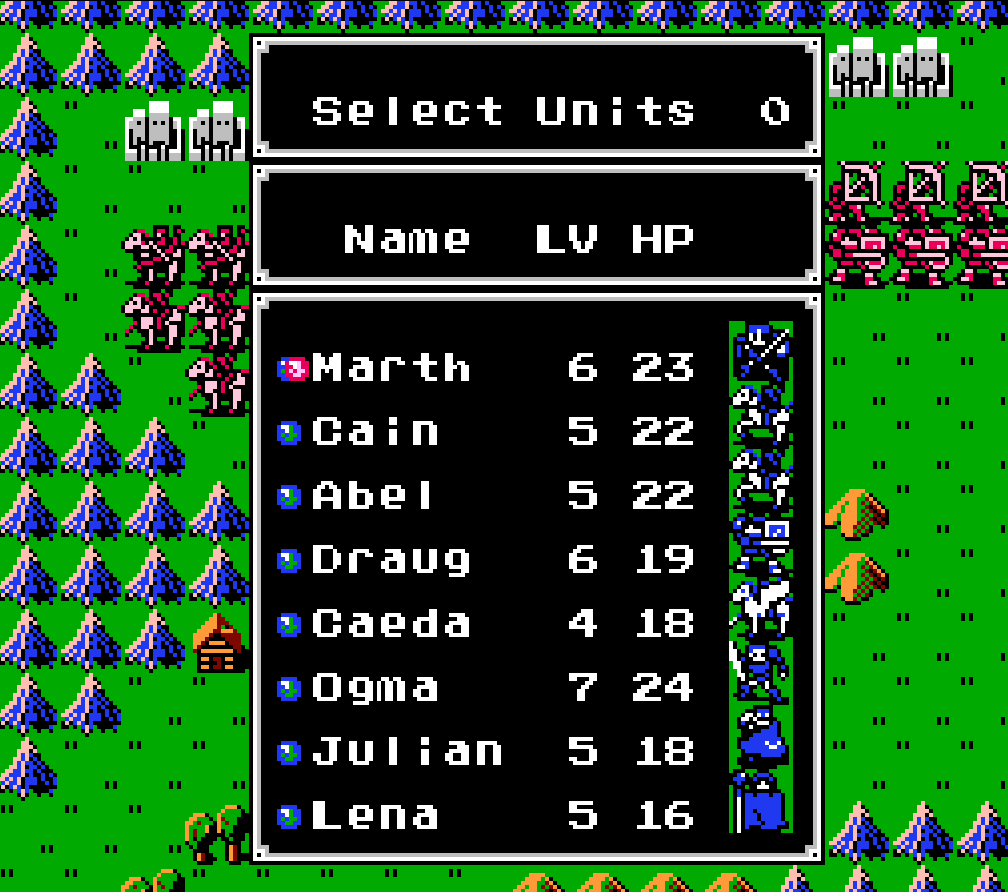
I also wanted to add some more bonus content to justify downloading another English patch, so I added scans of the world maps, mockup box art, a PDF describing the specific name changes, which you should read 🔫, and a small minigame that I wrote called Armored Knight Pong, which I wrote in C using Raylib, like some of my other previous projects.
That said, these patches will likely still get updates in the distant future, just to add more polish and make the patches look more professional. Especially since recently, Polinym has taught me about the dark arts:
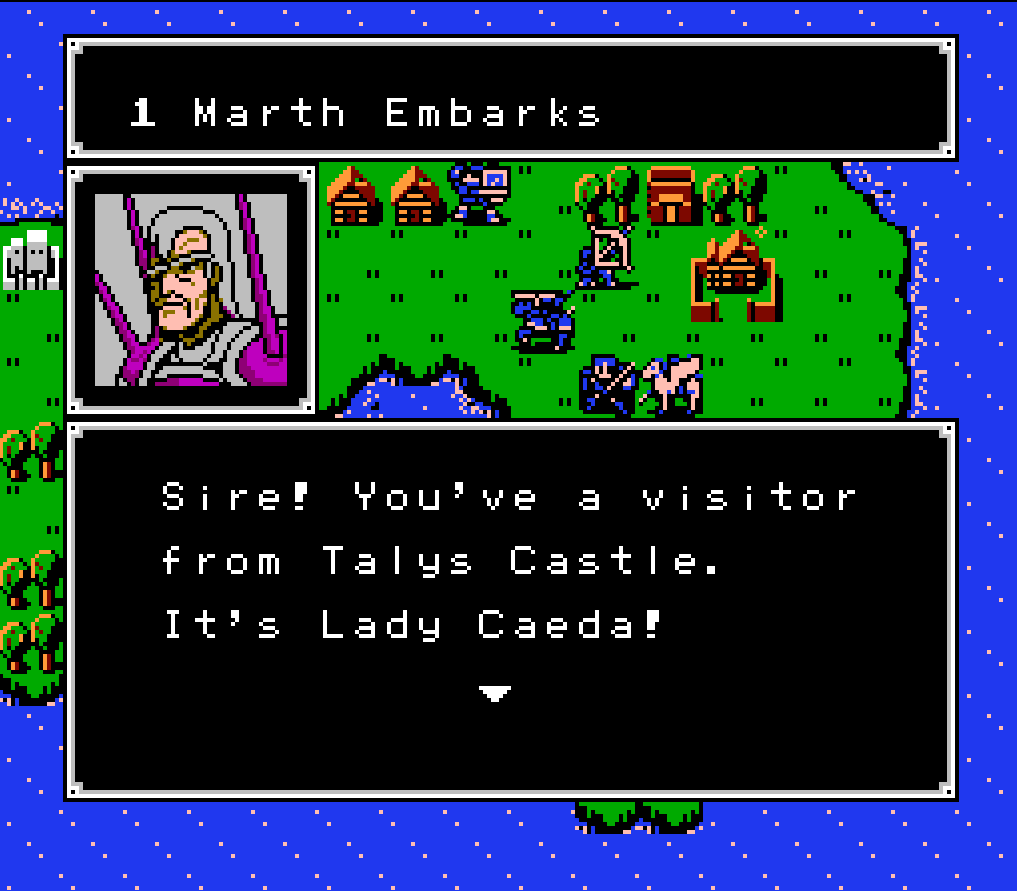
The final patch I want to discuss here is Project Deliverance, an FE2 patch released on August 31st, 2026, by a user named ChangaStinko.
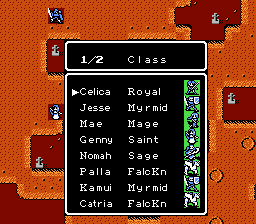
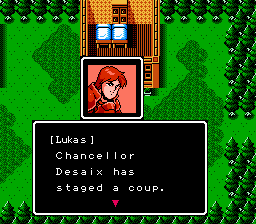
This project was originally conceived in 2017 shortly after Echoes came out, but they got stumped halfway through. They were able to get all the names down except for Silque and Tatarrah because they ran out of space, but the bigger issue was the ending cast roll.
I don’t know why, but for some reason, Intelligent Systems programmed the text for character names in the credits in the most obnoxious way imaginable. Like, standard dialogue and text are formatted in a very predictable way, but for the credits, it’s like a completely different language. For example, Alm’s name in the credits, ALM, is spelled using the bytes 34 64 in the ROM. I don’t know why a three-letter name uses two bytes, but okay. If you change 34 to 35, the name will read as APM; then if you change it to 36, it will spell ATM.
Then, say you change it back to 34 64, but instead you wanted to see what happens when you change the latter byte from 64 to, I don’t know, 65. Then you get ALMPCELICA, where you add a P to the end of Alm’s name and remove the line break between his name and Celica’s name. Then, what if you change it to 34 66? The name just changes to ALN, and the line break is restored. In other words, it’s really damn confusing, and realistically, you have more control over the weather than you do over changing someone’s name.
That’s why I left the names in the credits untouched in my patch. Likewise, when Changa initially got to the Credits, they also couldn’t decode the names, let alone find what offset they were, so they had initially dropped the project at the time.
Two years later, in 2019, they made a thread on Romhacking.net to see if anyone could help them, but unfortunately, no one answered… But through perseverance and brute force, they did eventually manage to edit the names in the credits, and even wrote a Python script that returns the hex values for editing.
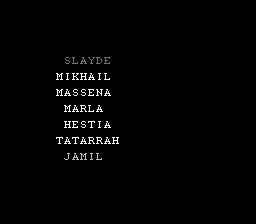
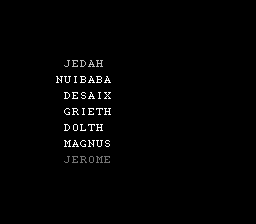
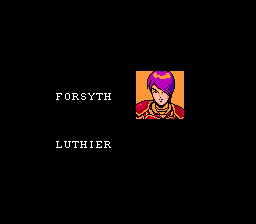
Additionally, they used the modified EarthBound font that I used in my initial FE1 patch, and in later updates to this patch, he mentions that my script was used as inspiration for their own patch. Yeah, I’m kind of a big deal. 😎
They also changed the critical hit text to say “Critical Hit!” instead of just “Critical!” and also restored the damage displayed, which was in the Japanese version but was cut from both Artemis’ and my patches.
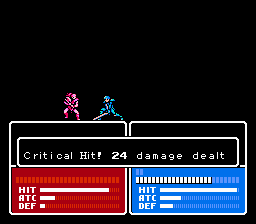
That said, this patch is quite good and is a nice option to scratch any Gaiden itches one may have.
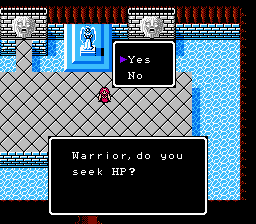
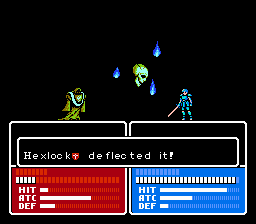
With that, that takes us to today. In terms of game translations, people are still working on various projects and updating patches to this day to give the community what they envision as the best way to experience the respective games. Additionally, the series is also still going strong and is only getting more and more popular seemingly with each entry.
Meanwhile, as a fandom, not too much has changed; Serenes Forest, as well as wikis, are still used for information about the games in the series, as well as updates for newer entries. Various social media sites are used to share art and other fanworks regarding the series, as well as discuss things from the games, with the subreddit still being the closest thing to a modern central hub; smaller Discord servers and communities are also often used for fans to converse and link up.
And all of that wouldn’t be possible without a lot of these translations and resources, which were done solely through the effort and determination of the fans. However, this isn’t everything that I want to discuss in this article. I also want to briefly discuss a few other non-video game translations.
Even though most of the attention on fan translations is towards the games themselves, there’s a lot of supplemental material that’s also received fan translations. Ranging from developer interviews, manga, novelizations, and TCGs.
I won’t be able to describe everything here, but I will bring attention to what I believe are the most interesting translations. Firstly, I will talk about Hakoda Maki’s FE1 manga: Fire Emblem: Ankokuryuu to Hikari no Ken, the manga I actually read.
The manga itself has 13 volumes with about 5 chapters in each volume. The first three volumes were translated by a group called SnoopyCool. But in 2012, a user named Crazy Foxie (a.k.a. Jeorge) set out to translate the remaining volumes.
In May of 2012, the project was split between two teams, where Jeorge did translations from volumes 3-6 while users Dokutayuu, Darros, and Ike-Mike did proofreading and editing. For volumes 7 onward, Jeorge and CalculusWhiz did the translations.
If you enjoy Archanea, this is a good read for sure; it gives a new breath of life and layers to a lot of the characters in the game.
This manga also has an accompanying CD Drama that spans 4 volumes, but it’s not translated. But if you’re interested, it can be found here.
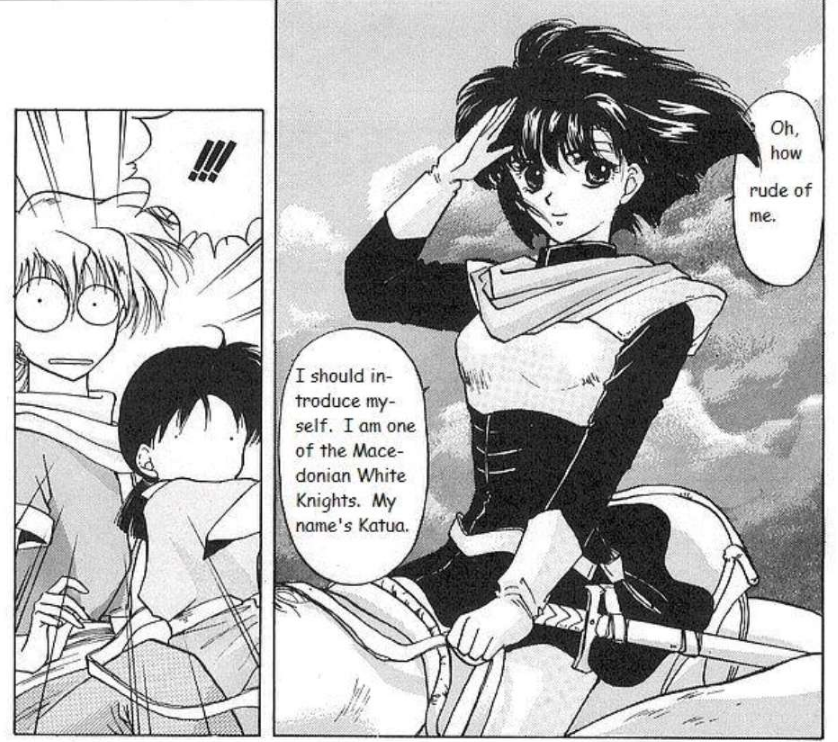
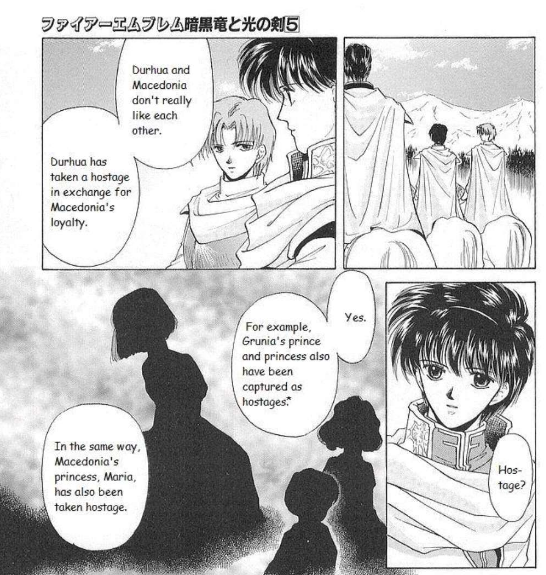
The next manga is the Mitsuki Osawa FE4 manga, also known simply as the Oosawa manga. This manga was a retelling of FE4’s original story, but with various characters and stories expanded upon more. When this manga was initially released, it had three different releases: an SC deluxe version and two Media Factory versions.
The only real differences were the different color pages and the sizes of the volumes. This is relevant because when this fan translation was picked up in 2009 by Tomoyo, it used the Media Factory versions as a base, but included some SC Deluxe Bonus pages that weren’t in the Media Factory version.
Tomoyo translated volumes 1-5, which spanned from chapters 1-35, as well as chapters 36 and 37. Later on, after a lack of updates, another user named Jugdral Defender picked this project back up and translated the remaining chapters, and efforts in this translation still continue to this day. As of right now, the most recent chapter uploaded was chapter 70.
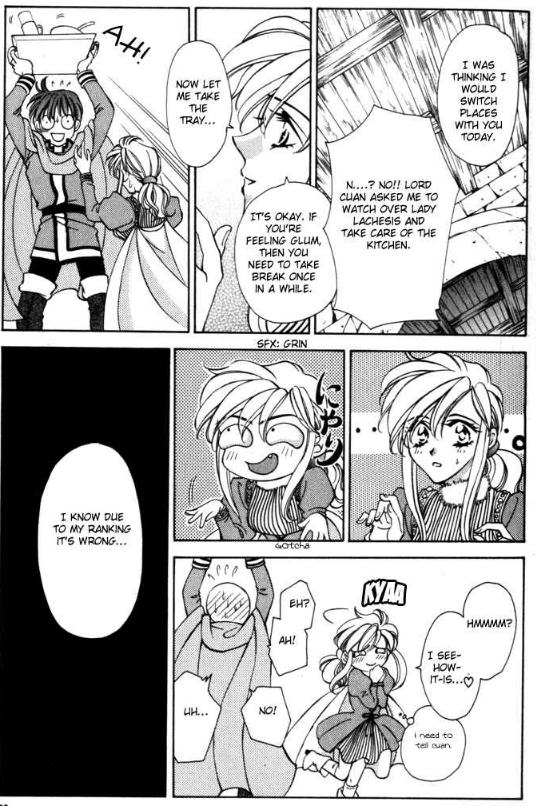
Speaking of FE4, it also received a novel adaptation by Ginichiro Suzuki, and I’m mentioning it here because it received a fan translation by LeifOfLeonsterTranslations in 2019. This book addresses backstory details that aren’t fully fleshed out in the games, like Loptous’ meeting with Galle, the story of the 12 Crusaders, and Arvis’ upbringing. This is also another interesting read if you’re interested in Jugdral lore.

In February 2021, LeifOfLeonsterTranslations also did a translation of Takase Mie’s FE8 novelization. This novelization is split into two books and shines a new light on Magvel, one of the more forgotten continents in the series. I definitely want to read this eventually.

Next is the next FE4 Manga, the Fujimori Nattsu’s Fire Emblem: Seisen no Keifu manga. This fan translation was done by a French user, AceNoctail, in 2009. This manga is based mostly on FE4’s first generation, and it’s a lot more light-hearted and comedic compared to other FE4 manga. Like, this manga has a moment where Sandima and Batou are accused of being lovers cheating behind the Queen’s back by Jamke; it’s out there.
Anyway, this manga was translated into both English and French and is another interesting read if you’re a fan of the Jugdral saga.

The last FE4 manga translation is Fuyuki Nea’s FE: Light Inheritor manga translation, done by TheEnd in 2011. This manga focuses on the second generation, spans from chapters 6 to 9 in-game, and has five volumes with four chapters each. As of right now, the download links on the original thread don’t work, but you can still read the manga in English on various manga sites.
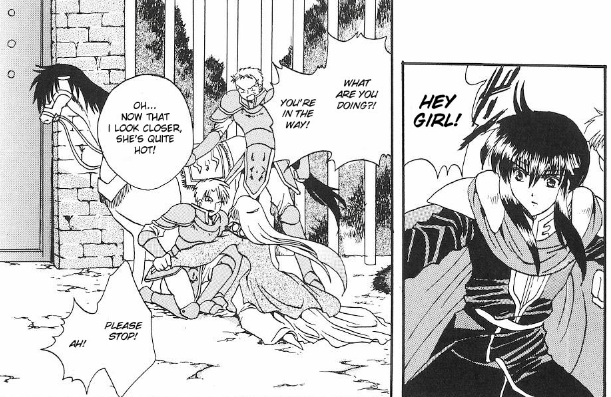
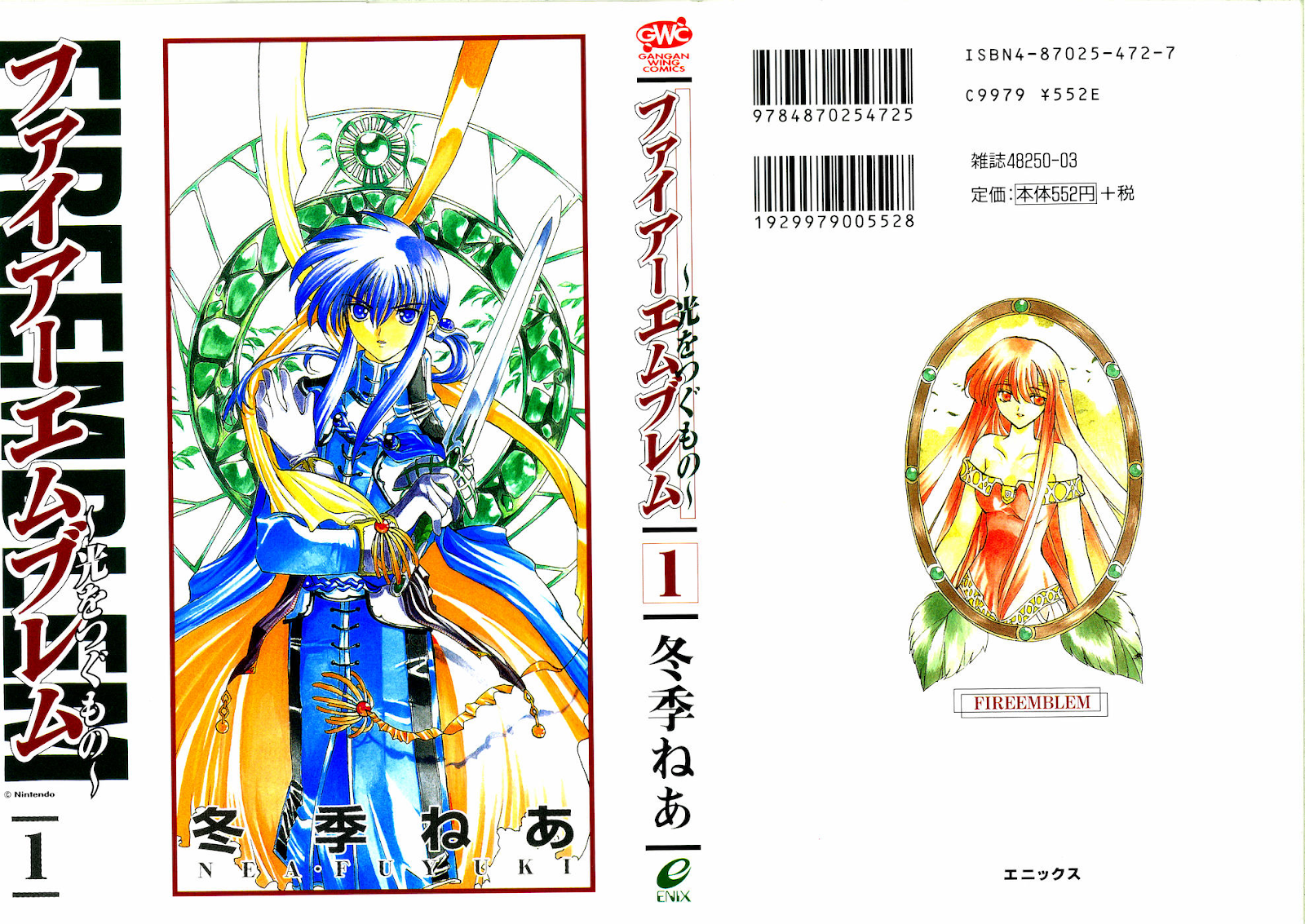
The next most notable manga is the FE6 manga, Hiroshi Izawa’s Fire Emblem: Hasha no Tsurugi manga. This manga was fan-translated by TheEnd back in 2009 and is a side story of the events of FE6, and instead of Roy, it follows some guy named Al. This is where Al’s Sword in FE6 gets its namesake. His story spans 11 volumes with four chapters each.
One notable thing I remember from the manga was the characters Jemmie and Zeed, since they appeared in Super Thracia. The two also received cipher cards, and Jemmie especially received a lot of fan art…I wonder why.

In June of 2011, TheEnd would once again translate another FE manga, that being M. Sano & K. Watanabe’s FE2 manga. This manga was short and “of poor quality”, according to TheEnd, so a lot less effort was put into this translation compared to their other works. And sadly, like everything else involving FE2, it didn’t get much love or attention.

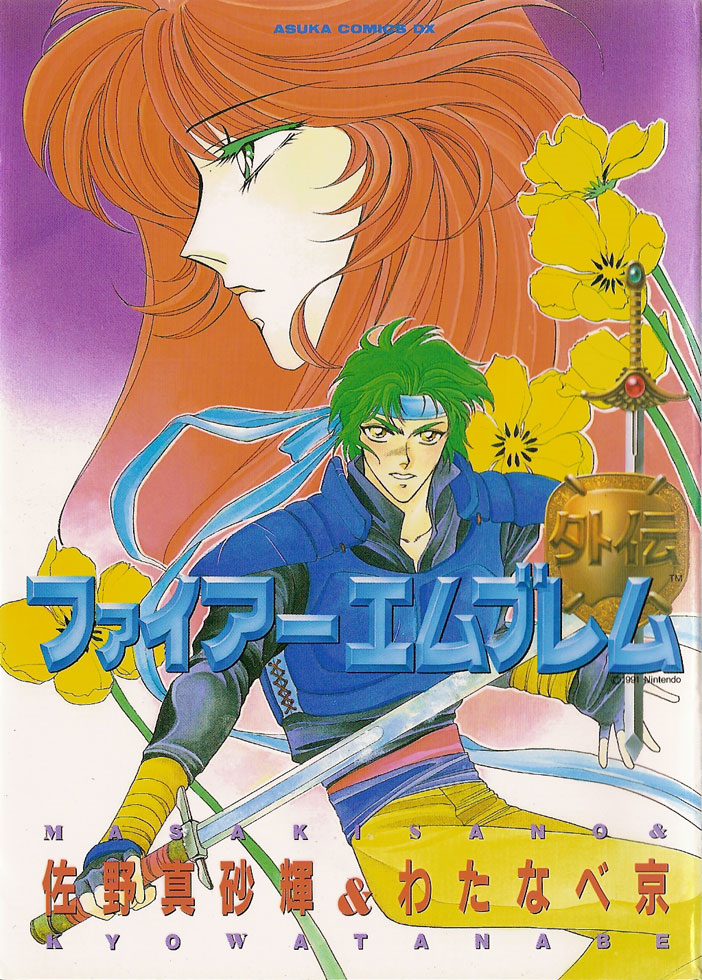
Back in the realm of novelizations, in 2019, LeifOfLeonsterTranslations would translate Takashi Umemura’s Thracia 776 novelization. There are twelve chapters altogether, and they are split into two books.
LeifOfLeonsterTranslations would also translate Makasa Kazuyoshi’s FE7 novelization. But there isn’t much else to say here, considering I haven’t read these.

Another written literature project I wanted to mention was the Thracia 776 Comic Anthology Manga, a manga adaptation of FE5 that had various authors. A user by the name of DarkAdvent has released a translation of the first chapter, and it’s a good short read that I’d recommend. Aside from this, Advent has started work on the FE5 Instruction Manual, a number of 4Komas, and is in the process of a ROM hack called Forseti’s Cut, an improvement patch for FE5 aimed at adding to the story, including new items, and amping up the gameplay.

The last manga translation I want to discuss is the Berwick Saga Anthology Manga done by yours truly. However, I should clarify that when I say ‘done,’ it’s a bit of a misnomer—I’ve completed the translation for the first chapter, with more chapters on the horizon, albeit in the distant future.
The first chapter is a story centered around the Lord character, Reese, and his deep camaraderie with Larentia, a Wyvern Knight who joined his army in Chapter 4-M. While the quality of the scans isn’t ideal, I’d recommend giving the manga a look if you have an interest in Berwick Saga lore—assuming I ever manage to finish the remaining chapters.

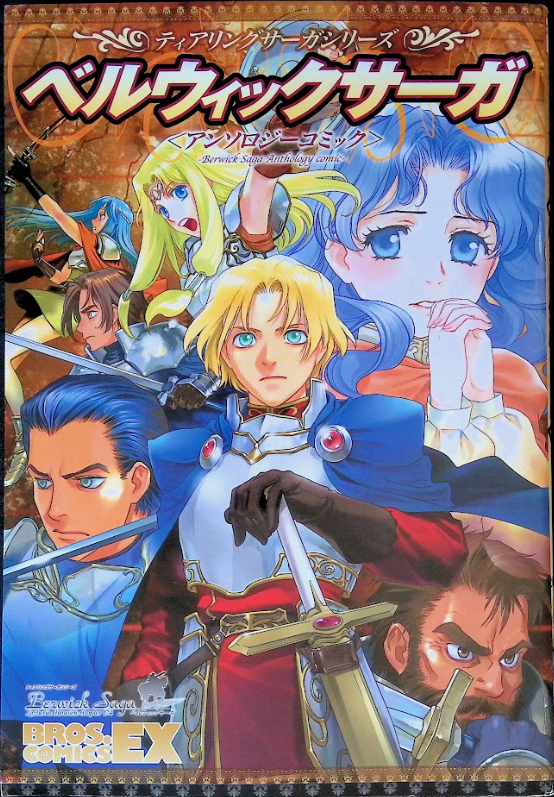
And since I can’t mention this anywhere else, I’d also like to mention that Berwick Saga’s User Manual received a fan translation recently by MousouMute. It outlines a lot of the game’s mechanics and some story information within the game, including character profiles. Some of the names are inconsistent with the names used in Aethin’s patch, but if you know the Japanese names, it shouldn’t be jarring at all. I’d definitely recommend checking it out, even if you are already familiar with Berwick’s lore.
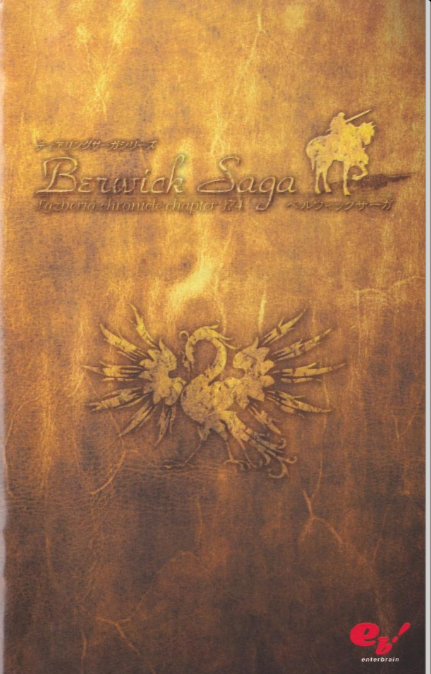
Aside from novelizations and manga, there also exist developer interviews that exist that have been translated by fans. A lot of these interviews have been archived on the website Kantopia, a really useful resource for gaming (mostly Fire Emblem) information regarding development, general trivia, and translations. A lot of other interviews can be found translated on Serenes Forest.
Moreover, the Cipher Trading Card game has garnered substantial attention from the fan community, resulting in a plethora of fan translations for individual packs and cards. A dedicated sub-wiki resource has been established to centralize this fan-translated content alongside the original Japanese material.
There are a couple more novel translations and unreleased fan translations I’d like to talk about, but there’s just so much content available that if I were to document everything, this article would deadass never end. So, I’ll leave it there.
When it comes to Fire Emblem, and most video games in general, its history isn’t written solely by the developers themselves, but also by the people who play them. Fanworks have always played a vital role in shaping the way we look at and interpret art, and this is something that I feel is underappreciated in our current era. Aside from just recounting the translation history, I also wanted to make this post to remind others of the relevance of these projects and how they shaped the player base.
You—yes, you—the reader, can make a significant impact by expressing your genuine pride and passion for what you enjoy. Think back to those individuals from the past who, with limited resources and documentation, uprooted the community through their sheer determination and love for the series. If they can do it, so can you.
You don’t need to be a coding wizard with decades of experience or a fluent Japanese speaker either. Your contributions can take many forms. Commissioning or drawing fan art of your favorite characters, releasing fanzines, creating ROM hacks or fan games, creating board games, producing content like unit analyses, documenting/archeiving printed works, or writing fanfiction—all of these expressions of love and passion can inspire others and foster a vibrant community. Remember, love and passion are the driving forces of life, and even a small dose of them can go a long way!