Physical Address
304 North Cardinal St.
Dorchester Center, MA 02124
Physical Address
304 North Cardinal St.
Dorchester Center, MA 02124

Okay, so before getting into this article, I have good news, and I have bad news. The bad news is that I’m sick; the good news? I’m not as sick as the game I plan to talk about today.
You see, in the early 90s, the SRPG genre was still in its infancy. There were some games like Master of Monsters, Hisou Kihei X Serd, and, of course, Fire Emblem had just been released. But in Japan, many developers were still searching for ways to push the genre forward and establish themselves in this up-and-coming niche within a niche.
This takes us to Sega, and before they eventually struck gold with their flagship SRPG series to rival Nintendo’s Fire Emblem, Shining Force, in 1992, they had released a much smaller-scale SRPG for their handheld Game Gear system the year prior. While this game mostly vanished into the annals of time and fell into obscurity, I found it to be quite enjoyable and worth talking about today. So, without further ado, let’s talk about Sega’s forgotten Game Gear entry: Crystal Warriors!
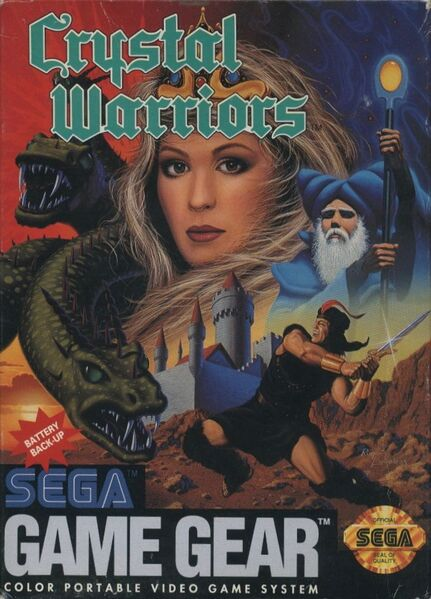
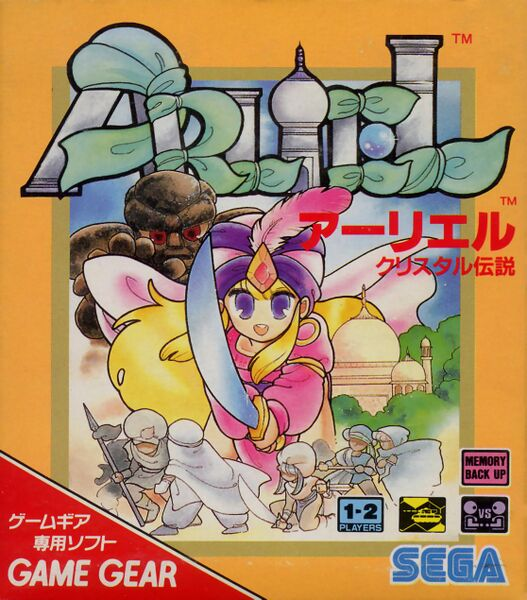
Crystal Warriors, also known as Arliel: Crystal Legends (アーリエル クリスタル伝説 lit. Ārieru Kurisutaru Densetsu) in Japan, was a Game Gear game released and published by Sega in December of 1991 in Japan and April of 1992 in the US.
The lead planner of the game was someone under the alias of LLG. As it was a common practice in the 1980s and early 90s for Japanese devs to use aliases in game credits to prevent talent poaching, we don’t know who LLG actually is. The only thing that we do know is that they also did work for other Game Gear games such as Batman Returns and Kenyuu Densetsu Yaiba, and are given a special thanks in Dragon Crystal, The GG Shinobi, and Sonic Chaos.
Similarly, the lead director was someone under the alias of Hide. Hide has done design work for the games Forgotten Worlds, Battle OutRun, and The Cyber Shinobi. As well as directing Astérix and the Secret Mission.
The design role is credited to Manabu Sato, who also did work for Dragon Crystal as the Graphic Designer, but also did the graphic design for various other more well-known games such as After Burner III, the Saturn version of Magical Drop 2, Fighters Megamix, Shenmue, the Dreamcast version of Super Robot Wars Alpha, Shining Force Neo, and Sakura Wars: So Long, My Love.
Programming was done by Yoshihiko Toyoshima, one of the oldest programmers who is still working at Sega to this day. His earliest role was as a programmer for Penguin Land in 1987. Around 2003, he was moved to Sonic Team, and after his work on Valkyria Chronicles II, he only stuck to working on Sonic games.
The other programmer working on this game was Yuichi Matsuoka, who did programming work for Sonic CD, Clockwork Knight 1 and 2, and the Sakura Taisen series, amongst other roles. He also did programming work for Sonic ’06…so he’s the one to blame…
The music was composed by Macky, the alias of Yukifumi Makino, a musician, sound producer, and executive at Sega of Japan. He served as the head member of Wave Master Entertainment, now called Sega Music Inc., from 1991 to 2004. An audio development team for Sega focusing on soundtracks and sound effects for various Sega games, most notably the Sonic series, Space Channel 5, Jet Set Radio, Panzer Dragoon, and NiGHTS.
Makino himself has worked on several jingles for Sonic 1, which are still used to this day. Even if you don’t know his name, you most certainly know of his most iconic work.
In addition, he is also credited with the Chaos Emerald jingle. That said, I don’t particularly think Crystal Warriors is Makino’s best showing. Don’t get me wrong, I don’t hate the Crystal Warriors soundtrack or anything; some of my friends are Crystal Warriors tracks. It’s just nothing that’s going into my “favorite songs” playlist, unlike some of his other works.
That being the case, Crystal Warriors was actually one of Makino’s first credited roles alongside Advanced Daisenryaku: Deutsch Dengeki Sakusen and Sonic the Hedgehog.
And beyond those roles, in 1997, Makino got the chance to produce whole-ass games, such as Sakura Taisen: Jouki Radio Show, Neon Genesis Evangelion: Digital Card Library, and Roommania 203.
In 2005, he moved on to work at Delfi Sound, formerly Marvelous Studio Inc., a subsidiary of Marvelous Inc. established in 2005, specializing in audio production. While he’s rarely in contact with Sega now, he is still often credited with various roles, such as in the Mario & Sonic games.
The credits also include special thanks to Masaya Kaneko, Hiroshi Aso, Go Sugai, Atsushi Tomari, and two people under the aliases of Captain Elf and Raizou.
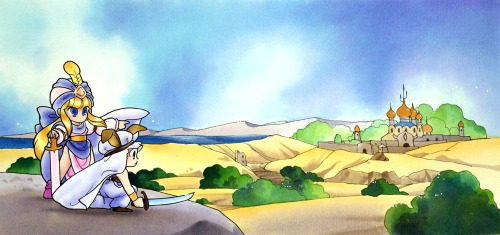
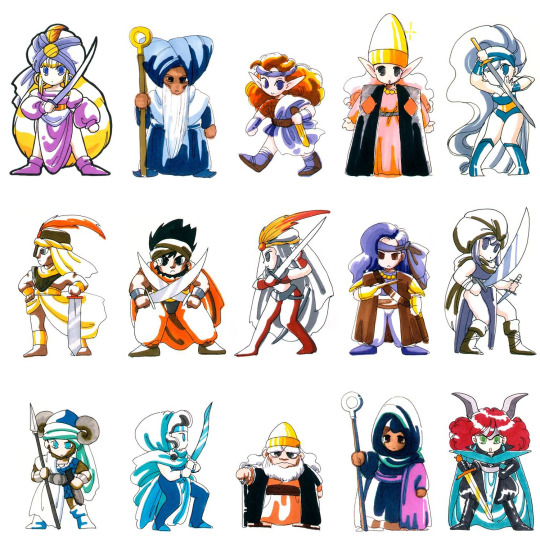
Lastly, Kugatsuhime did the original art and character designs, and this is the part of the article where I put Krispy Kreme out of business with how much I’m going to glaze this artist. She has a very distinct and cutesy art style, which was what initially drew me to the game in the first place. All of her illustrations are bursting with personality, and you can tell a lot about each character from their appearance alone.
Her illustrations use colors that have a very watercolor-esque quality to them, giving her art a storybook feel, especially when combined with the softer edges and chibi-inspired character designs. The coloring almost reminds me of some of Ken Sugimori’s older Pokémon illustrations, while the chibi style gives the characters a slightly homely and warm quality reminiscent of Peanuts or some of the Magical Drop 1 character art.
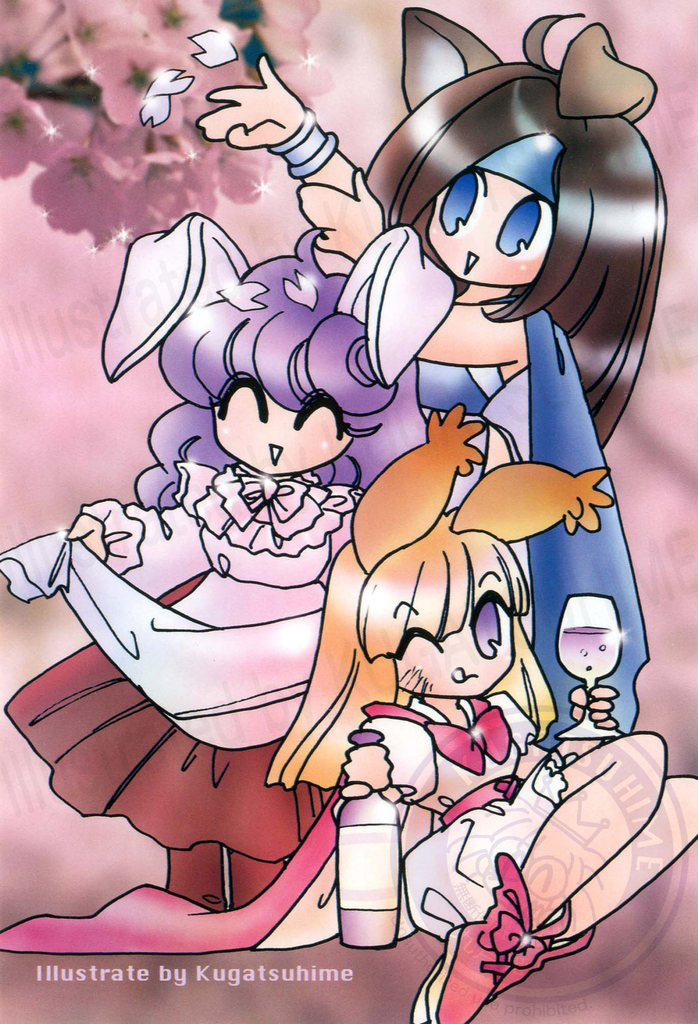
It’s very simple and cute without trying too hard to be overly kawaii. It’s a natural kind of cuteness that isn’t restricted to traditionally moé characters. For example, even a big, strong, muscular, bearded man can somehow invoke that same feeling when drawn in Kugatsuhime’s art style. That’s what I really like about it: the cuteness comes from the way she draws the characters, rather than from the characters themselves necessarily being cute.
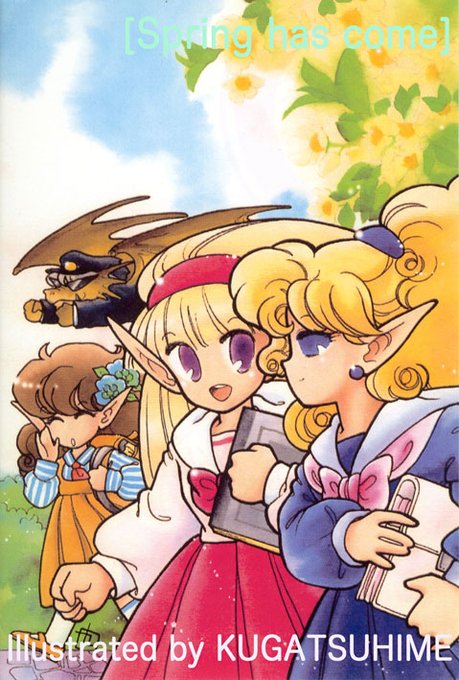
Kugatsuhime got her start in the shoujo manga magazine Hitomi, under the pen name Ikuzawa Nobuko. She later changed her pen name to Kugatsuhime, which comes from William Somerset Maugham’s 1939 novel, Princess September and the Nightingale, as Kugatsu (九月) is how you’d say “September” in Japanese, and -hime (姫) just means “princess.”
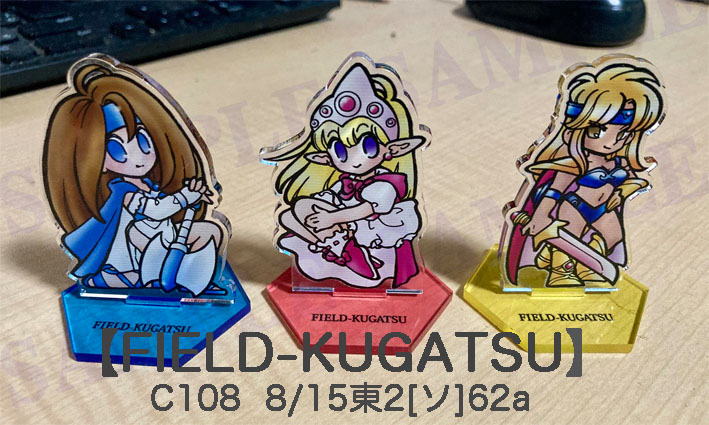
She’s most famous for her character designs in the card game/RPG series Monster Maker, but also did work for various novels and manga. She also participates in doujinshi events such as Comiket, sells her works under the circle name FIELD-KUGATSU, and is still active and making art to this day. She even takes requests.
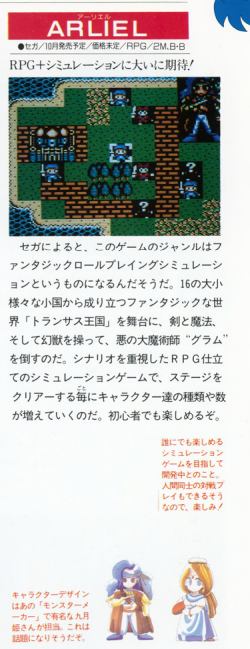
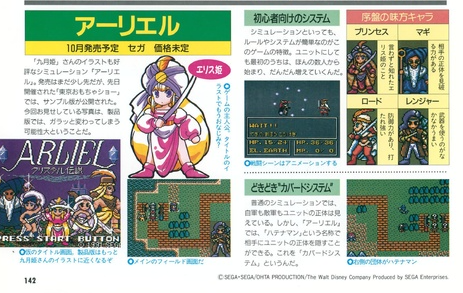
Now, before talking about the game proper, I wanted to show some of the magazine articles and promotional material for the game. One of the first times the public learned of this game was in a July 1991 edition of Beep! Mega Drive in Japan, where they briefly teased the game, discussed the general setting and genre, and explained how it’s more beginner-friendly.
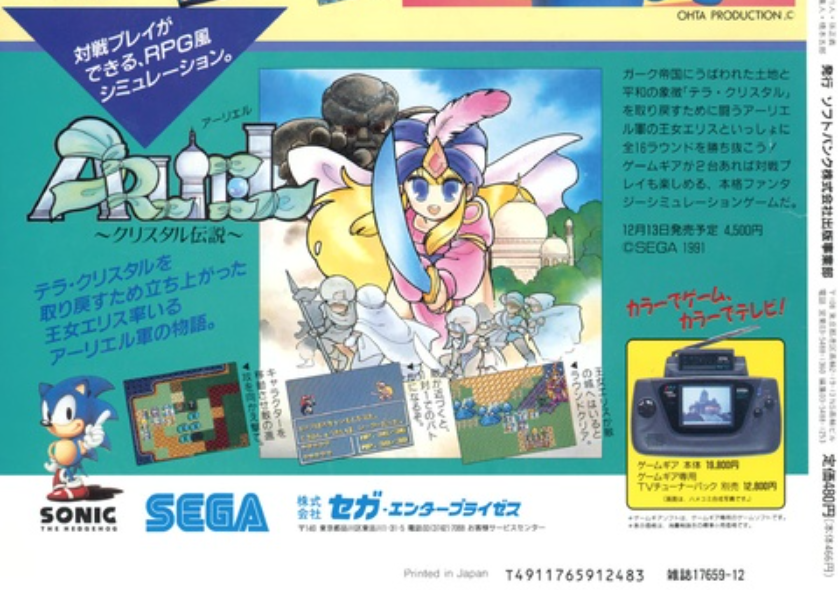
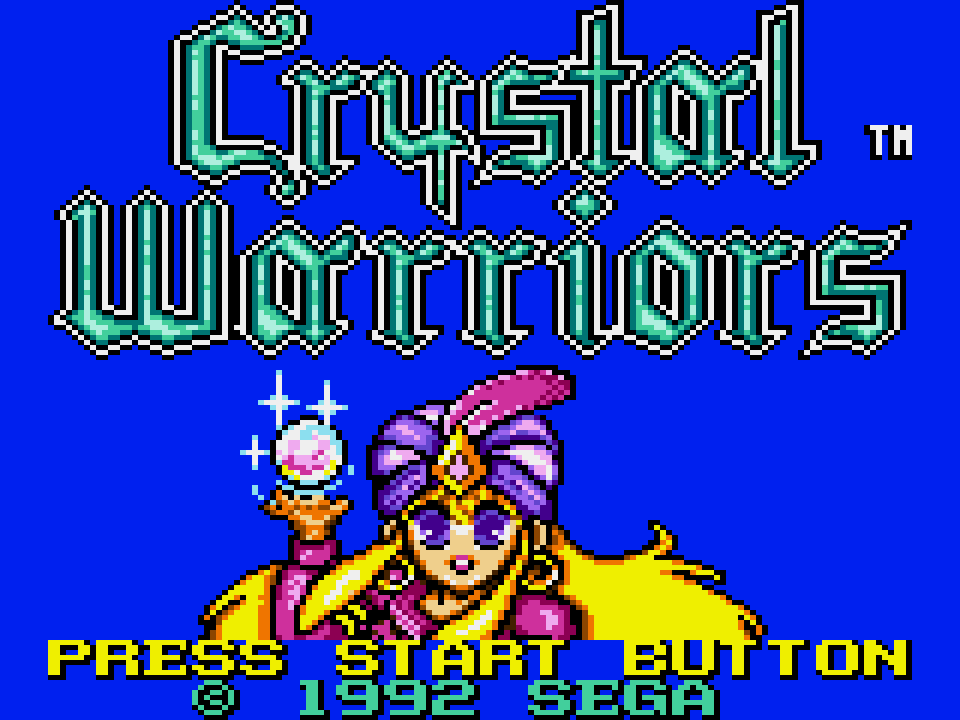
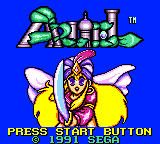
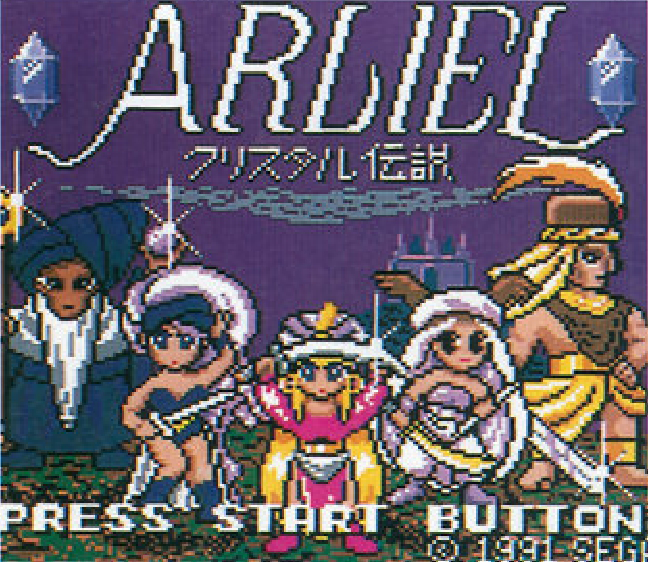
More info about the game was also shown in an August 1991 edition of Mega Drive Fan, and this one in particular is interesting because it shows off an early version of the Japanese version’s title screen, which I honestly like quite a bit more than the final ones. I like the little sprites of all the characters looking at you.
Unsurprisingly, since the game is rather old, the story is kinda simplistic. It’s about as fleshed out as the standard Super Mario game and can be summed up as “the hero has to kick the bad guy’s ass to save the kingdom.”
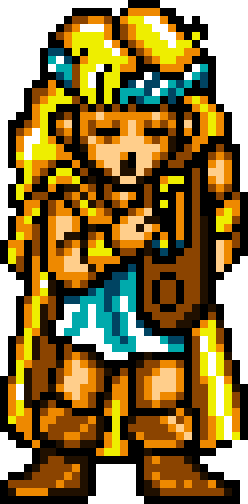
Basically, for over a century, tranquility enveloped the continent of Tyramus (トランサス lit. Toransasu) via the power of the Four Elemental Crystals of Arliel. However, things went awry when King Lawrence and his kingdom were overtaken by the Jyn (ガーク lit. Gāku) Empire, led by the dastardly Emperor Grym (グラム lit. Guramu).
However, in order to secure their grasp on Tyramus, the Jyn Empire would need to seize control of the Four Crystals: Fire, Water, Wind, and Fire. They manage to collect three of the crystals, but notice that the last one, the Earth Crystal, is missing.
Furthermore, they also realize that the Princess of Arliel, Iris (エリス lit. Erisu), a sorceress, had slipped away from the castle. Coping and seething in anger, the Emperor sends his forces to find Iris, while she, in turn, builds an army and begins her quest to reclaim the crystals and her country.
You don’t really get much else in terms of story until the very end of the game, and some very brief conversations with NPCs in houses and villages.
When starting the first chapter—which is called a “round” in this game—you have Iris, your main character, and she brings some of her friends. Some of them fight with falchions and halberds, and some can even cast magical spells. How come none of my friends cast magical spells? I’m looking at you, friggin’ DJ.

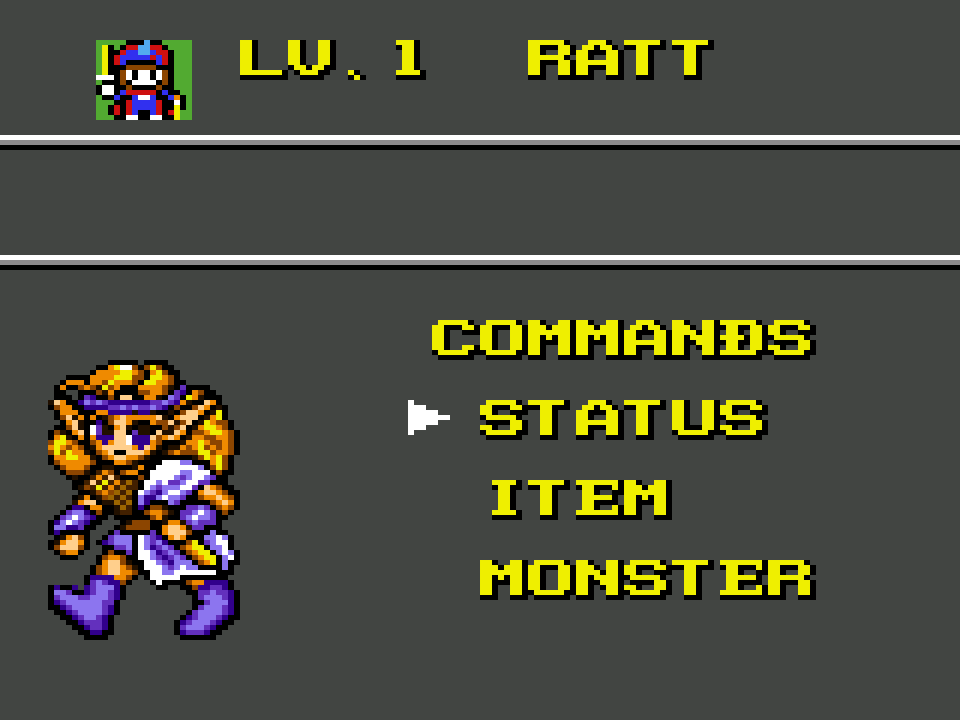
Like the story, characters don’t have too much to them either. When you get a new character, they’ll have a small blurb like “I’m joining you to avenge my brother,” or some shit like that, and then that’s it. They make the FE1 cast seem like social butterflies. As a result, your interpretation of the game’s characters will almost exclusively come from their sprites. And as I mentioned prior, Kugatsuhime’s lovely art style breathes a lot of life into these characters.
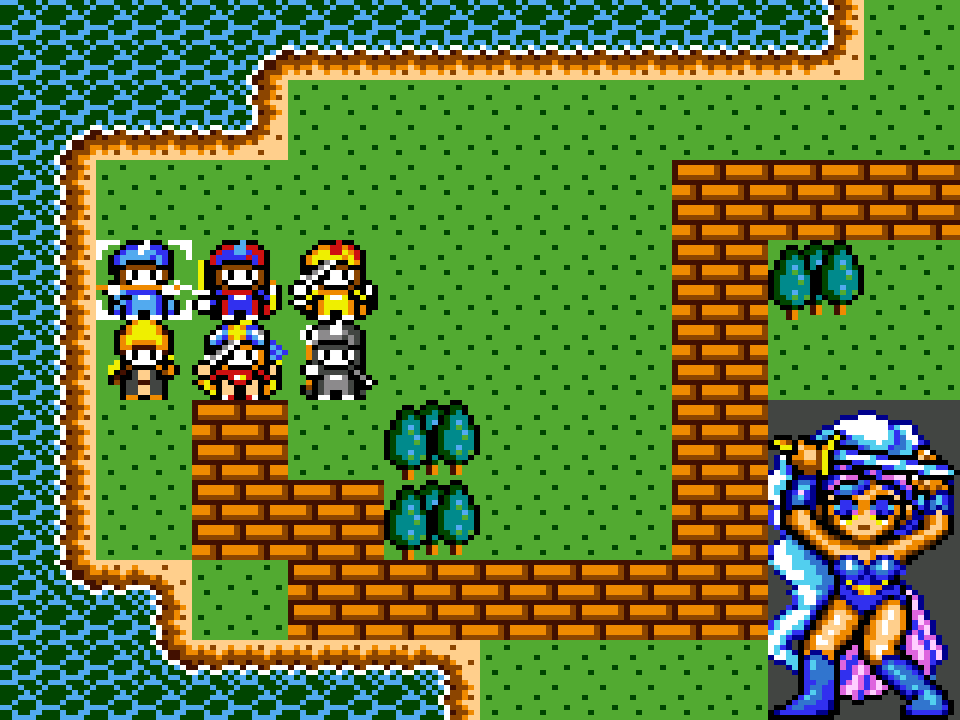
My personal favorite is Ratt. You can tell from her sprite that this friend-shaped little gremlin is always up to mischief and hijinks. She would ring her neighbors’ doorbells, then run away before they answer, or call you to ask if your refrigerator is running, before telling you to go catch it. She and the Empress from Magical Drop would be good friends.
In addition to the sprites, I’m also a big fan of how they mix traditional European medieval theming with Arabian theming. A lot of them wear turbans and are dressed in the same kinds of robes you’d imagine from the region.
So, the game presents itself as a turn-based SRPG where up to nine of your units have to kick the asses of an enemy army of up to nine units per round. Every human enemy will initially start as Hatenamen; their character sprite and overworld sprite will appear as follows:
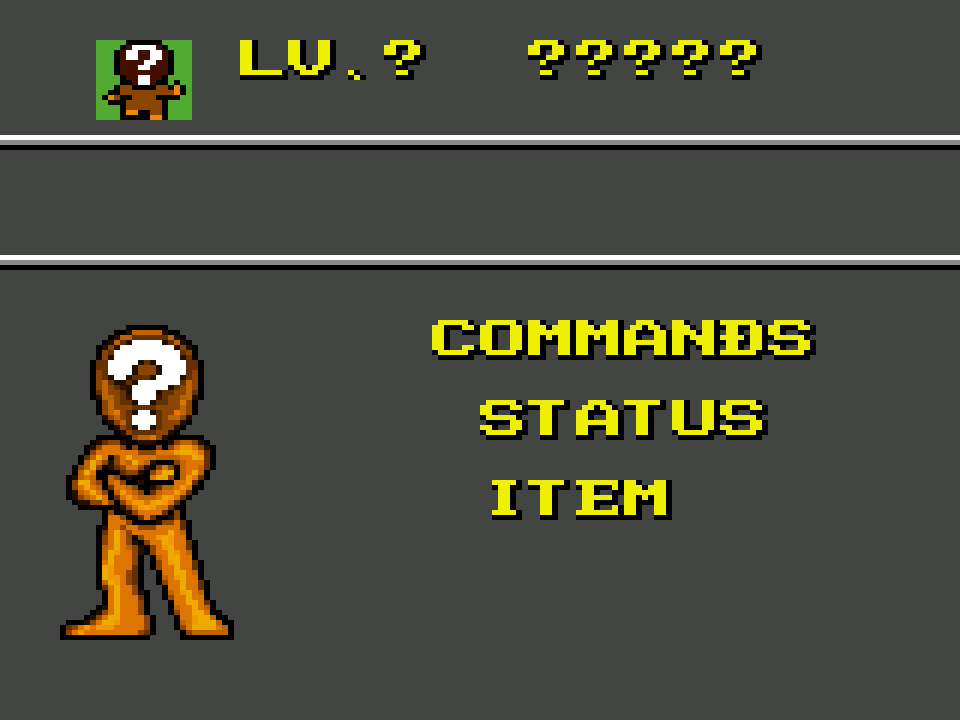
And their stats will be obscured and appear as “???” until you either engage in combat with them or you use the Scan spell on them. Something a little annoying, though, is that even when the enemy stats are revealed, you can never see their movement, so if you want to know how far an enemy can move, you kinda have to either just assume their range based on your own units, or remember how far you’ve seen them move before.
To complete a round, you must either rout the enemy, defeat the Warlord, or seize the town that the enemy has taken over. …But uh, I wouldn’t recommend ever seizing if there are enemies still alive; just treat every map like it’s a rout map. I’ll explain why later.
If you do ever want to seize, just know that there is no “seize” command like there is in Fire Emblem, and you don’t even need to use Iris to do it. If you have anyone end their turn on the gate, the round automatically ends. I actually found this out by accident; I ended my turn when there were still like three enemies left on the map, and then the map suddenly ended…so I reset.
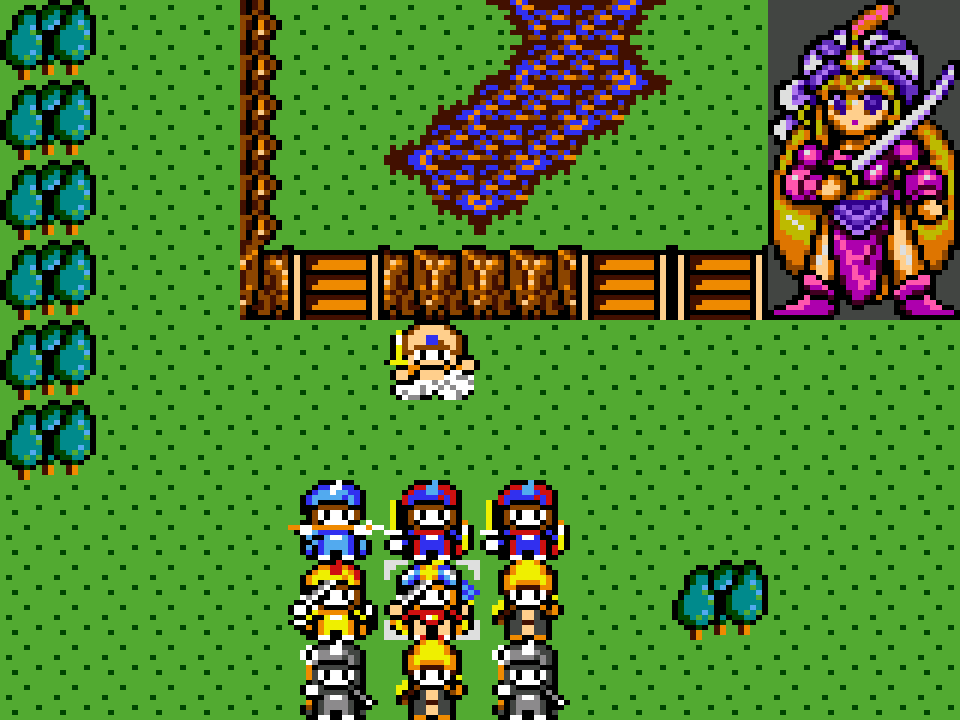
That said, you cannot seize a map if there are any enemy Warlords on the map. Warlords are effectively just boss characters; they have much higher stats than the generic mooks, and only appear on Rounds 6, 10, 13, 15, and 16.
Also, when routing enemies, enemy monsters don’t count towards the total enemy number, so if you kill every human enemy, but there are still like two monsters left on the map, the map will still end, and I strongly recommend defeating any enemy monster you see. I will also explain that later.
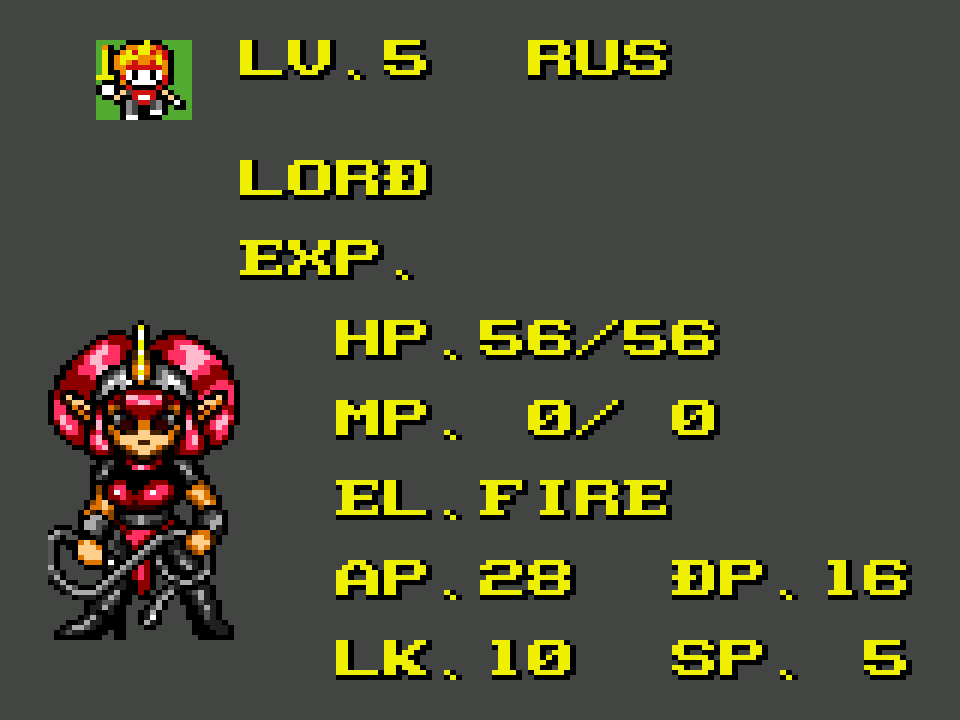
In your initial party, as you’d imagine, your various characters have various stats. They have their HP, which is self-explanatory. When you take hits, the number goes down; once it reaches zero, your character dies. And when I say “die,” I mean it. Like Fire Emblem, this game has permadeath, and as you’d expect, if Iris ever dies, that’s Game Over.
There’s also AP, which is your attack points; the higher the number, the more damage you do. Similarly, DP is your defense points; the higher the number, the less damage you take from the enemy. MP is your magic points; when you use spells like Heal or Scan, for example, it will use up a certain amount of MP, and if you run out, you can’t use magic anymore for that round.
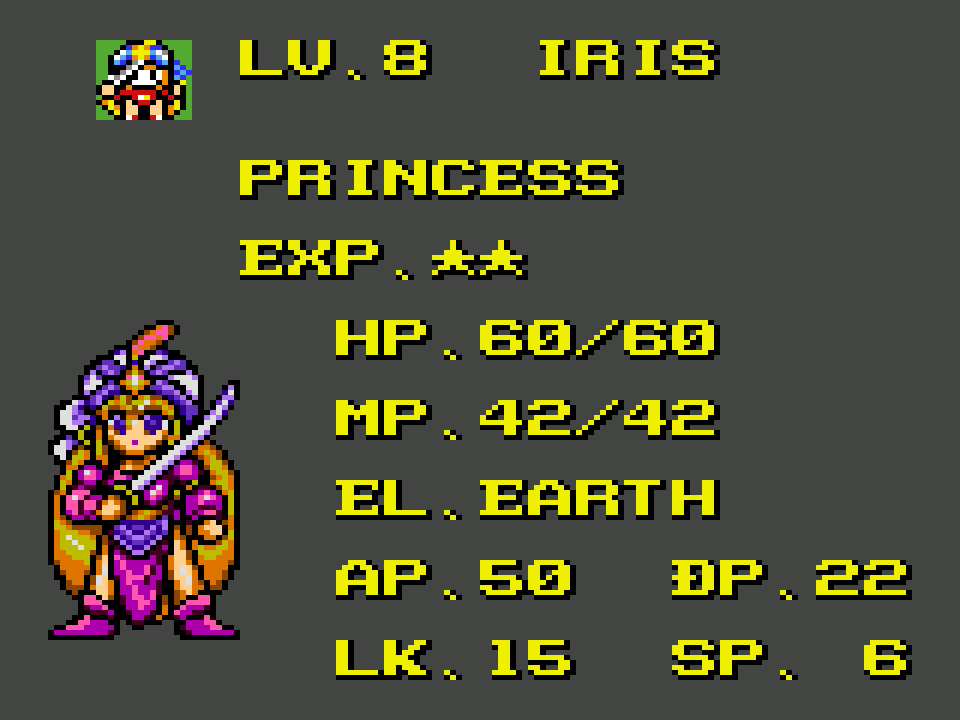
LK is your Luck, and SP is your speed, and to keep it a buck, I have no idea what any of these stats do. I assume they improve your hit rates and avoid, but since none of the sites I scoured through for research had any information on what the stats did, I can’t be 100% certain. Gomen nasai…
As for leveling up, your units will only get EXP when they kill an enemy, which is represented as a little star on the status screen. The amount of EXP your units get will always be a static 4 EXP. For every 10 experience points you get, you will level up and gain a bunch of stats, as well as being healed to full HP, which can be used to your advantage. The level cap is 9, and the game does not feature any class changing or promotions, which seems limited, but at the same time, the game is really short, with only 16 rounds.
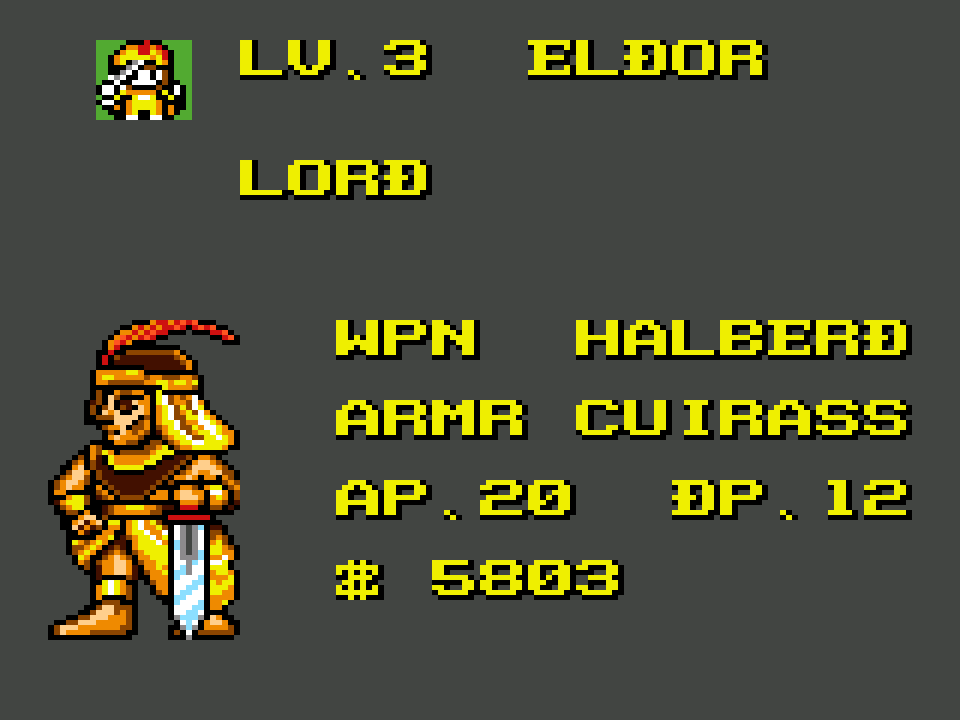
Each character comes in one of six classes. There’s Princess, which is the exclusive class of Iris. It has high attack, low defense, and is the only class that can use both magic and physical attacks decently well. Then there’s the Fighter class; they have decent movement and damage, but low defense. The Lord class has less movement and less attack, but high defense. Ranger has decent attack and high movement, but low defense. Mages cast high damage offensive spells, but have piss poor defense and physical attack.
The last class is Healer; you know what a healer does, and like Mages, they have nonexistent DP and AP. …Well, that last part is only half true. You get these two freaks: Frye at the start of the game and Oryon in Town 4, and for some reason, when they reach the level cap, they become the eighth and ninth wonders of the world, respectively, gaining 70-80 points in all their stats.
I don’t know if it’s a glitch or some kind of in-joke from the programmers, but I’m leaning towards the latter. Since your healers have jack shit for offenses, both physical and magical, and they don’t get EXP for healing, they’re naturally harder to level up. So, it’s likely some kind of Magikarp → Gyarados situation.
Something that adds an extra layer of strategy is the fact that each class also has an element associated with it. Each character can be one of four elements: fire, water, wind, and earth… Huh, I should have used the “Fire, Water, & Wind” title for this blog post instead of the Rayearth one.
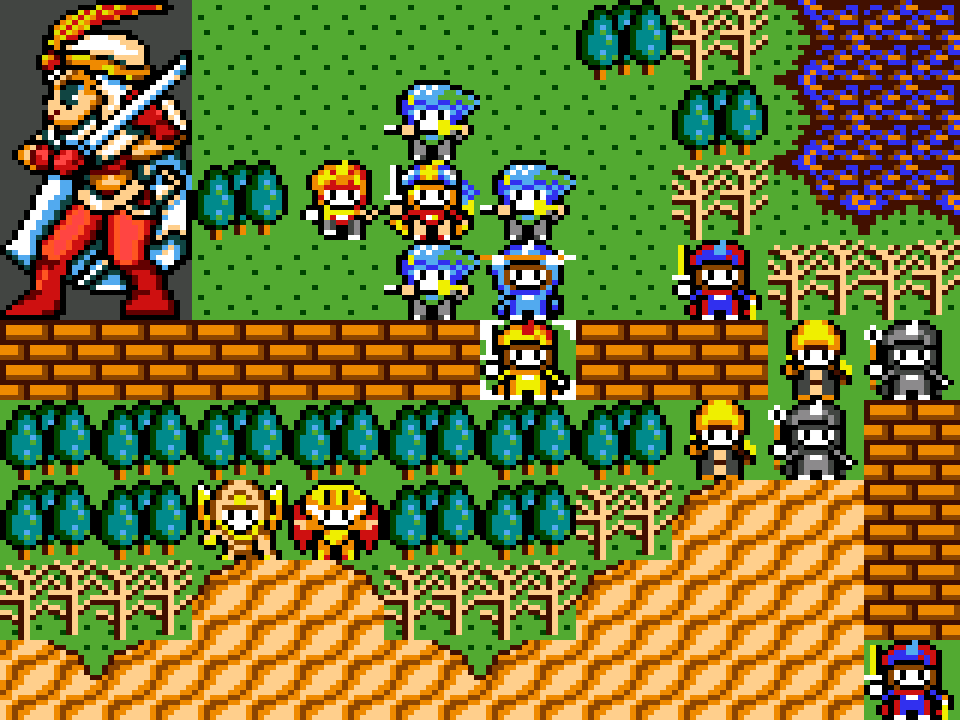
In Crystal Warriors, the elements work similarly to the troop types in Langrisser or the types in Pokémon. Water beats Fire, Fire beats Wind, and Wind beats Water. I lowkey have to keep a sticky note on my desk to remember this.
Earth, on the other hand, is neutral against everything. The Earth elemental type is mostly relegated to Iris, a couple of monster classes, Mages, and Healers. The Mage and Princess classes in particular have spells that can be either strong or weak against specific types as well.
On the topic of monster classes, though, that’s one big thing that sets this game apart from others in its genre: the monster-taming mechanic. It’s nothing as fleshed out as Pokémon, but it’s still a really cool mechanic.
Every map will have about two or three generic enemy monsters, and defeating them will automatically have the unit who defeated them tame them. This means the monsters can be summoned in future battles. Each unit can tame up to four monsters; however, mages and healers cannot tame monsters at all.
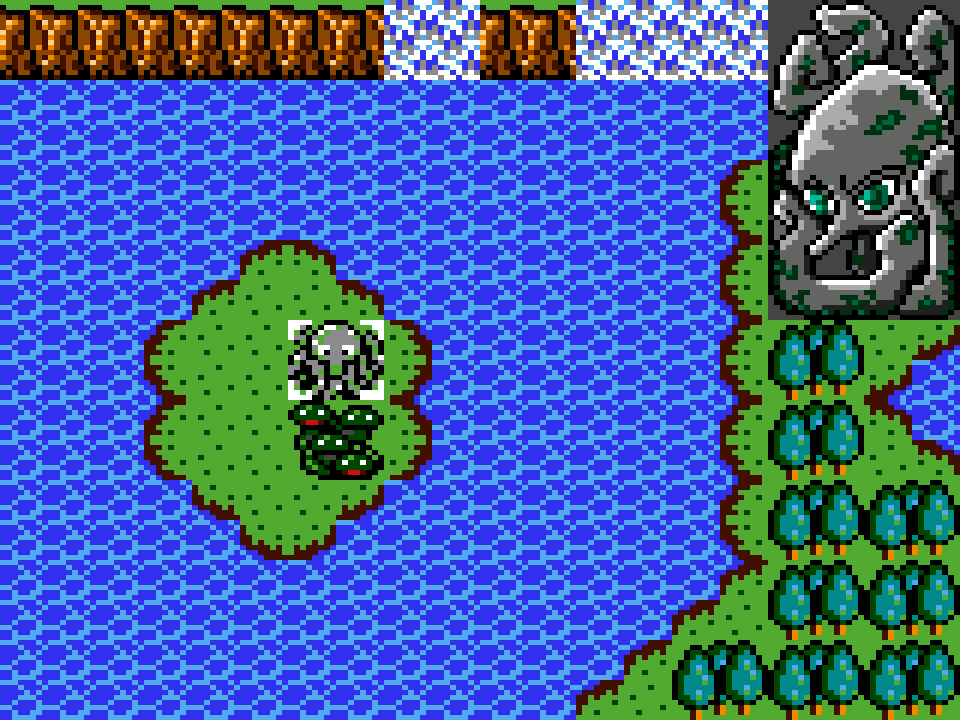
Monsters will also get a slight alteration in stats when tamed. Most of these consist of increased HP and AP, but lower DP. All monsters will also spawn with 0 LK and SP at all times.
Each monster has its own element type and can be used to complement your team. They also abide by permadeath, though, and can’t be healed with your healers. They’ll only be restored to full health once you start the next map. That said, though, the monsters are also kinda expendable, so you don’t stress out too much if you lose one here and there.
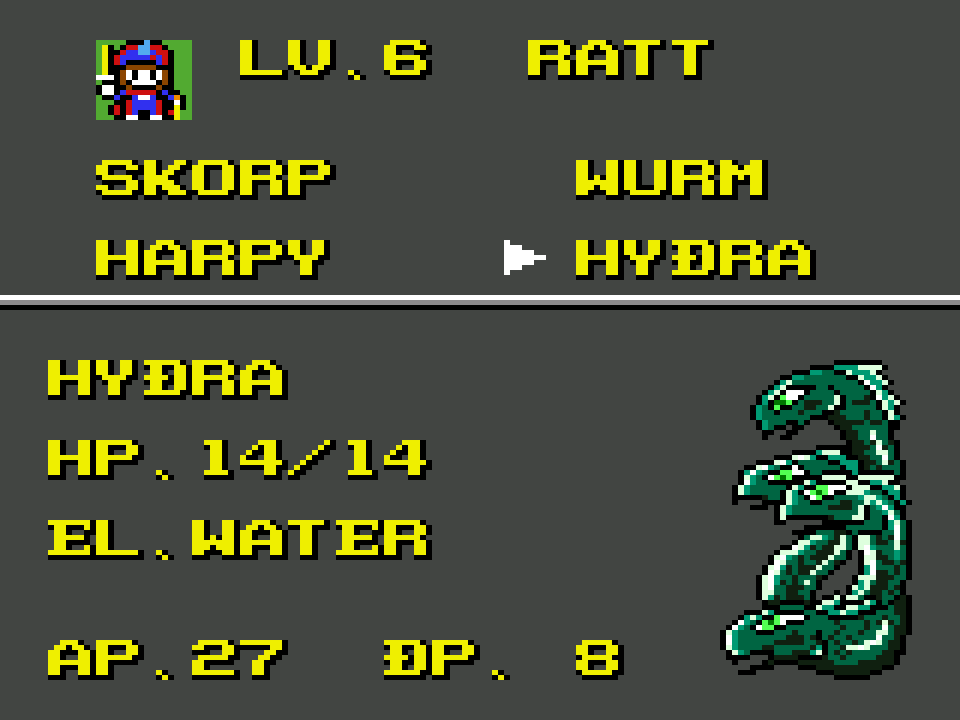
To best explain how monsters work, though, it’s time I talk about the battle system. There’s a lot to mention about the battle system, as it’s actually pretty unique. I’ve never seen a game from that era replicate this game’s battle system, and I haven’t seen a game do it since.
So, in Fire Emblem, right, when you engage in the standard battle screen, your character will attack the enemy, the enemy will counter if they can, then whoever is faster can perform a follow-up attack.
In Crystal Warriors, when you engage in combat, you will have four options: Battle, which is just performing an attack; Retreat, which just means running away from the battle and ending the round of combat; fleeing is not guaranteed, but I don’t know the exact percentage; Monster, which will summon one of the monsters you’ve tamed; they will do a small amount of damage to the enemy, then eat the counterattack from the enemy, almost like the move Substitute from Pokémon; and Spell, which allows the user to cast an attack spell if they have any.
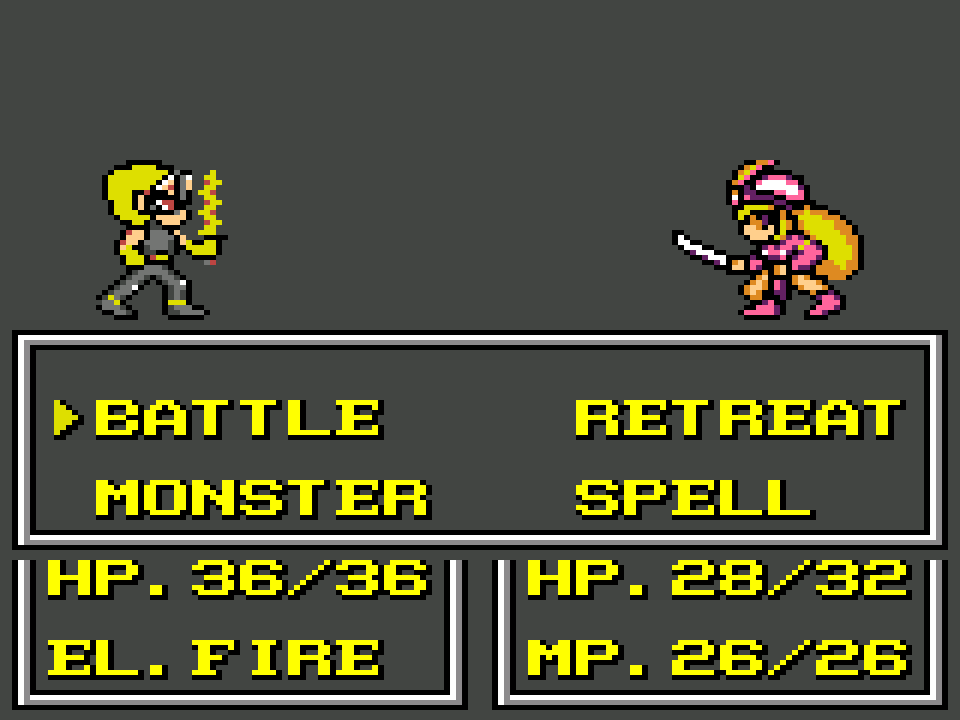
When you select your command, the enemy will either counterattack or use magic—enemies never really use monsters or retreat—then after that, you will have the ability to act again. And you have free rein to select whatever command you want; you can attack as your first action, take the counter, then cast a spell for your latter action. Or cast a spell first, then summon a monster second. You can mix-and-match in any way, and it really changes the angle in which you approach battles.
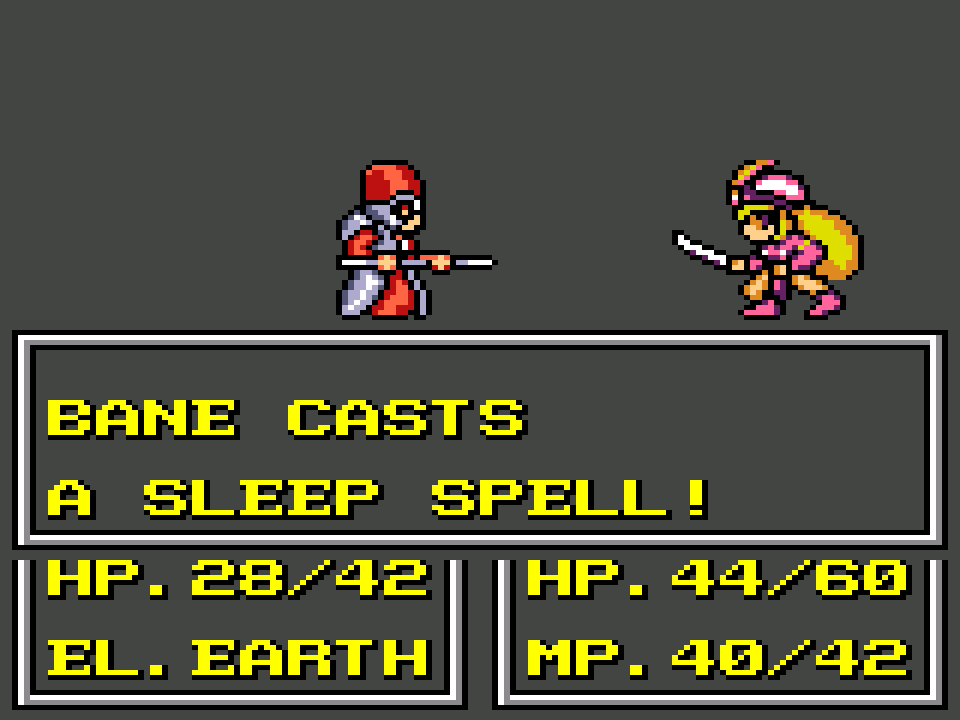
After that second action, the enemy will then perform their second counter, and then you will return to the map. And of course, if you’re on enemy phase, the order of actions is swapped.
So, back when I was talking about monsters, something I like to do is try to vary my monster types to help complement the unit I have. For example, Ratt is a Wind-type, so she struggles against Fire-type enemies, is strong against Water-type enemies, and does neutral damage against Wind-type enemies. So, with her, I try to tame Monsters that are Fire- and Water-types.
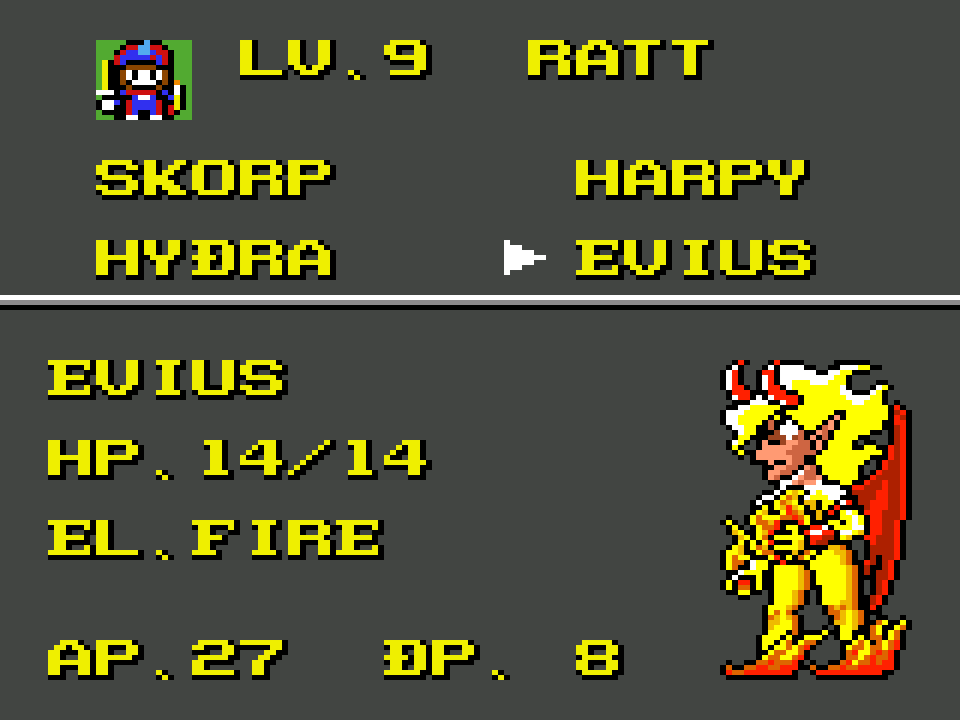
That makes it so if I run into a Fire-type enemy, I can summon the Water monster to do more damage to the enemy and reduce the damage taken. Then, if I have Ratt fight another Wind-type enemy and I really want to do extra damage, I can send a Fire monster at them.
An aspect about this that I feel falls a bit flat, though, is the fact that monsters don’t really level up with you, and they don’t really get any stronger. When you get further in the game and enemy units get more HP and DP, the usefulness of your monsters will wane heavily, and by the time you get to Round 10, they’ll be nothing more than just glorified meat shields.
Between maps, you can walk around freely and enter towns, much like a game like Shining Force or Fire Emblem Gaiden.
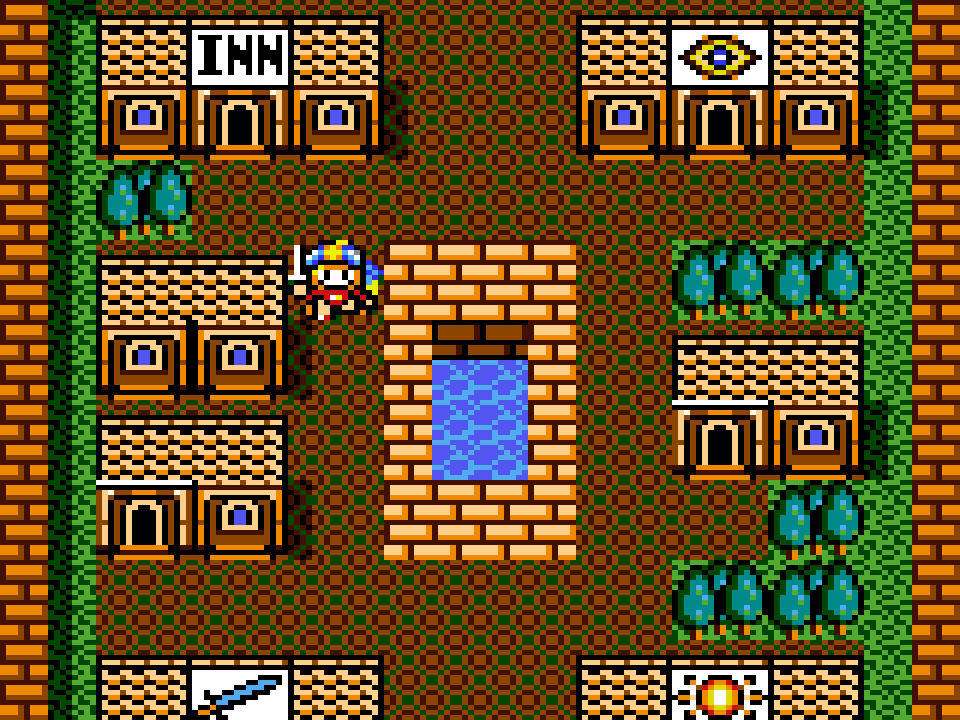
At inns, you can save your progress, and sometimes you can recruit characters depending on the map. Each character will cost a certain amount of gold to recruit, and when you pay them, they join you permanently…or at least until they die.
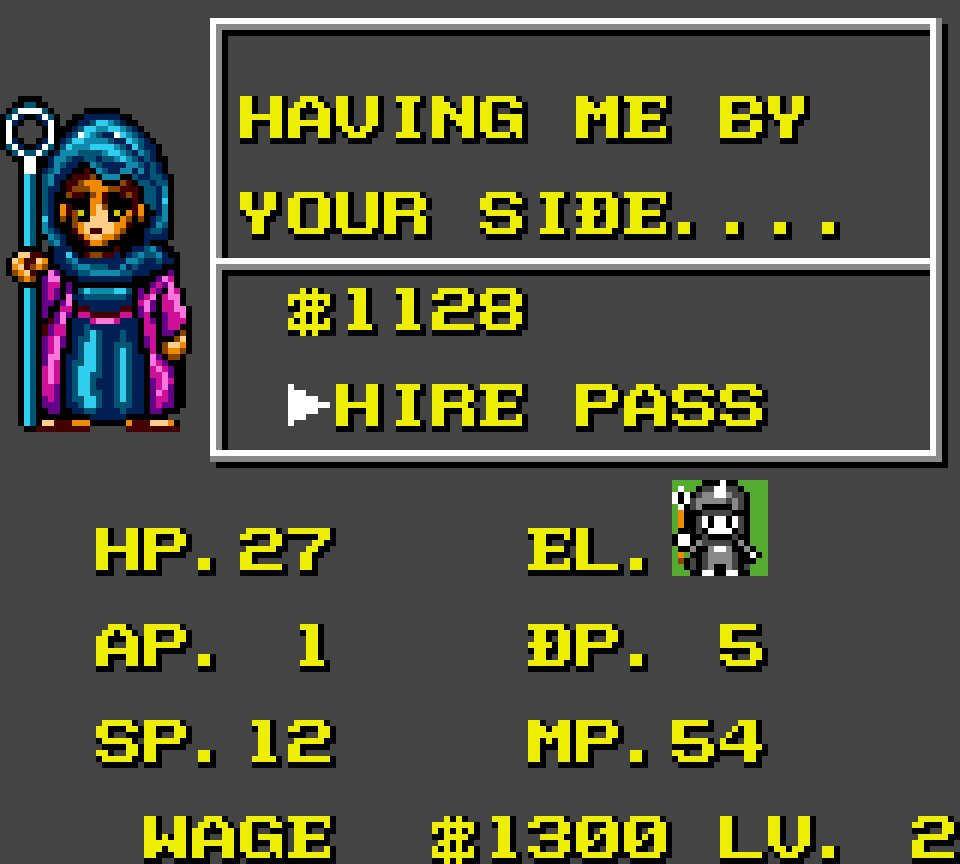
One thing that’s a bit stressful early on is that recruitable characters are very expensive, and their usefulness varies a lot. I recruited everyone for completion’s sake, but I didn’t really use most of them, and a lot of the later ones like Elsid and Borm never even got to see combat once.
But aside from needing money to recruit people, you also need money to buy weapons and new magic spells, and early on, you’ll be finding yourself living paycheck to paycheck. Like, there are a few towns where you can recruit two units at once, and when you hire them both, you’ll be left with next to no gold remaining. This is why I strongly recommend you kill every enemy you see, and don’t seize if there are enemies still alive, since you’ll want all the money you can get.
At the weapon vendors, you can buy weapons and armor for your units. It’s a bit hard to remember who can use what weapons and armor, and as this is an old RPG, the game won’t tell you the exact stats or anything, but the game is actually pretty nice in this regard.
The game outright prevents you from buying equipment for units who can’t use them. Additionally, if you try to buy a duplicate weapon, or a weapon weaker than the one your unit already has equipped, the game won’t let you purchase it.
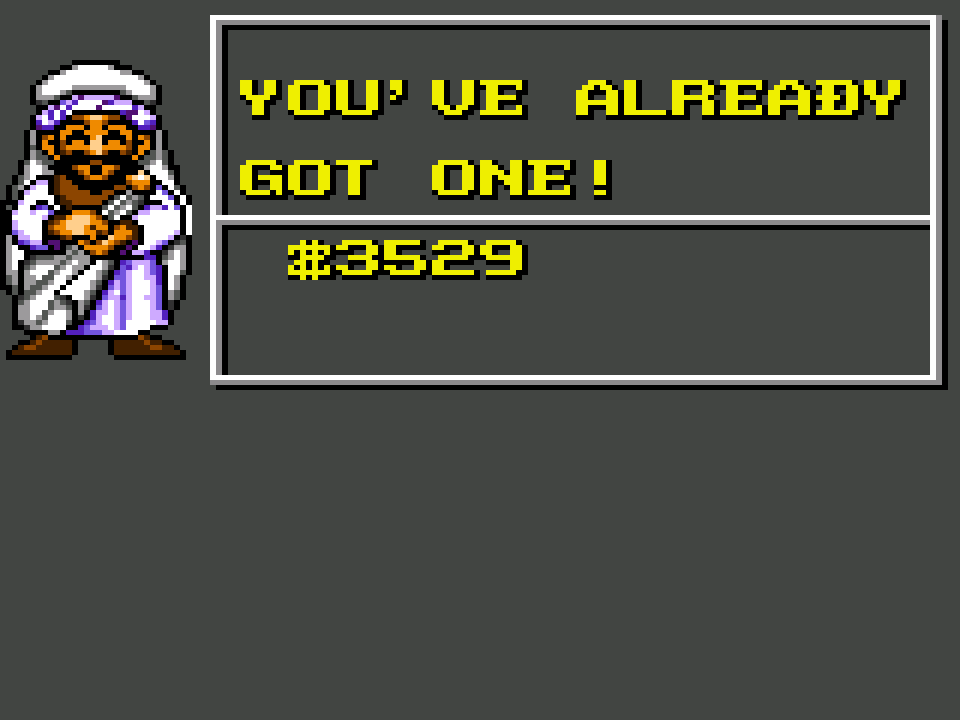
In magic shops, you can buy magic spells. This game doesn’t have any sort of magic stat, and your magic damage is mostly static, so if you want to do more damage with your mages, you’ll want to buy stronger spells.
I’ll recommend eventually purchasing the Drain spell for Iris; it works the same as Nosferatu in FE, where it drains HP from the opponent and allows Iris to heal herself. One downside is that the damage it does is equal to 25% of the enemy’s current HP, rounded down, so if you use it against an enemy with, like, 8 HP left, you’ll only do two damage to them, and if they have 3 HP or less, you will do zero.
In towns, there are also fortune tellers; if you give them 10 gold, they will give you very vague advice about the upcoming map. Lastly, there are regular houses, which will give you flavor text and advice, but if I’m being honest, a lot of these NPCs give you some of the most basic and obvious pieces of “advice” ever.
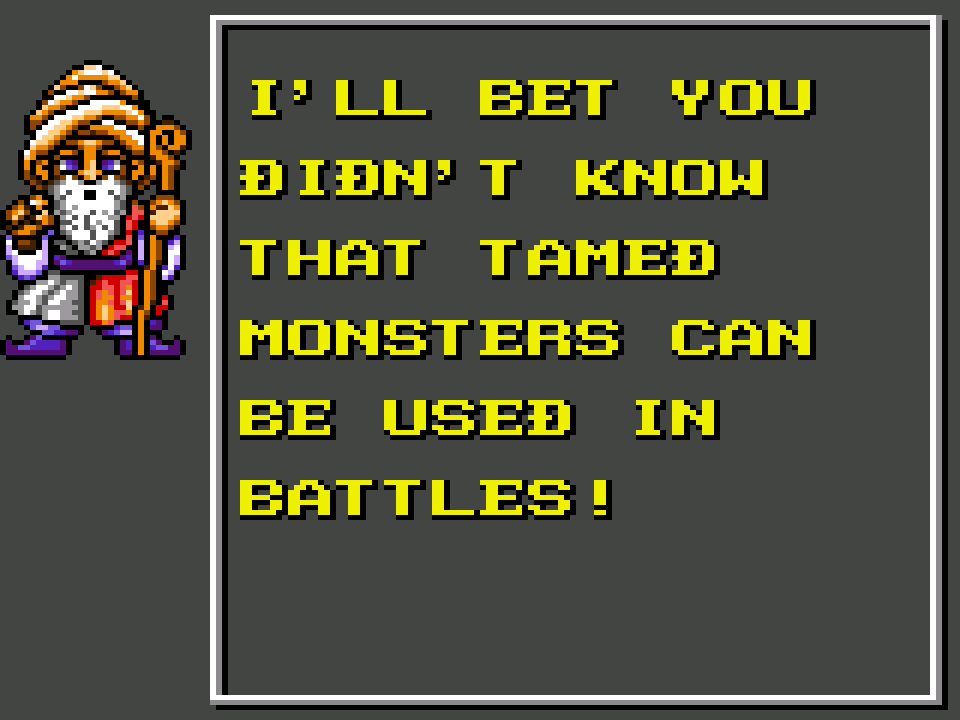
Like, wow, thanks for informing me that the monsters I defeated can be tamed and used in battles; this is such useful information in round 10. You’re too kind.
When you start playing the game, you may notice that the enemies are all named. They have names like Morbi, Aya, and Pyro, and at first I wasn’t really sure why they had names—like, are these their country names, faction names, or am I just fighting clones of the same people on every map? An NPC in one of the towns seems to imply that they are.
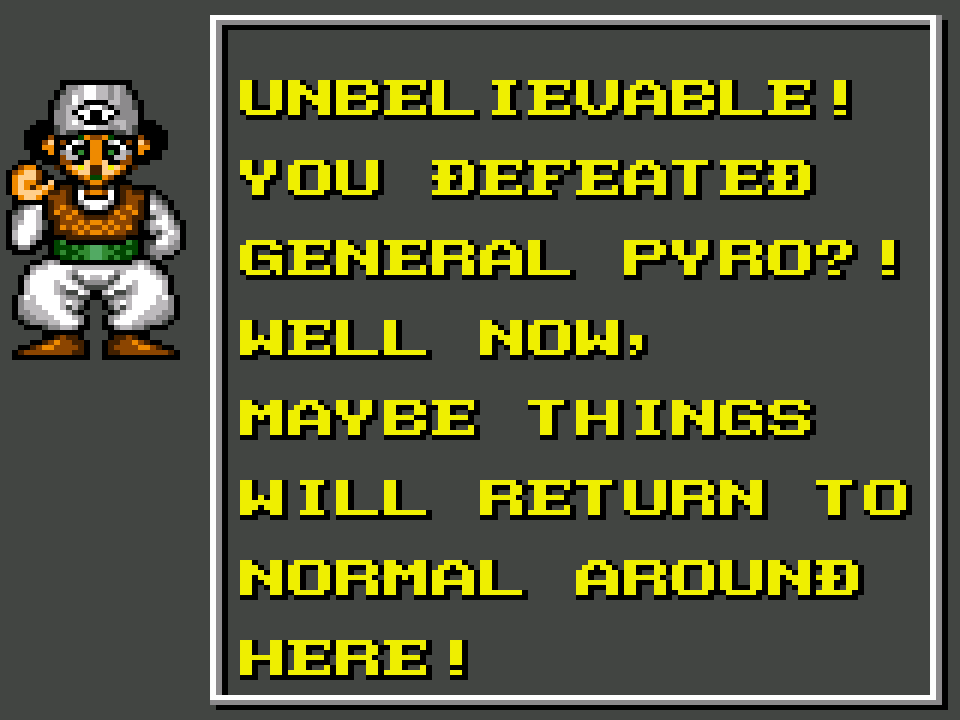
But the reason they all have names is because of the two-player mode. In the multiplayer mode, your opponent will have access to use these enemy units, and they’re mostly just enemy variants of your guys. For example, the enemy equivalent of your Fire-type Lord character, Eldor, is Morbi, the Fire-type Fighter character.
The second player also has access to a character who is an enemy variant of Iris, named Cham (チャミル lit. Chamiru), the Princess of the Jyn, and she’s only ever seen in this multiplayer mode.
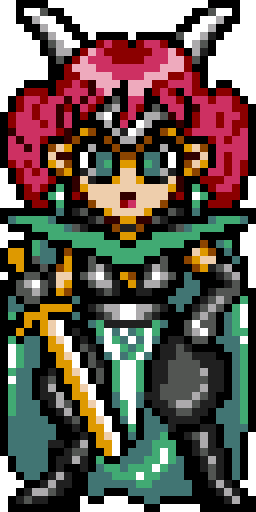
The multiplayer mode, from what I’ve seen, is a basic player-versus-player match where you either have to rout one another’s forces or seize their castle. All while taming any monsters on the respective maps. It starts with a stage select, where you can choose whatever round you want to play on, then each player can choose up to nine units they wish to duke it out with.
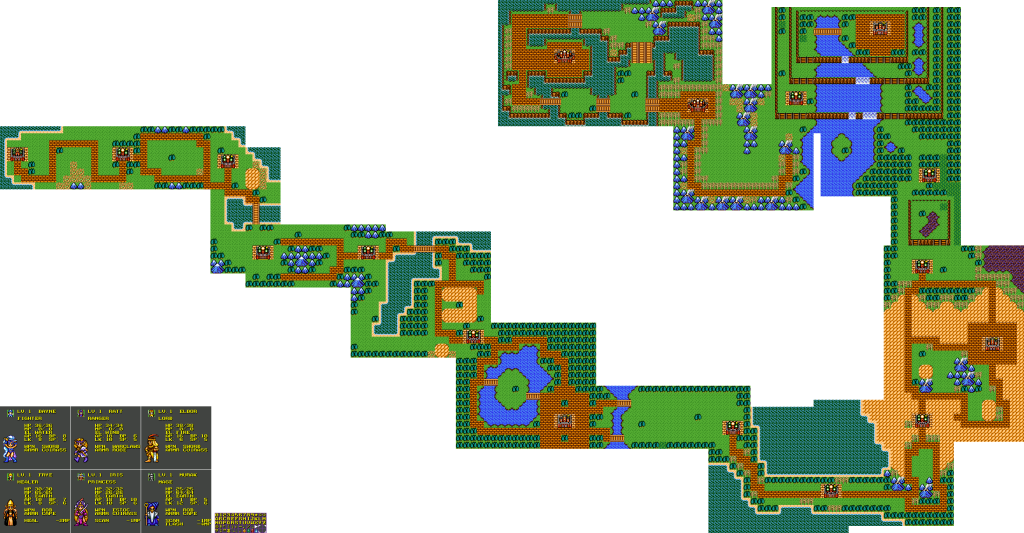
Speaking of maps, since I don’t have anywhere else to mention this, something I recently learned that I found pretty cool is the fact that every map in the game connects perfectly with one another, and you can make one big world map, as seen here:
Out of the games I’ve talked about on this site, this will probably have the shortest “extras” section. Since, unless you count the game’s official manual and the occasional artwork Kugatsuhime posts on her social media, this game doesn’t really have supplemental media. It kinda just came and went.
However, it must’ve been somewhat of a success, considering it ended up getting a sequel a few years later, called Royal Stone: The Door of Time Opened (ロイアル・ストーン ~開かれし時の扉~ lit. Roiaru Sutōn ~Hakareshi toki no tobira~), or just Royal Stone. While I have yet to play it myself, from what I’ve seen, it seems to have a lot of the same mechanics. It has the same element system, similar battle mechanics, and the same combat stats.
Some gameplay mechanics were also improved; the level cap is raised from 9 to 16, and some classes can even promote. The battles, instead of taking place in an empty gray void, now take place in a pseudo-3D perspective, kinda similar to Shining Force.
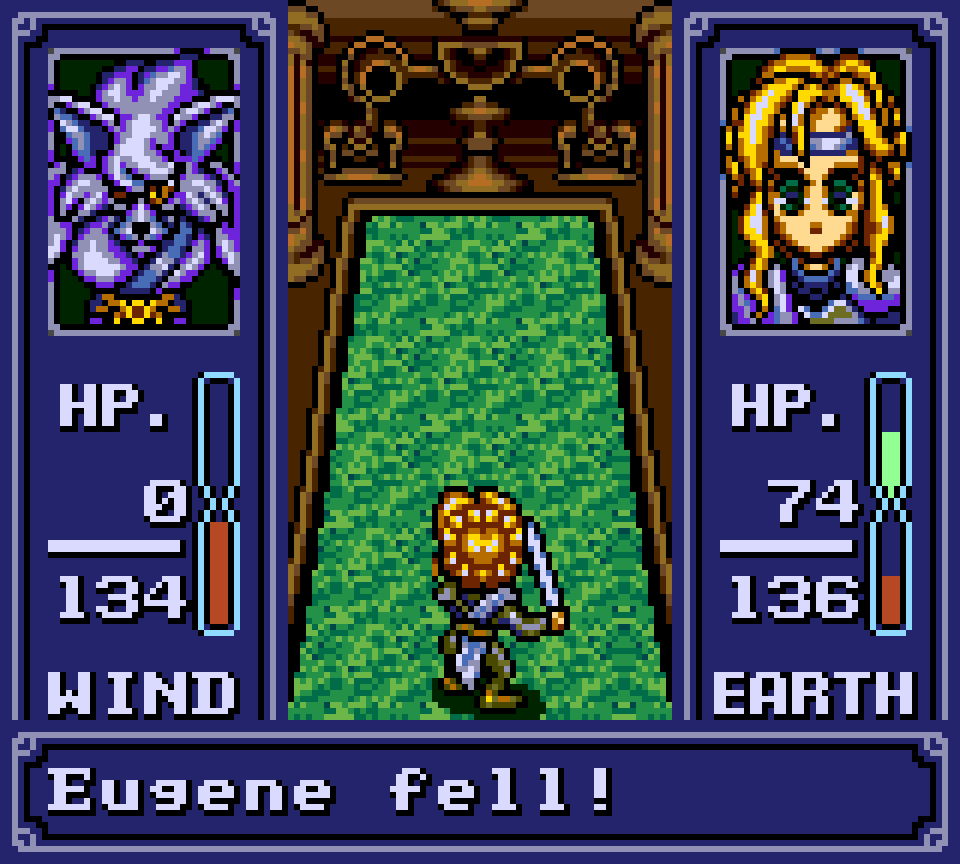
Towns are no longer basic and identical glorified menus, but actual unique locations that you’d see in a more standard JRPG like Lunar or Chrono Trigger. You can now sell items. And best of all, the art for this game was also done by Kugatsuhime, and the character designs somehow look better than they did in Crystal Warriors. In fact, it’s probably one of the best-looking games on the Game Gear, and despite it being an 8-bit system, it gave some Super Nintendo games a run for their money.
One thing that’s especially improved upon its predecessor is the plot and story. By that, I mean that Royal Stone actually has a story. Royal Stone follows Eva, who was accused of betraying her father and the kingdom of Martalia and was exiled. During the game, she attempts to clear her name and save the world in the meantime, and apparently the story can be surprisingly dark at times.
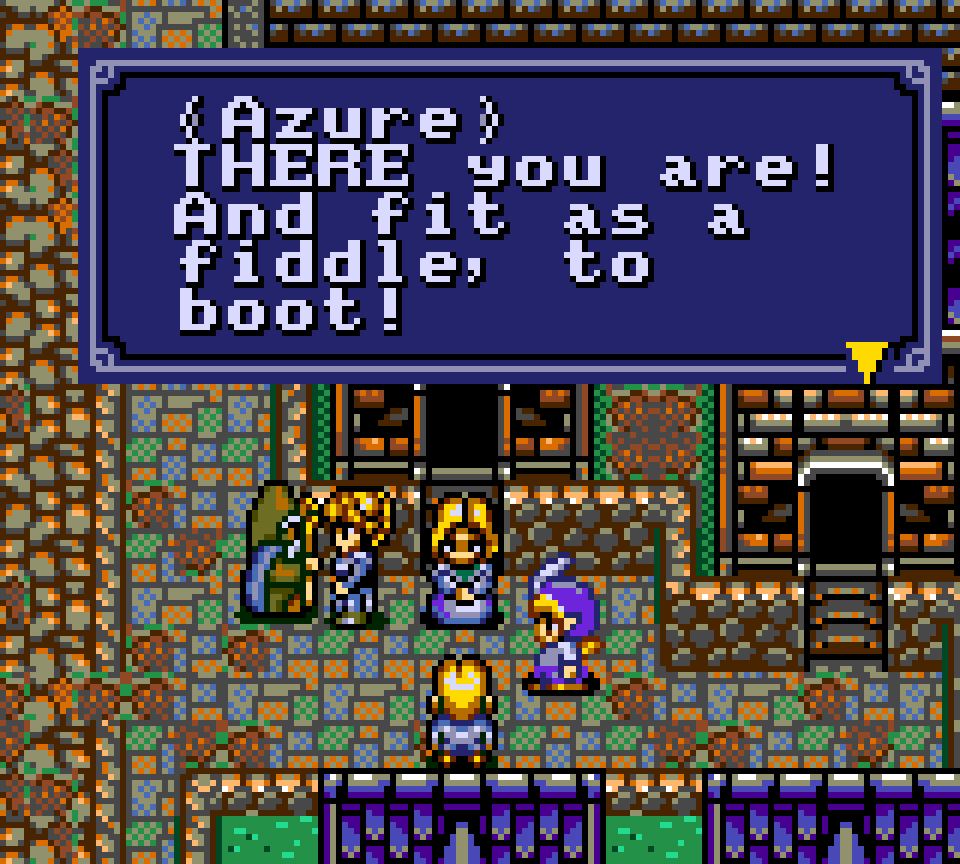
While this sequel was only released in Japan, it got a fan translation by Aeon Genesis back in 2013. And since this is an Aeon Genesis translation, it’s both very professional and faithful to the Japanese text.
Beyond that, Crystal Warriors was ported to the 3DS virtual console in 2013. But uh…considering the 3DS eShop is lost media now, your only way to play this game on a 3DS system would be to look into modding your 3DS and getting it from the hShop. Modding your 3DS is surprisingly easy, I hear.
This version facilitates the local play mode, though, so if you want to see Cham in all her glory, you no longer need to purchase two Game Gears secondhand on eBay or something, buy two copies of the game, and the Gear-to-Gear Cable. Though I don’t know if I know anyone locally who would even play Crystal Warriors with me, let alone anyone who knows of any non-Sonic Game Gear games. I don’t know; DJ probably does.
When the game came out, it didn’t make a huge splash in the same way games like Fire Emblem, Langrisser, or Shining Force did. A lot of the reviews from back in the day mostly just came down to “decent” or “okay… I guess.” One review I found kinda funny, though, was one I saw in GamePro magazine when doing research for this post.
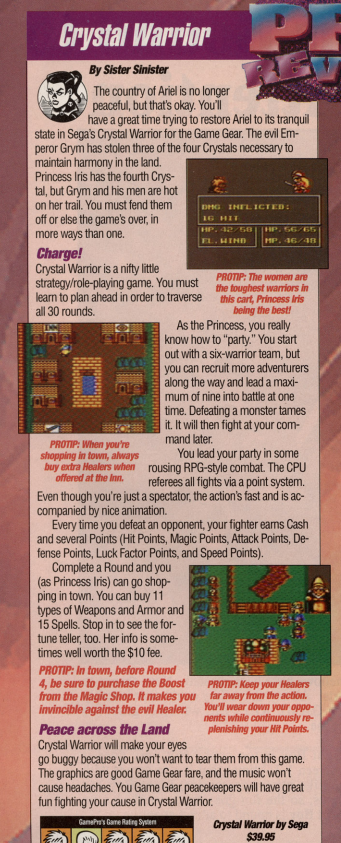
I like how they consistently misspell Arliel as Ariel, though that’s an understandable mistake. What is less understandable is how they blatantly lie and say that there are 30 rounds in the game, when there are only 16.
They also recommend buying the Boost spell from the Round 4 magic shop, since it will make you invincible against enemy healers…even though what it actually does is guarantee that your next attack will be a critical hit. I guess if the implication is that you can kill healers faster by using a crit, you end up taking less damage against them, then maybe…? But that’s a stretch, and you can also say the same about any enemy class.
They also assert that all the best units in the game are women, which, I guess, I can’t argue against that. In my run, Iris, Dayne, Ratt, and Flare mostly cleaned house, while all the men either just sat there and watched, or just healed the girls when they got low on HP. Well, okay, Zephi did help out here and there, but even then, he was kinda just Ratt 2.0.
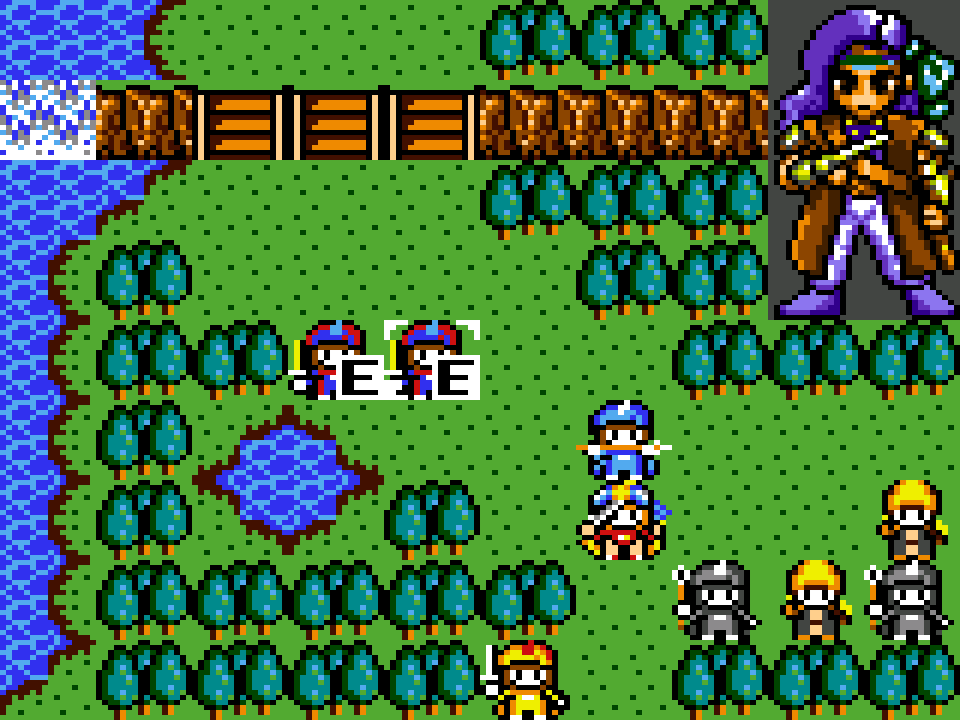
Another review I saw was on Nintendo Life in 2013 by a guy named Damien. This one was rather negative, as Damien gave the game a whopping 5/10. He even goes as far as saying this:

What the fuck, Damien? I thought you were cool. Well, I’ll let this little transgression slide, considering you named Warsong/Langrisser 1 as one of your all-time favorite games. But you’re still on thin fucking ice.
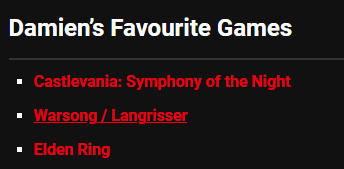
Anyhow, Crystal Warriors isn’t a huge or revolutionary game, but in its defense, it doesn’t try to be. It’s the type of game you would have taken out when you were either on a long car ride, recess, lunch, or in bed hiding from your mom. It has a lot of earnest charm, as well as a lot of cool and unique mechanics I haven’t seen in any other SRPG series. And while it’s short, I’m at the age where a shorter and easier game isn’t really a detriment.
That’s not to say the game is overly easy, mind you. Between having permadeath and how dickish a lot of the enemy warlords, mages, and especially healers are, it’s…still not too difficult, but it’s not a cakewalk either.
But anyways, it, honest to brimstone, has the blueprints and outlines for a very compelling and excellent game, and I wish more people knew of it. Excuse me as I use the r-word, but I would love to see a game like this get a modern-day remake or at least a remaster, fleshing out its story and characters, improving the monster system, and taking notes from Royal Stone in some of the balancing and aesthetics.
I know this post is shorter than my usual stuff, especially considering I haven’t published a new blog in a while. I’ve been struggling mentally, but I’m slowly getting back into the groove of posting stuff again. I have a lot of games, anime, and internet history in the backlog that I wish to talk about; I just need to put those thoughts to docs.
But I hope you enjoyed my little musings on this game, and even if I didn’t put you on to play this little hidden gem…er, “crystal,” I at least hope you learned something new and gained something of value from reading this article. And if you didn’t learn or gain anything of value…well then fuck you.