Physical Address
304 North Cardinal St.
Dorchester Center, MA 02124
Physical Address
304 North Cardinal St.
Dorchester Center, MA 02124

As an English speaker, if you wanted to watch the original Mazinger Z anime, your best bet is to purchase the DVD sets by DiscoTek Media, which were released back in 2014. The subtitles are pretty good and easy to read. They were provided by Toei, with the only real caveat being that there were some cases when a character might sound more formal or more casual than they should. Also, despite how some aspects of the original series aged rather poorly, the subbers were able to recognize that the series is just a product of its time, put their own beliefs aside, and opted to remain as faithful to Go Nagai’s original work as possible, which I respect.
However, what if you were a fan of Mazinger Z before 2014? How would you watch the series then? Well, you had a few options…kind of… Like many anime series, Mazinger Z had received a fan sub, a couple actually. The first one is officially known as the Jintymac sub and was released back in 2006. Jintymac is a translation group based in Hong Kong, which, apart from Mazinger, also subbed Getter Robo, Getter Robo G, Uchuu Enban Daisensou, Devilman, and some of the Grendizer, Mazinger, and Getter Robo crossover movies.
Their subtitles were likely machine translations, and were also translated from Japanese to Chinese, then from Chinese to English, and to little surprise, this sub was really shitty, notoriously so, to the point that you’ve probably seen screenshots or memes of it online. The sub is so bad that in the first episode, Dr. Hell’s Bardos’ Wand is translated as “crabsticks,” having many Mazinger fans online refer to this sub as the “Crabsticks Sub.”
After that, there are the Garada subs, made by a user by the name of Garada. Lemme tell you, this sub is a bitch and a half to research because there is a Mechanical Beast in Mazinger also called “Garada K7,” so searching up “Mazinger Z Garada subs” gives you next to nothing related to this sub. These subs were notably more competent than the Crabsticks subs. For one, they were coherent. The one caveat is that, online, many people refer to this sub as the “FIRE THE FUCKING ROCKETS subs,” which is because the sub inserted many swear words, a lot of swear words, which was surprisingly pretty common for older fan subs. While funny, it’s not the most optimal way to watch the series, but still much better than the Crabsticks Sub.
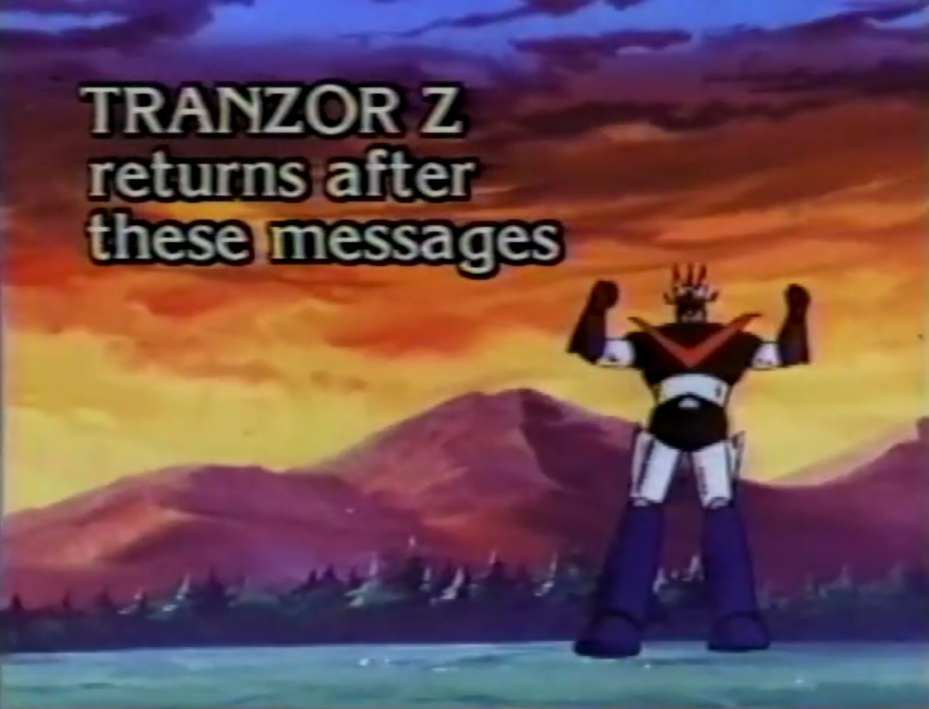
But what if you wanted to watch the series dubbed? Well, in that case, you were screwed. Well, at least partially. There did exist dubbed versions of Mazinger Z, but each of them has its own set of baggage. The most famous—and perhaps the most interesting—is Tranzor Z, an American adaptation that took significant liberties with the source material. Before diving into that, though, I’ll first touch on some of the lesser-known dubs and other ways Mazinger was adapted in the West in the next few sections. So, buckle up, lock on your Jet Scramblers, and let’s get into Tranzor Z!
The Hawaiian English Dub was a dub that was commissioned by Toei Animation and dubbed by M.&M. Communications, Inc., a subsidiary of MK Company based in Honolulu. The dubbing cast mainly consisted of students from the University of Hawaii, and the dub itself was a straight translation; the characters’ names were left intact, the plot was kept intact, and even the opening was kept the same, but featured English lyrics by Isao Sasaki, which sound hilarious, but it’s also quite good. The primary issue with this dub is that only around 27-29 episodes of this dub were produced, as Toei didn’t commission any more episodes.
The dub aired in 1983 in America as part of a Japanese-themed block on PBS called Beyond the Horizon, and was meant to show English speakers a glimpse of what Japanese animation had to offer. This dub also aired on Pat Robertson’s Christian Broadcasting Network, the network that was later renamed to ABC Family when it was bought by Disney, then later again renamed to FreeForm. Furthermore, in the UK, some episodes of this dub were edited together into a compilation film and released on VHS.
There was also a Filipino English Dub, which aired in—you guessed it—the Philippines in the late 70s. There’s not much info about this dub online, but from what we do know, the show was eventually banned by President Ferdinand Marcos.
After that, there was the Frontier Enterprises Dub. Frontier Enterprises was a Tokyo-based dubbing company that did jobs mainly for Toho International, Toei Animation, and Shochiku Company before moving into voice acting for video games in the 1990s, then closing in 2000.
The president of the company, William Ross, claimed to have dubbed Mazinger Z at some point, but it appears that it failed to be sold to a network, as there’s no footage or anything about this dub available online. Since Ross has long passed away, and the company is now defunct, this dub is essentially lost media. Hell, it’s unknown whether or not Ross misremembered and was actually referring to a Mazinger Z compilation film, which was advertised on the Voltes V compilation VHS, or an actual full-on dub.
Due to the deregulation of the Reagan Administration in the 1980s, kids’ television in the West boomed! Many toy companies were able to churn out animated television series as a way to convince young kids to ask their parents for toys from the shows, to the point where these series almost functioned as half-hour-long commercials. Series like Hasbro’s G.I. Joe, Mattel’s Masters of the Universe, and Hasbro’s My Little Pony were created and supported by accompanying toy brands.
While some companies made their own series to sell toys, other companies chose to import and adapt pre-existing series from other countries, usually from Japan, and used those to sell toys, since it was usually cheaper, easier, and faster to produce. A lot of these older adaptations were some of the earliest methods in which anime was introduced to Westerners.
As for a brief primer, though, I’m going to sit in my rocking chair with my reading glasses to explain that back in the day, anime in the West wasn’t seen the same way it is now. Back then, there wasn’t even a word for it; they were just “cartoons from Japan,” the same way a show like Total Drama Island is simply “a cartoon from Canada.” The fact that a lot of older anime had similar art styles to those you’d see in older Hanna-Barbera cartoons like Scooby Doo or Johnny Quest further justified this. Over time, though, as anime evolved and people in the West started to realize how different these shows actually were, the term “Japanimation” was adopted.

Eventually, “Japanimation” fell out of style, and we just started calling it animé with the accent mark over the e, before the accent was eventually dropped, and we just spelled it as “anime.”
In those “cartoons from Japan” days, series weren’t usually just straight-up translated, dubbed, and released. Because of the stricter regulations of what could and couldn’t be allowed on American television, certain aspects of these animations were altered, sometimes quite heavily. Aside from that, they also had to make some adaptational changes to better make the series appeal to a younger Western audience.
In today’s era, it’s commonplace for people to mock and trash the heavy-handed changes made in anime adaptations—like 4Kids’ One Piece dub or Brock’s jelly-filled donuts. And while those edits were indeed silly, many of the changes made to these older adaptations make the 4Kids versions look faithful by comparison. A lot of these older adaptations were on par with how Kyōryū Sentai Zyuranger was adapted into Mighty Morphin Power Rangers, though to a lesser extent. Renaming characters, toning down graphic content, and removing mature themes were just the start. Entire episodes would be skipped, storylines altered, and footage from other shows spliced in to pad out runtimes.

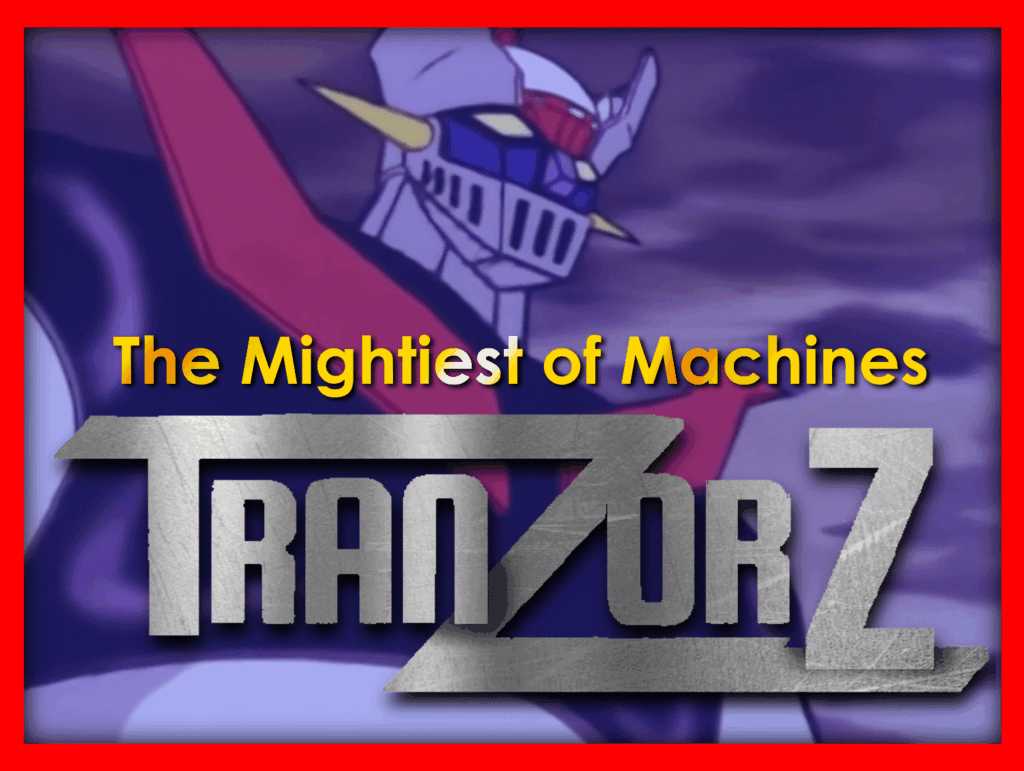
In fact, with Tranzor Z, it’s much less of a dub and more of an adaptation or localization. I only really call it a “dub” for simplicity, and also so I can have the title of this post reference that awful Patreon post made by a certain piece of sh… er, I mean jello.
Moving on, Tranzor Z was created by a team called Three B. Productions Ltd. (sometimes called 3B, 3-B, BBB, or Three Bee) in 1985 under the guidance of a guy named Bunker Jenkins. Three B Productions was likely a company founded by former members of Sunwagon Productions, the production company behind Star Blazers, a 1979 American adaptation of the anime series Space Battleship Yamato. Three B is also credited for the production of Starbirds, a movie released in 1982, which was a compilation of the pivotal episodes of Tōshō Daimos; The Adventures of Huckleberry Finn; and Daddy Long Legs, an animated version of the Jean Webster novel.
Amongst the staff, Bunker Jenkins served as the executive producer, while Chris Henderson directed the project. The sound mixer, as well as the sound effects director, was Jim Hodson. The writing team included Dick Strome, Sandy Childs, and Bunker Jenkins.
Video editing was handled by Helen Marie Ingram, with assistance from Lise Ruth. Patricia Byrne worked as the unit manager, and Sandy Childs served as the production coordinator. And lastly, Howard Sisko and Joanne Silver managed the film-to-video transfer. I want to discuss individual voice actors later on, when we get to the individual characters they voice.
Three B. was likely inspired to adapt Mazinger Z because of the fact that so many of Toei’s shows were already adapted in a mecha programming block known as Force Five by Jim Terry Productions in 1980. As the name suggests, five shows were adapted. Those shows were Getter Robo G, which was adapted into Starvengers; Starzinger, which was adapted into Spaceketeers; Gaiking and Danguard Ace, which were adapted but retained their Japanese names; and Grendizer, which was adapted into Grandizer.
The way the programming block worked was that on Monday, a new episode of Starvengers would air, then on Tuesday, Spaceketeers, on Wednesday, Gaiking would air, and so on and so forth.
Furthermore, World Events Productions’ Voltron (1985), which was an adaptation of Beast King GoLion and Armored Fleet Dairugger XV, was hugely successful as they partnered with Matchbox, Panosh Place, and LJN to sell their lines of Lion Force Voltron toys and Vehicle Force Voltron toys. Voltron had every toy aisle and family television set under lock and key, and even to this day, Voltron is a fondly remembered name, especially since it even got a 2016 reboot on Netflix by DreamWorks Animation Television and Studio Mir, which became just as popular…amongst Tumblrinas and shippers…

Beyond that, while Tranzor Z didn’t have its own dedicated toy brand, Mazinger Z and Great Mazinger did have toys sold in the US in 1977, almost a decade before Tranzor Z would ever air in the US. In Japan in the early 1970s, Bandai’s toy subsidiary, Popy, created toys featuring various characters from tokusatsu shows, mecha anime, and kaiju movies. Their line-up of toys got insanely popular when they picked up the licenses for Kamen Rider and the new, at the time, Mazinger Z anime. With the Mazinger toys, they released them in a line called Chogokin (超合金 tl. Super Alloy), a line of five-inch die-cast toys with various projectile weapons, including its signature rocket punch. The name “Chogokin” implied that the toys themselves were made of the same indestructible metal seen in the show, and made them feel a lot more special to the kids buying them.
In 1973, Popy released the Jumbo Machinder line, a line of two-foot-tall polyethylene figures. The Jumbo Machinder line was huge in Japan, with the Mazinger one alone selling about half a million units in Japan. The American toy company Mattel saw this popularity, and with the growing popularity of series like Godzilla in the US, Mattel bought the rights for these toys to sell them in the US under the name Shogun Warriors.

To put it bluntly, these toys were fucking sick. As I said before, they stood at two feet tall, almost as tall as the kids who would be playing with them. They came with various interchangeable weapons and gear, like the die-cast toys; they shot projectiles and could fire rockets, and they were hollow, so they were easy to carry around. I’m honestly really jealous of the kids who grew up with this. But I did purchase a 3D printed reproduction of the Great Mazinga one a few days ago.

The Jumbo line included Daimos, Dragun (from Getter Dragon), Gaiking, Godzilla, Goldorak (from Grendizer, only released in Europe), Mazinga (from Mazinger Z), Raydeen (from Raideen), and Rodan (only released in the US).
The 5-inch die-cast line had Dragun, Mazinga-Z, Poseidon, and Raider (from Getter Liger). There also existed two-in-ones, which were figures that could transform into different forms, that consisted of Daimos, Dangard (from Danguard Ace), Gaiking, Grandizer, Raydeen, and Voltus (from Voltes V). Then the 3-inch collector’s line came with 17 (Daitetsujin-17), Combattra (Combattler V), Dangard, Dragun, Gaiking, Grandizer, Great Mazinga, Leopaldon, Poseidon, and Voltes V.
There are others, but they would take forever to list off. While the Shogun Warriors were a hit with kids in the US, a lot of the larger 24-inch toys with projectile weapons had to be recalled because younger children kept choking on the small parts, deeming them too dangerous. As a result, nowadays it’s kind of a bitch to find these sold online for anything less than several hundred dollars.
Beyond that, there also existed a Shogun Warriors tie-in comic line by Marvel, which featured Raydeen, Dangard, and Combattra with a completely original story.
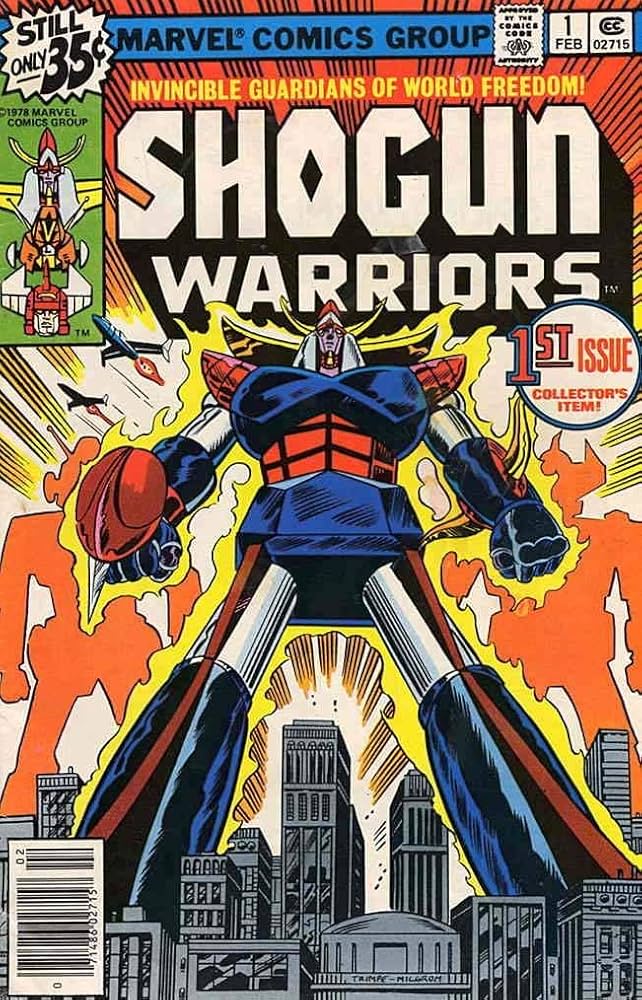
And to go even further beyond that, Shogun Warriors also had coloring books, role-playing games, Halloween costumes, watches, and clothing. They were even referenced in an episode of the Cartoon Network show, MAD, in the skit called Regular Shogun Warriors. It was a parody of Regular Show with Raydeen taking the place of Mordecai and Mazinga taking the place of Rigby, lol. The whole skit is really funny because the target audience of the show MAD wouldn’t have any idea of what Shogun Warriors even is.
Getting into the show proper, when looking for what’s different between Tranzor Z and Mazinger Z, the first thing you’ll likely notice is the name of the series and the titular robot. The Japanese name, “Mazinger Z,” likely comes from the Japanese term Majin (魔神), meaning Demon God, as well as a likely reference to the tokusatsu series, Daimajin. The -ger suffix likely comes from Energer Z, the original concept design of Mazinger. Considering the mech’s role as being either a protector of peace or a tyrannical demon, depending on the heart of who pilots it, it’s a fitting name.
Conversely, the name Tranzor Z likely comes from terms such as “transistor” or “transmission,” but spelled with a z, to stylize it a bit, then add a Z at the end to be at least a little faithful to the original Japanese name.
Thinking about it, it’s actually not too different from how Voltron got its name, wherein that series, the name was originally going to be called Klystron, the name for vacuum tubes used to generate and amplify high-frequency radio waves. That decision received pushback, then someone else suggested the name Voltar, and eventually the two suggestions were combined into Voltron.
The next change you’ll probably notice is the opening theme. Tranzor’s opening theme is much less of a theme and more of an opening narration. It’s actually quite reminiscent of older Superhero openings, such as the classic Batman and Superman cartoons. The opening sequence features music composed by Doug Lackey and narrations by Bunker Jenkins.
This opening isn’t actually bad by any means. In fact, I find it pretty catchy. It had a lot more effort put into it than a lot of the Force Five intros, which were just instrumental versions of the Japanese OPs. In a vacuum, Tranzor Z’s OP does a good job of hyping up the upcoming show and showing off how cool the robot is, but it just doesn’t hold much of a candle to the original Japanese OP. The original OP is a hot-blooded piece sung by Ichiro Mizuki, written by Fumihiko Azuma, and composed by Michaki Watanabe.
The ED of Tranzor Z is the exact same theme as the OP; it’s just an instrumental version of it. Meanwhile, the ED of Mazinger Z is a unique theme called Bokura no Mazinger Z, which is also sung by Ichiro Mizuki.
The next thing to note about Tranzor Z is the fact that while the original Mazinger Z was 92 goddamn episodes, Tranzor Z cut that down to 65 episodes, as that was the number of episodes needed for syndication at the time.
One of the most talked about changes is the character name changes; like most shows at the time, a lot of the characters received American names to better relate them to an American audience. Furthermore, the setting was changed from Japan to the United States, so it’s not like we have all these people with American names living in Japan or anything like that.
The main character, Koji Kabuto, was renamed to Tommy Davis, and he is voiced by Gregg Berger. Mr. Berger has done many voices for Transformers, Garfield, Rugrats, and several other series. Koji’s brother, Shiro Kabuto, was renamed to Toad Davis, which is such a funny name to me. Like bro, as a parent, you can’t just name your kid “Toad,” then claim that you love them after that. No wonder the poor kid gets bullied in the show.

Toad is voiced by Mona Marshall, who also has quite a large resume; her roles range from Izzy Izumi from Digimon Adventures, Konekomaru Miwa from Blue Exorcist, and her most notable role, Kyle’s mom, Sheila Broflovski from South Park.

Koji’s grandfather, Dr. Juzo Kabuto, was renamed to Dr. Lawrence Wells. I’m not sure why his last name is different. I guess the implication is that he’s from Tommy’s mother’s side, and if that’s the case…why…? What’s the reason for that change? It’s such a specific choice.

Sayaka Yumi was renamed to Jessica Davis. I don’t know why she and Tommy have the same last names; they just kinda do. They’re not even related or anything. She was also voiced by Mona Marshall. Sayaka’s father, Professor Gennosuke Yumi, was renamed to Dr. Davis, and Patrick Pinney and Paul Ross both voice him. Paul Ross did a number of voices on Tranzor Z, but also did voice work for the movies Nicholas: The Boy Who Became Santa and Shadow World. Pinney, on the other hand, did several voices for Robot Chicken, a few one-off characters in the Powerpuff Girls, and most notably, Painty the Pirate, the pirate that shows up in the opening of every episode of SpongeBob.

The best character in the show, Boss, was renamed to Bobo. This is one of the weirdest name changes to me because the name Boss already worked as an English name, and it kinda gave a sense of comedic irony. You have this character that’s a self-proclaimed big shot and refers to himself as “Boss,” but in actuality, he’s just a fat, horny dumbass, and the name “Bobo” removes that irony. Bobo is voiced by Patrick Pinney for episodes 39-65 and Bunker Jenkins himself for episodes 1-38.

Dr. Hell was renamed to Dr. Demon and voiced by Pinney, Ross, and Jenkins. Baron Ashura was renamed to Devleen, and while both in the Japanese version and the Hawaiian Toei dub, the male and female halves have separate voice actors, in the Tranzor Z dub, the character is just voiced by one dude, Gregg Berger, doing a campy voice.

Something that I find odd is that in the show, they go as far as to refer to Devleen as a “Shemale.” I know views on terms like that were less progressive at the time, but it still feels weird to reference that at all in a kids’ show. Though I am ignorant, so I don’t know if that’s considered offensive or not, but if so, I guess that’s something that may make a newer viewer feel a bit uncomfortable.

Boss’s goons, Mucha and Nuke, were renamed to Jim and Chris, respectively. Jim was voiced by Robert A. Gaston and Gregg Berger on one occasion, while Chris was voiced by Paul Ross and Mona Marshall on one occasion.
Count Brocken was renamed to Count DeCapito, which is a little on the nose there; maybe you should come up with better names, Mr. Bunker Jenkins. DeCapito is voiced by Patrick Pinney, and god, his voice is probably my favorite voice in the entire show. He has a very stereotypical, angry German accent—since, y’know, the character is a former Nazi soldier—and it’s hilarious, it reminds me of those “Hitler reacts” memes that were more popular in the mid-2010s.
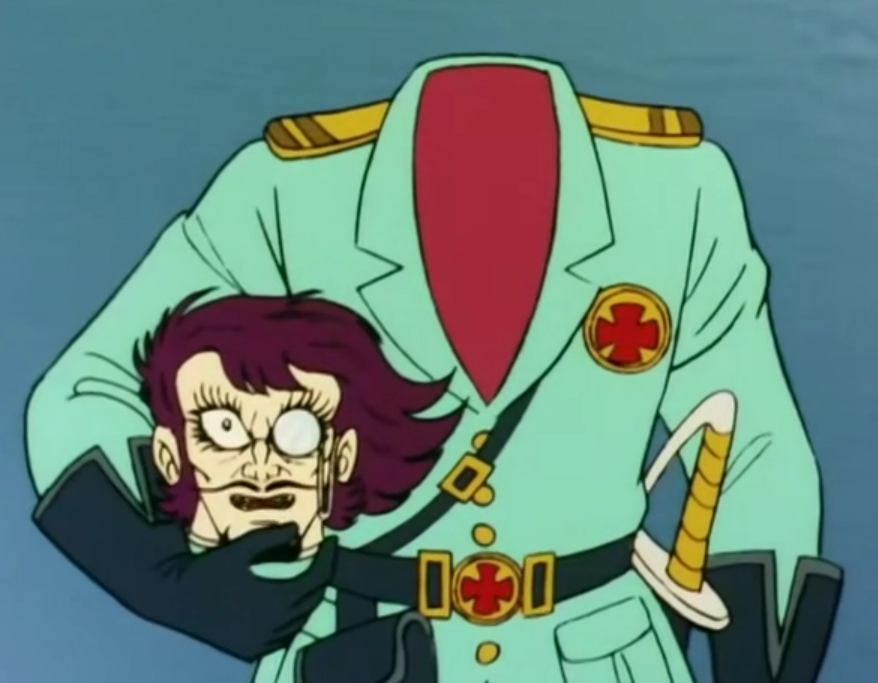
His troops, the Iron Cross, are usually just referred to as Troopers, in Tranzor Z. Next, there’s Archduke Gorgon, who was renamed to Genghis the Ghastly and is voiced by Paul Ross.

Dr. Sewashi was renamed to Professor Manning, but for some reason, the other two professors, Dr. Nossori and Dr. Morimori, are unnamed in the dub. Manning is voiced by Bunker Jenkins for episodes 1-38, and then voiced by Pinney for the remainder of the series. The other two scientists are voiced by Ross.

As for a few one-offs, Mr. Kenzo Kabuto and Mrs. Toko Kabuto are renamed to Mr. and Mrs. Davis, respectively. Bakarasu the Crow was renamed to Aesop the Crow, after the Greek fabulist. A kid named Onimaru was renamed to Roger, Sayaki’s cousin, Yuri, was renamed to Judy. Mitsuo Satomi was renamed to Billy Parks, and the beautiful Misato was renamed to Sally Bradberry.
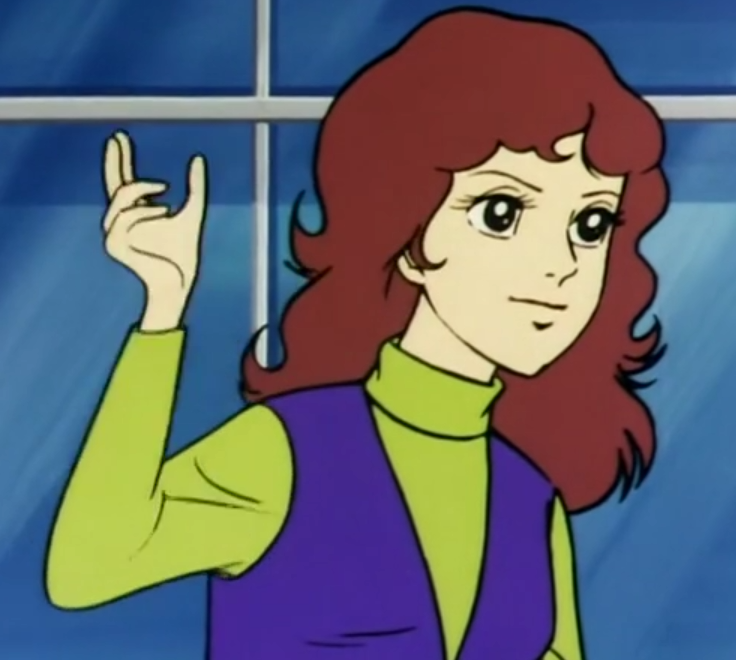
The minor villain, Viscount Pygman, doesn’t appear at all in Tranzor Z, on account of all the episodes he appeared being skipped. In Mazinger Z, Pygman first appeared very late in the series, episode 83, and only appeared in six episodes.
That kinda reminds me, though, I read an article a while ago. It was by one of the translators who worked on the DiscoTek subs, Kara Dennison, and she talked about her issues with some of the more poorly aged aspects of Mazinger Z. She mentioned Viscount Pygman, and how he very much resembled a negative African stereotype. I can definitely see it, and I wonder if that was the main reason those episodes were cut from Tranzor Z.

A few other notable one-off characters, like Minerva X and Lorelai, also do not appear in Tranzor Z, to my knowledge.
As for mechs, we already mentioned that Mazinger was renamed to Tranzor, but the material it’s made out of, Super Alloy Z, was renamed to Ultra Alloy Z. This technically isn’t really a localization change; it’s just an alternative interpretation of the Kanji 超 (Cho), as it can be translated as “super,” “ultra,” “hyper,” or “extreme.”
The element that the alloy comes from, Japanium, was renamed to Volcanium. Furthermore, Mazinger’s Photon Energy became Photo Atomic Energy, and the Photon Research Institute was renamed to the Volcanic Research Institute.
The Pilder that Koji pilots became a Hover Glider that Tommy pilots, and rather than yelling “Pilder On!” he instead yells “Hovercraft Link!” when he connects the craft to the mech’s head. The various attacks that the robot had went from Breast Fire, Rust Hurricane, and Photon Beam to Chest Fire, Atomic Hurricane, and Laser Fire, respectively. Although the latter is sometimes just referred to as “Photon Beam.” Additionally, the upgrade that lets Mazinger fly was renamed from the Jet Scrander to the Jet Scrambler.

While Aphrodite A retains the same name as it does in Japanese, Sayaka’s upgraded mech, the Diana A, does not. Though it’s a bit weird, because of the fact that the episode where the original Aphrodite A is destroyed was cut from Tranzor Z, when Sayaka gets the Diana A, it’s treated as just a redesign the lab made for her offscreen, and they just refer to the mech as Aphrodite A.

Aphrodite A has an attack where it fires missiles from its breasts—I like to call them Booby Blasters, Milker Missiles, Sweater Puppy Projectiles, Homing Honkers, Jet Jugs, Rack Rockets… and you get the idea, lol.
Online sources often claim that all the scenes showing this attack were cut, but that’s not quite true. In some episodes, a few shots were trimmed: Jessica shouts “Missiles, fire!” and the next cut jumps straight to the missiles already in flight. The edit is pretty seamless, so you might not even notice. But there are episodes where you can still see the missiles deploying from the robot’s bosom.
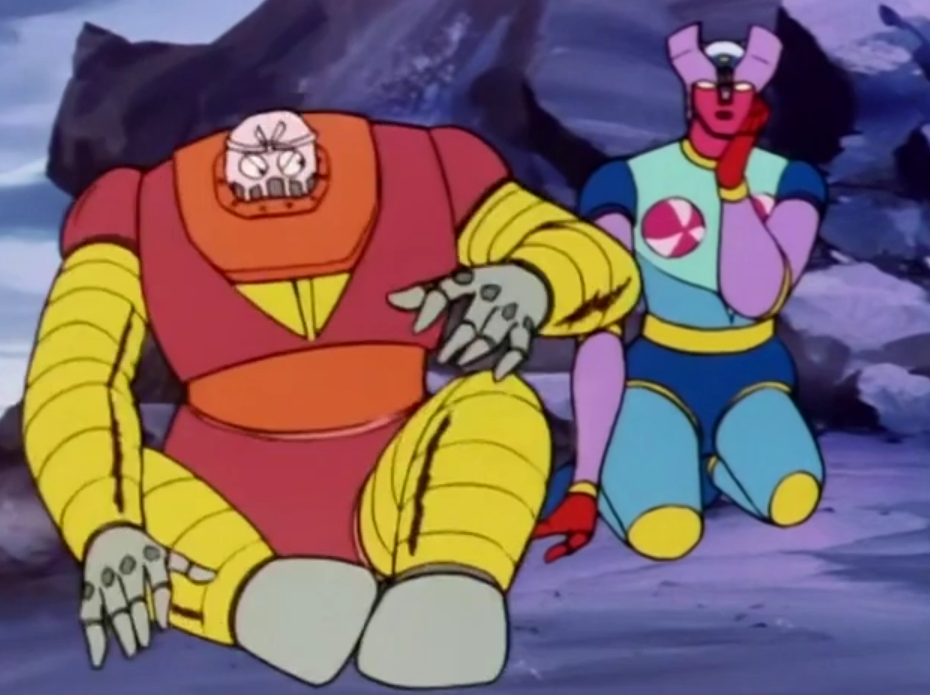
The Mechanical Beasts are called Machine Beasts in Tranzor Z, but are also sometimes called Doom Machines and Mechanical Brutes. Additionally, the Crabst— er… I mean, the Bardos Wand was renamed to the Fork of Fury; likewise, Bardos Island was called Demon Island. The Underwater Fortress Salude was renamed to the Submarine Fortress Barracuda.
Baron Ashura’s Underwater Fortress Bood was renamed to the Tiger Shark in Tranzor Z. Meanwhile, Count Brocken’s Flying Fortress Ghoul was renamed to— oh crap, I don’t know what it’s called. I combed through multiple episodes where the craft appears, but I don’t recall them ever mentioning it by name; they just call it “Air Fortress” or “Aircraft.”
Most of the individual Mechanical Beasts retained their Japanese names, but a few of them were renamed. For example, the Stronger T4 was renamed to the Hurricane 75; unfortunately, I’m not going to list all of the other name differences, because I have not seen every single episode of the series. However, one piece of trivia I learned while doing research was that the Stronger T4 was likely the inspiration for the design of Airman from the MegaMan series.
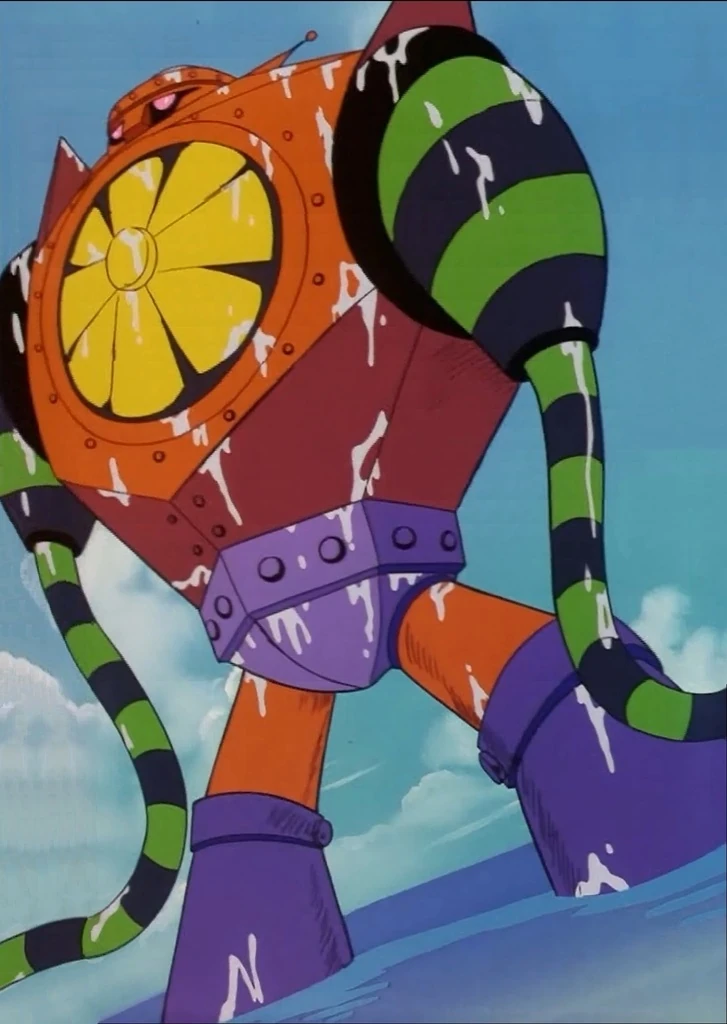
For some more general changes, something I noticed in my viewings was that, compared to the original, Tranzor Z has a lot more puns and dad jokes. It actually reminds me a bit of a 4Kids dub, but not as cheesy. Overall, though, I’d say the writing is pretty tight, and it tells the story of Mazinger decently well, much better than a 4Kids dub. Furthermore, the voice acting is pretty tight; it’s nothing Oscar-worthy, but it’s servicable for the time.
Adding on to that, as you’d expect, a lot of the more dicey aspects were toned down or cut out altogether, since American kids couldn’t handle it. Things like graphic deaths, domestic violence, sexual content, and things like that were removed. Though major deaths were usually left in, like with major villains or Koji’s grandfather. To fill in those removed scenes, they would often fill in that footage with spliced-in scenes from Great Mazinger, which is kind of hilarious in hindsight.
If you’re a fan of Mazinger or just really observant, you’d notice that the mechs are clearly different, but as a 10-year-old kid with no frame of reference as to what Great Mazinger was, and was as dumb as I was at that age, you’d likely not notice. Or at the most, say “Huh, Tranzor Z looks slightly different in this scene… Anyways-” then not really think about it anymore.
Going back to the violence, though, that’s one change I dislike. I know the show is aimed at kids and all, but I feel like the more graphic and darker topics discussed in Mazinger were what made it stand out in Japan. It was one of the big shows that demonstrated that anime wasn’t solely for young children, alongside others such as Lupin the Third, Ashita no Joe, and Genshi Shonen Ryu. Something I briefly mentioned in my Nadesico article was the Gekiga movement, a shift in anime during the late 60s and early 70s. This movement was characterized by sharp angles, hatching, and gritty lines, and featured deeper storytelling, more serious topics, social engagement, and realistic art.
While a lot of the aforementioned shows, like Lupin the Third, are praised now, they didn’t do too well when they first came out. They were really costly, and since a lot of them were advertised in newspapers and stuff, not many people watched them, and the companies didn’t make much return on investment. What made Mazinger Z stand out was the fact that it combined a lot of the lighthearted elements of older anime and the detailed art and storytelling of the series that came from the Gekiga movement, not to mention Go Nagai’s general unhinged nature. Tranzor Z cutting away those edges, honestly, feels like it defeats the purpose of bringing the series over to begin with.

The last notable change I want to mention is the ending. In Mazinger Z, the series ends with the original Mazinger Z being destroyed, the Great Mazinger is revealed, Dr. Hell and Count Brocken are defeated, and Archduke Gorgon runs off to set up the events for the Great Mazinger anime series. In Tranzor Z, as they didn’t opt to dub Great Mazinger—and realistically, they couldn’t since they used so much of its fucking footage in this series—they made the Tranzor Z ending a lot more conclusive. Tommy defeats Dr. Demon and Count DeCapito, and the fate of Genghis the Ghastly is left up in the air. After the victory, Tommy returns to the lab with Tranzor, and the crew have some banter before the camera pans into the sky and the credits roll.
Tranzor Z saw very little success when it came out back in the 80s, and people even saw it as an inferior version of Voltron. Which, I mean, the original Mazinger Z came out a decade before GoLion did, so it makes sense.
It’s a bit ironic, though, because back in Japan, Mazinger Z was a huge success, receiving sequels, universal praise, and being one of the main robots to appear in Super Robot Wars. Meanwhile, GoLion was basically a complete flop, being seen as “just another underwhelming gattai mecha series.” Hell, GoLion was so unpopular that the only Super Robot Wars game that it ever appeared in was SRW W, and it never returned since.

Then, when GoLion was brought to the US as Voltron, it was a huge success, getting many future adaptations, merchandise, and being mentioned in pop culture even to this day. Which in itself was kinda funny, considering the original acquisition of GoLion was a mistake. World Events Productions originally wanted to adapt the anime series Future Robot Daltanious, but I guess since both series feature lion motifs, there was some mix-up when it came to sending the tapes over, and we got Beast King GoLion instead.
But I guess Voltron’s success and Tranzor’s failure go to show that being in the right place at the right time is sometimes just as important as the work itself. That said, even though Tranzor wasn’t popular at the time, it has gotten a bit of a cult following as of late, and even older people who remember seeing the show as a kid, going back and watching those older episodes and thinking, “Huh, this is goated, actually.”
It’s honestly pretty nice to see old, forgotten adaptations like these get some attention—and to read comments from people sharing their fond memories of the show. Tranzor Z was never re-released or resold, so for the longest time, if you wanted to watch this dub yourself, you were S.O.L. Luckily, some people online had recordings of the original broadcast and archived them on the internet for others to watch.
Beyond that, in 2023, a group of dedicated fans uploaded a project called Tranzor Z Restored, which uses higher-quality footage from Mazinger Z re-releases to let fans experience the episodes of Tranzor Z in the best quality possible. If you decide to watch this dub, this is the version I’d recommend.
Beyond that, I don’t have too much else to say. As always, I hope you enjoyed this read. Tell me what you like about it, tell me what you disliked, yadda yadda yadda. If you’ve watched Tranzor Z or any other similar adaptation like RoboTech, Star Blazers, or Voltron, I’d love to hear you talk about your experiences with that in the comments. Trust me, I’m not a YouTuber, let alone a big one, so I’m actually inclined to read and care about what you have to say! With all that done, see you in my next post.
